


Earth Rite Ground Monitoring System
Categories: Grounding & Monitoring Newson Gale Facility
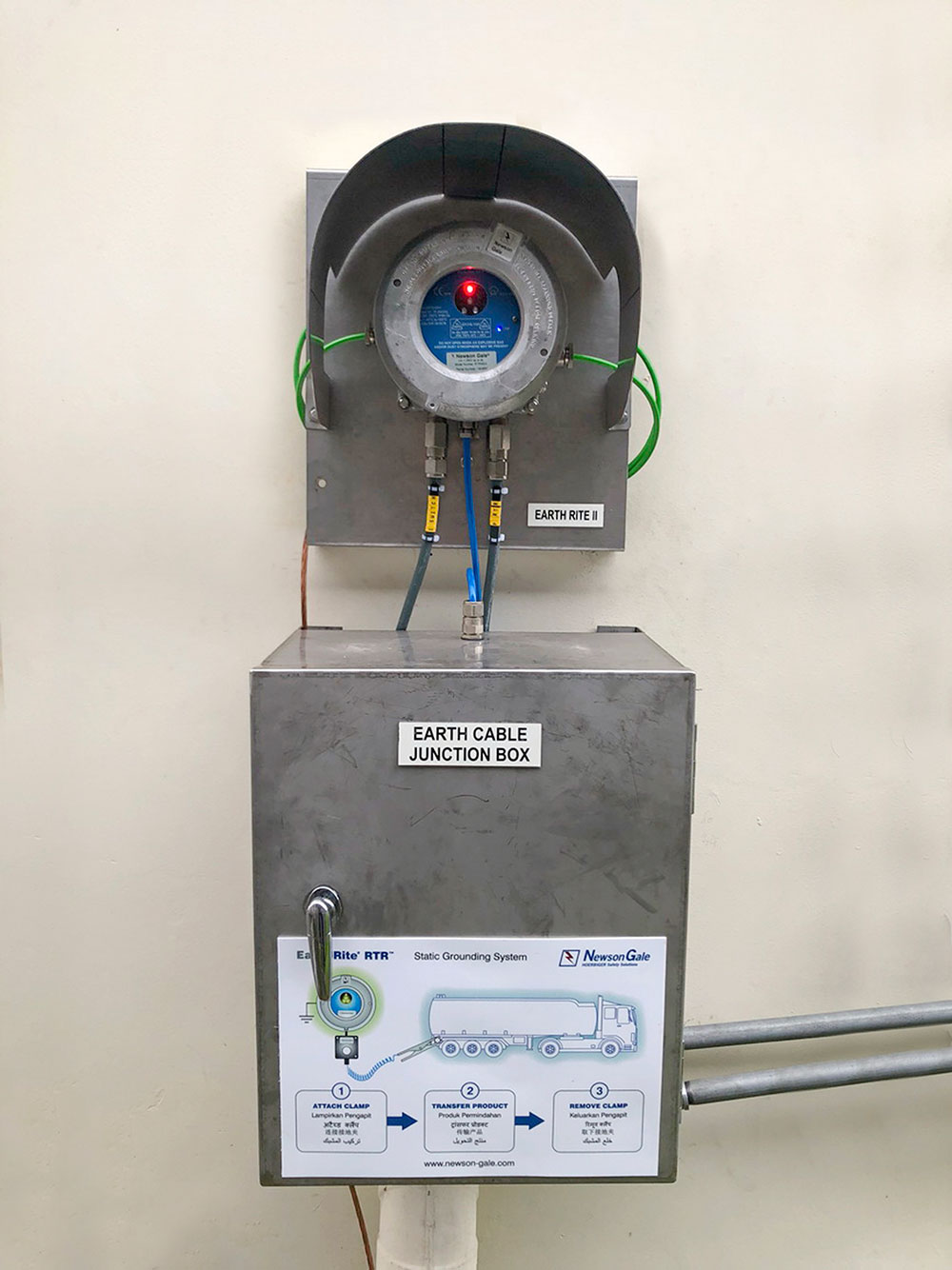
Earth Rite Ground Monitoring System
The Earth-Rite Ground Monitoring System is a reliable safety solution designed to prevent electrostatic discharge in industrial environments handling flammable materials. During operations such as fuel transfer and chemical processing, static electricity can build up and create serious ignition risks if not properly controlled. This system continuously monitors and verifies grounding connections in real time, ensuring safe discharge of static electricity and reducing the risk of fire or explosion. With fail-safe grounding verification, it provides consistent protection during critical operations.
Widely used in hazardous industrial applications, the Earth-Rite Ground Monitoring System enhances workplace safety while supporting compliance with NFPA and OSHA standards, making it an essential component for safe and efficient operations.
What is a Ground Monitoring System?
A Ground Monitoring System is an engineered safety device that ensures equipment is properly grounded during operations involving flammable or volatile substances. It monitors the connection between the equipment and the grounding point to confirm that static electricity is safely dissipated.
Unlike manual grounding checks, a Ground Monitoring System provides continuous monitoring, ensuring that safe conditions are maintained throughout the operation.
Importance of Ground Monitoring System
In environments where flammable liquids or gases are present, static electricity can pose a significant hazard. Improper grounding can lead to sparks that may ignite vapors. A Ground Monitoring System reduces this risk by ensuring that proper grounding is always maintained. It improves workplace safety and helps facilities meet strict regulatory standards.
How the Ground Monitoring System Works
A Ground Monitoring System connects to equipment involved in transfer or processing operations. It continuously checks whether a proper grounding path is established. If the system detects a secure connection, operations can proceed safely. If grounding is lost or becomes ineffective, the Ground Monitoring System alerts operators or can stop operations to prevent unsafe conditions.
Key Features
- Continuous grounding verification
- Real-time monitoring and alerts
- Fail-safe operation for enhanced safety
- Designed for hazardous environments
- Supports regulatory compliance standards
These features make the Ground Monitoring System a reliable solution for industrial safety.
Applications
A Ground Monitoring System is commonly used in:
- Fuel loading and unloading operations
- Chemical processing facilities
- Oil and gas terminals
- Tanker transfer systems
- Hazardous material handling areas
In these environments, a Ground Monitoring System ensures safe handling of flammable materials.
Safety and Compliance
A Ground Monitoring System helps facilities comply with safety regulations such as OSHA and NFPA standards. Ensuring proper grounding at all times, it reduces the risk of static discharge incidents. Regular inspection and proper usage ensure that the Ground Monitoring System continues to perform effectively in demanding industrial environments.
Operational Benefits
Using a Ground Monitoring System improves operational safety and reliability by eliminating manual grounding checks. It reduces the risk of accidents and enhances confidence during high-risk operations. The Ground Monitoring System also helps reduce downtime by preventing unsafe conditions before they escalate into serious issues.
Role in Industrial Safety Systems
In modern industrial operations, the Ground Monitoring System plays a critical role in managing electrostatic risks. It ensures that grounding is consistently maintained during transfer and processing activities. By integrating a Ground Monitoring System into safety procedures, facilities can improve protection, maintain compliance, and support safe, efficient operations.