

Metal Work Platform for Safe Feeder Access
Categories: Stairs & Work Platforms Mining & Minerals ErectaStep Facility
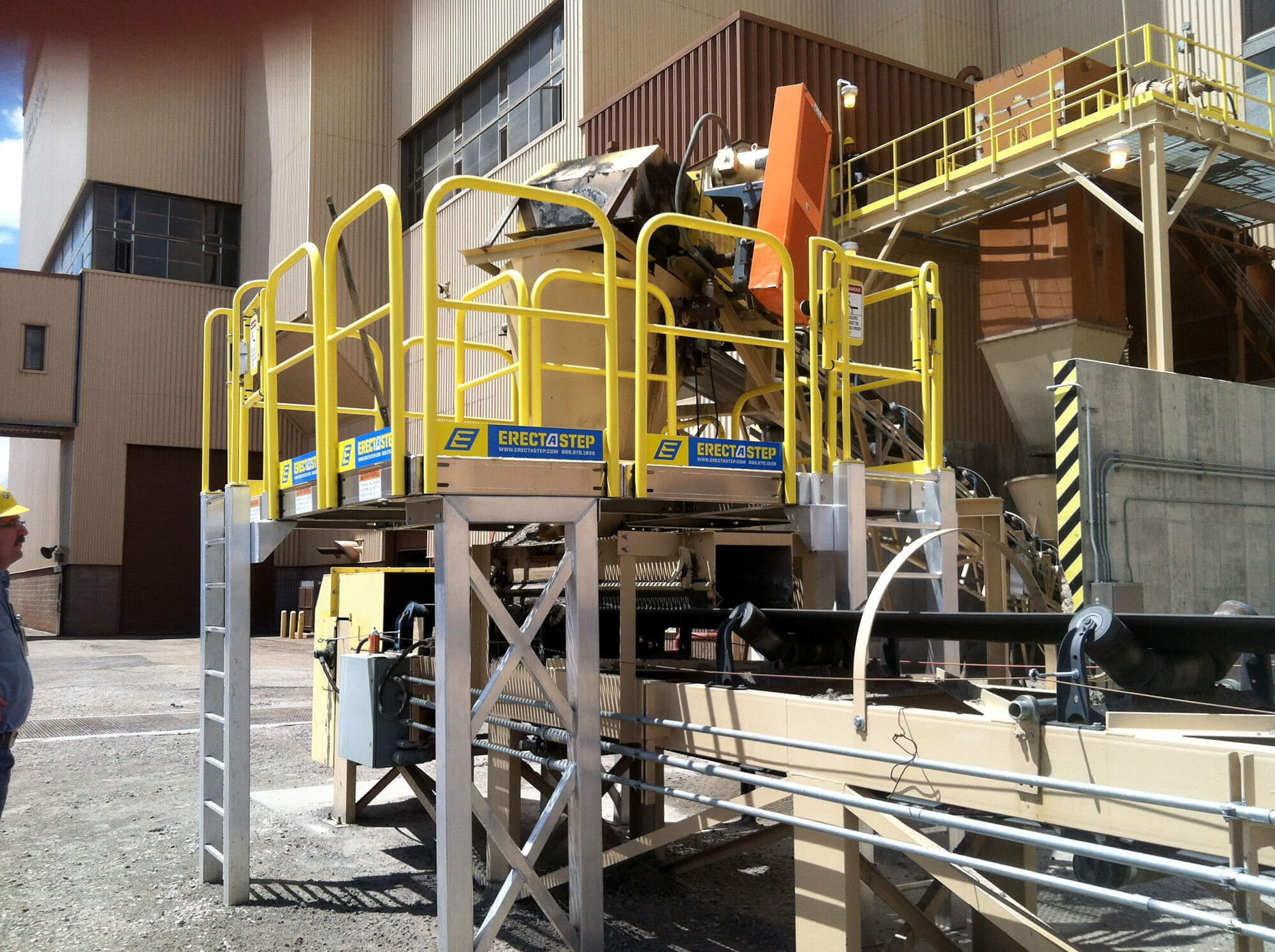
Whether it’s a simple catwalk or a complex scaffolding system, work platforms help to improve worker safety by providing a stable surface for employees to stand on while they perform their duties.
Feeders and conveyors play an important role in manufacturing and bulk material handling by moving materials into mixers, furnaces, production processes, storage units, or final containers. Because these systems often include elevated controls and components, workers need a stable way to reach them for operation, maintenance, cleaning, and repairs. A Metal Work Platform for Safe Feeder Access provides a dedicated elevated surface that helps workers reach these hard-to-access areas more safely. Feeder systems can handle fine, coarse, granular, or powdery materials and may include belt, screw, vibratory, or electromechanical feeders. The equipment configuration and operating requirements can vary between applications, making accessible working areas important. Industrial work platforms can be designed around the specific requirements of a production line, providing workers with stairs, guardrails, and handrails for access to elevated feeder components and related equipment.
What Is a Metal Work Platform for Safe Feeder Access?
A Metal Work Platform for Safe Feeder Access is an elevated work surface designed to provide workers with a stable area for reaching feeder controls and other elevated components on a production line. These platforms can be used around feeder systems, conveyors, bins, bunkers, silos, hoppers, and other equipment involved in material handling and manufacturing. The source material describes metal work platforms as a practical solution for accessing feeder systems that may otherwise be difficult to reach for maintenance and repairs. Depending on the application, a platform can incorporate metal stairs, guardrails, and handrails to create a more accessible working area around elevated equipment.
Why Is Safe Feeder Access Important?
Feeder systems are essential for maintaining a consistent flow of material through manufacturing processes. They can control how much material moves from storage units such as bins and silos into downstream processes or other equipment. However, these systems can also require regular maintenance, cleaning, and repairs. Without a suitable access area, workers may have difficulty reaching feeder controls and elevated components. A Metal Work Platform for Safe Feeder Access creates a stable surface where workers can perform necessary tasks while reducing reliance on unsuitable access methods. Access is also important when handling bulk solids. Granular and powdery materials can create buildup inside material-handling equipment, potentially contributing to jams, downtime, and increased wear. Providing appropriate access can make it easier for workers to reach equipment for cleaning and maintenance.
How Does a Feeder Access Work Platform Work?
A feeder access platform elevates workers to the level of the equipment they need to reach. Workers can use the integrated stairs to climb to the platform, while handrails provide support during ascent and descent. Guardrails around the working area help protect workers from falling from the elevated surface. The platform can be positioned around feeder controls, conveyors, or other elevated components according to the requirements of the production line. The source also indicates that industrial work platforms can be custom-designed for specific applications and adjusted to different heights when used around storage units of varying elevations. This approach provides a designated working area rather than requiring workers to access elevated equipment from an unstable or unsuitable position.
Key Features of Metal Work Platforms
A Metal Work Platform for Safe Feeder Access can incorporate features that support access to elevated industrial equipment, including:
- Stable elevated working surfaces for workers
- Metal stairs for reaching elevated equipment
- Guardrails around elevated work areas
- Handrails for climbing and descending
- Adjustable heights for different equipment elevations
- Custom designs for specific production-line requirements
- Access to feeder controls and elevated components
- Suitable applications around bins, bunkers, silos, and hoppers
The exact platform configuration can vary according to the equipment, available space, elevation, and access requirements of the application.
Applications
Work platforms can be used in a range of manufacturing and material-handling environments where workers need access to elevated equipment. Common applications supported by the source include:
- Feeder systems
- Conveyor systems
- Vibratory feeders
- Electromechanical feeders
- Belt feeders
- Screw feeders
- Manufacturing production lines
- Food manufacturing facilities
- Dry bulk material handling
- Bins and storage units
- Bunkers
- Silos
- Hoppers
- Elevated feeder controls and components
In food manufacturing, vibratory feeders can move raw or finished products through different areas of a facility. In dry bulk applications, feeder systems can maintain material flow from storage units and convey material downstream into processing equipment. A properly configured access platform can support workers who need to reach these systems for operational or maintenance tasks.
Supporting Maintenance and Feeder System Access
Feeder systems can be difficult to access when controls and components are positioned above the production floor. A Metal Work Platform for Safe Feeder Access provides a dedicated area from which workers can reach these components for maintenance and repairs. Access can also be important for addressing material buildup. When bulk material does not flow properly through equipment, buildup can contribute to feeder jams and production interruptions. Regular cleaning and maintenance can help prevent these issues, and an accessible work platform can provide a more practical working area for reaching elevated equipment. By creating a stable access point around the feeder system, work platforms can support maintenance activities without requiring workers to work directly from unsuitable elevated positions.
Work Platforms for Bulk Material Handling
Bulk solids are commonly handled in granular or powder form and may be stored in bins, bunkers, silos, and hoppers. These storage units can require workers to reach elevated areas for inspection, cleaning, maintenance, or other tasks. A Metal Work Platform for Safe Feeder Access can be configured with stairs and protective railing components to provide access to these elevated areas. The source also indicates that platforms can be adjustable to accommodate storage units at different heights. This makes work platforms useful where manufacturing or material-handling operations require regular worker access to elevated storage and processing equipment.
What is a Metal Work Platform for Safe Feeder Access?
It is an elevated working surface that provides workers with stable access to feeder controls and other elevated components. Platforms can include stairs, guardrails, and handrails based on the requirements of the application.
Where can feeder access work platforms be used?
They can be used around feeder and conveyor systems, manufacturing production lines, food-processing equipment, dry bulk material handling systems, bins, bunkers, silos, and hoppers.
Why are work platforms useful for feeder systems?
Feeder controls and components can be difficult to reach for maintenance and repairs. A dedicated work platform provides a stable area from which workers can access these elevated components.
Can work platforms be customized for feeder systems?
Yes. The source states that industrial work platforms can be custom-designed to fit specific production-line requirements. Platform configurations can vary according to the equipment and access needs.
What safety features can be included with a feeder access platform?
Depending on the application, platforms can include metal stairs, guardrails, and handrails. The source also supports OSHA-compliant work surfaces and adjustable platform heights for different storage-unit elevations.