


Eastman Chemical Company Railcar Elevating Cage Installation
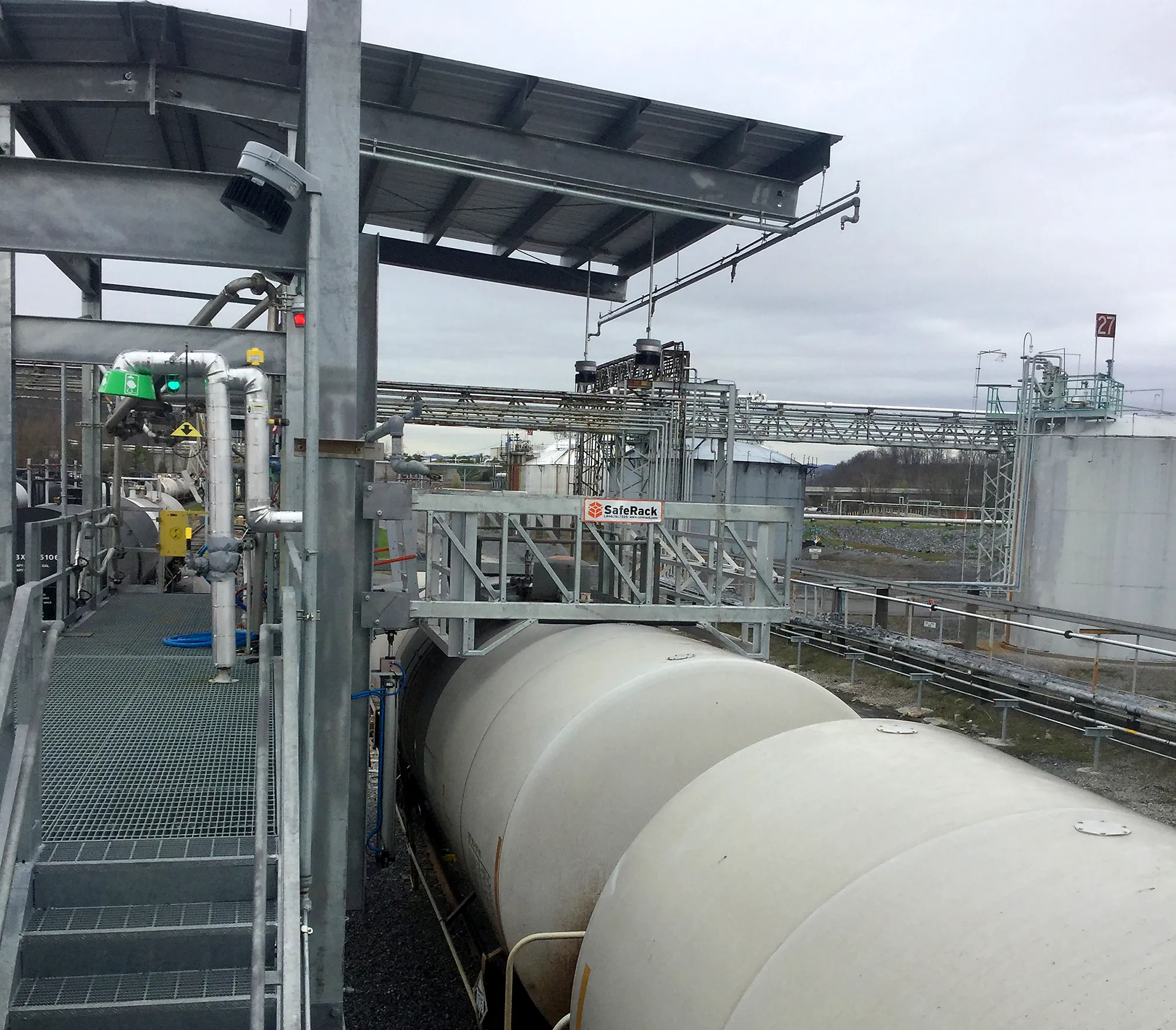
SafeRack’s Legacy Elevating Cage, implemented at Eastman Chemical Company, provides pneumatic lift and easy-glide winch capabilities for secure and compliant entry to railcars and tank trucks beneath existing canopies in harsh environments.
Industrial bulk loading operations require safe and efficient access solutions that allow workers to perform loading, inspection, and maintenance activities around railcars and tank trucks. Facilities operating in chemical, petroleum, and other demanding industries often face challenges such as limited clearance areas, harsh environments, and strict safety requirements. A Railcar Elevating Cage Installation provides a reliable access solution that helps operators safely reach vehicle hatches while improving productivity and maintaining compliance standards. Designed for challenging industrial applications, these systems combine elevating platforms, fall protection features, and flexible adjustment capabilities to create a safer working environment during bulk loading operations.
What Is a Railcar Elevating Cage Installation?
A Railcar Elevating Cage Installation is an industrial access system designed to provide protected entry to the top of railcars, tank trucks, and isotainers during loading and unloading activities. The system uses an elevated safety cage and platform to allow operators to safely access vehicle hatches while reducing exposure to fall hazards. SafeRack elevating cage solutions are engineered for environments where traditional access methods may not be suitable. Features such as pneumatic lifting systems and easy-glide winches allow operators to adjust the platform height efficiently, making the system suitable for low-clearance areas and facilities with existing structures such as loading canopies.
Importance of Railcar Elevating Cage Installation
Safe access to vehicle tops is essential for protecting workers and maintaining efficient bulk loading operations. A Railcar Elevating Cage Installation helps facilities by:
- Improving worker safety during elevated loading activities
- Providing secure access to railcars and tank trucks
- Supporting OSHA-compliant workplace practices
- Reducing fall risks during vehicle access
- Allowing operators to reach multiple loading points safely
- Improving operational efficiency
- Supporting safer bulk material handling
- Providing reliable performance in harsh environments
By creating a dedicated access solution, these systems help companies maintain safer loading procedures while reducing operational challenges associated with elevated work areas.
How Railcar Elevating Cage Installation Works
The installation process begins with evaluating the facility layout, loading requirements, clearance limitations, and vehicle access needs. Engineers design the system configuration to ensure safe positioning around railcars and tank trucks while meeting operational requirements.The elevating cage uses lifting technology, such as pneumatic systems and winch-assisted adjustments, to move the platform to the required height. Once positioned, the protective cage and handrail system create a secure working area around the operator, allowing safe access to vehicle hatches during loading operations. Adjustable handrail systems provide additional flexibility by extending along different vehicle lengths, helping operators safely access multiple points while maintaining fall protection standards.
Key Features
- Pneumatic lift functionality
- Easy-glide winch adjustment system
- OSHA-compliant handrail safety system
- Adjustable access platform
- Fall protection cage design
- Suitable for railcars and tank trucks
- Designed for low-clearance areas
- Corrosion-resistant industrial construction
- Compatible with existing loading canopies
- Flexible vehicle access configuration
- Durable performance in harsh environments
- Reduced manual handling requirements
Applications
A Railcar Elevating Cage Installation is commonly used in:
- Chemical processing facilities
- Bulk loading terminals
- Railcar loading stations
- Tank truck loading facilities
- Petroleum storage operations
- Industrial manufacturing plants
- Hazardous material handling facilities
- Energy and logistics operations
These industries require dependable access systems that allow workers to safely perform loading activities while maintaining efficient material transfer processes.
Eastman Chemical Company Installation Overview
Eastman Chemical Company required a safer and more efficient solution for accessing railcars and tank trucks during bulk loading operations. The facility needed an access system that could operate beneath existing canopies while handling harsh environmental conditions. SafeRack implemented an elevating cage solution featuring pneumatic lift capabilities and an easy-glide winch system to provide flexible and reliable vehicle access. The design allowed the system to be retrofitted into the existing facility layout while maintaining safe operation in restricted clearance areas. The installation also included OSHA-compliant handrail safety systems designed to provide fall protection around vehicle loading areas. The adjustable handrails extended above standard railcar crash boxes and could be configured to match different vehicle lengths, helping operators safely access multiple hatches during loading activities.
What is a Railcar Elevating Cage Installation used for?
It is used to provide safe and elevated access to railcars, tank trucks, and isotainers during bulk loading, inspection, and maintenance operations.
Why is a Railcar Elevating Cage Installation important?
It improves worker safety, reduces fall risks, supports OSHA compliance, and provides reliable access for elevated industrial loading tasks.
Can elevating cages work in low-clearance areas?
Yes. These systems can be designed for facilities with limited clearance, including areas with existing loading canopies or structural restrictions.
What safety features are included in these systems?
They can include protective cages, adjustable handrails, pneumatic lifts, winch-assisted positioning, and other fall protection components.
Where are Railcar Elevating Cage Installation systems commonly used?
They are commonly installed in chemical plants, bulk loading facilities, petroleum terminals, railcar loading areas, manufacturing plants, and industrial processing sites.