


Benefits of Work Platforms in Industrial & Commercial Facilities
Categories: Stairs & Work Platforms Industrial ErectaStep Facility
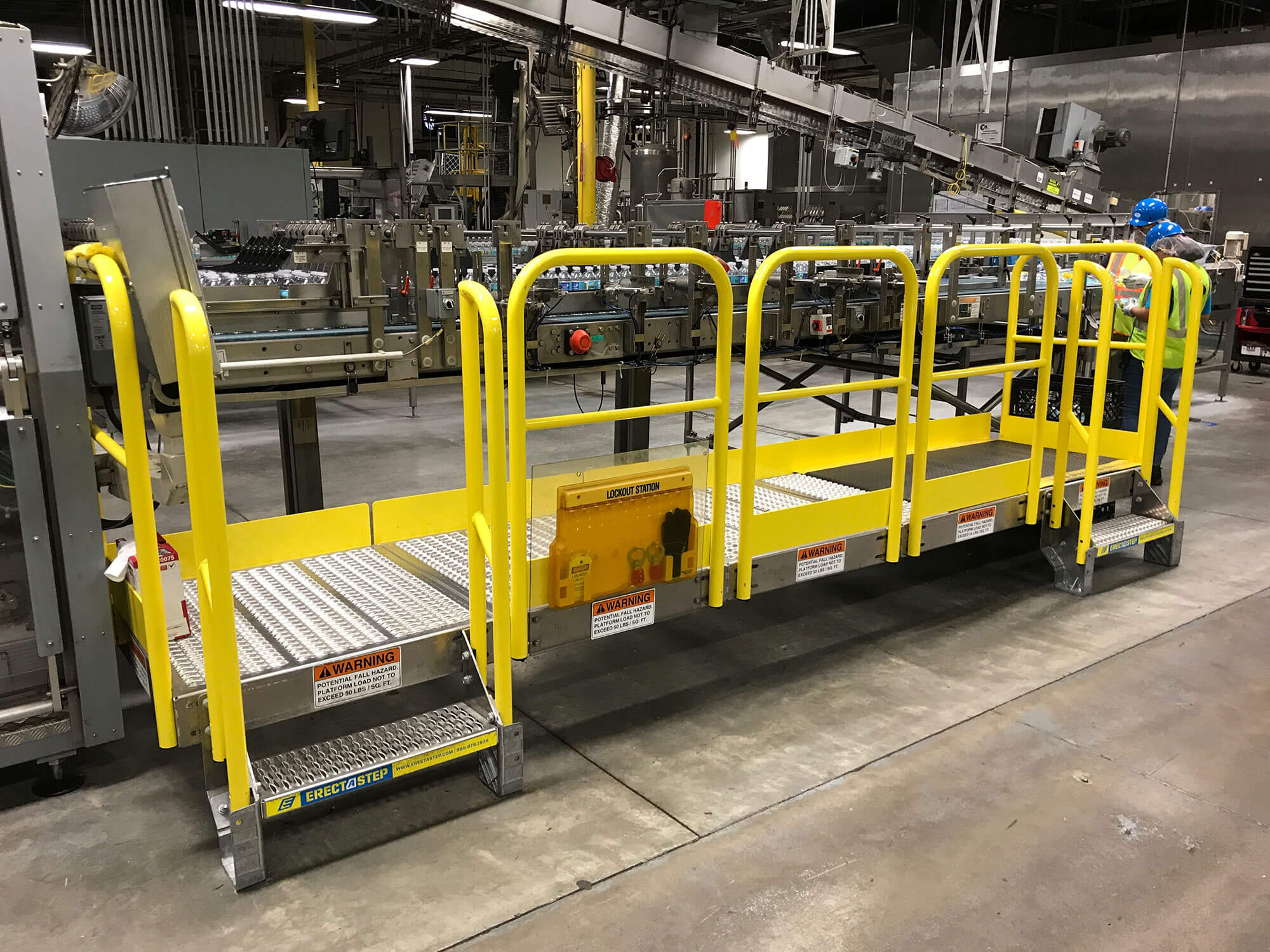
ErectaStep work platform installed in a bottled water plant to provide a safe, level working height alongside the conveyor system, improving worker access and efficiency.
Work platforms provide safe and efficient elevated access solutions for a wide range of industrial and commercial applications. Used in construction sites, manufacturing plants, warehouses, maintenance facilities, and storage areas, they help workers perform tasks at the proper height while maintaining stability and control. These platforms can include crossover systems, rolling stairs, forklift access platforms, guardrails, handrails, and other elevated work solutions designed to improve workplace safety and productivity. By providing secure, OSHA-compliant working surfaces, work platforms help reduce workplace hazards, minimize physical strain, and support more efficient inspections, maintenance, assembly, loading, and repair operations.
Unlike temporary or makeshift access methods, properly engineered work platforms offer a reliable long-term solution that enhances operational efficiency while helping protect workers from slips, trips, falls, and other job-site risks.
What Are Benefits Work Platforms?
Benefits Work Platforms refer to the advantages and workplace improvements gained from using industrial work platforms. These systems are designed to provide elevated access while supporting worker safety, comfort, and productivity.
They are commonly used in:
- Manufacturing facilities
- Bottling and packaging plants
- Warehouses and distribution centers
- Maintenance workshops
- Construction sites
- Industrial production environments
The Benefits Work Platforms provide organizations with safer and more efficient working conditions.
OSHA Requirements and Importance of Work Platforms
Industrial work platforms play a critical role in maintaining workplace safety, operational efficiency, and OSHA compliance. Workers often need safe access to elevated equipment, machinery, conveyors, and production areas, making properly designed work platforms essential in industrial and commercial facilities.
OSHA Requirements for Work Platforms
According to OSHA 1910 Subpart D Walking-Working Surfaces requirements, work platforms should include:
- Minimum 42-inch guardrails for fall protection
- 4-inch toeboards to help prevent falling objects
- Controlled access points with safety gates
- Appropriate fall protection measures for elevated work areas
- Guardrails for platforms with multiple steps or access points
Why Work Platforms Are Important
Work platforms provide several operational and safety benefits, including:
- Improving workplace safety
- Supporting OSHA compliance requirements
- Reducing fatigue and physical strain
- Promoting ergonomic working positions
- Minimizing workplace injuries
- Enhancing worker productivity
- Providing safe access to elevated equipment and machinery
- Maximizing available workspace through vertical access
Properly designed work platforms help create safer, more efficient work environments while supporting long-term operational performance.
How Ergonomics Improves Workplace Safety
Ergonomics focuses on creating work environments that support safe and efficient movement. When employees are required to work at uncomfortable heights or positions, the risk of fatigue, repetitive strain injuries, and musculoskeletal discomfort can increase.
Work platforms help create better working conditions by providing stable, elevated access to equipment, tools, and work areas. By allowing employees to work from a secure and properly positioned surface, these platforms reduce unnecessary reaching, bending, and overextension.
When Can Workers Benefit from Industrial Work Platforms?
Industrial work platforms are used across many job functions where safe, stable, and elevated access is required:
- Truck Loading and Unloading:
Work platforms provide a safer and faster way to load and unload trucks by eliminating the need to repeatedly climb in and out of trailers. This improves workflow efficiency while reducing the risk of slips, trips, and fall-related injuries.
- Maintenance, Painting, and Repairs:
hese platforms are commonly used for maintenance tasks such as painting, cleaning, and equipment repair. They allow workers to reach elevated areas safely while maintaining balance and stability during detailed work.
- Heavy Equipment Handling:
Work platforms support safer handling and positioning of heavy equipment by reducing the need for manual lifting or unsafe movement practices. This helps lower the risk of strain-related injuries.
- Ergonomic Work Support:
By providing properly elevated and stable working surfaces, industrial work platforms help workers maintain better posture and reduce repetitive strain. This improves comfort and supports safer, more efficient task performance.
- Flexible and Mobile Applications:
Many work platforms are designed for easy movement and quick setup, allowing them to be used in different areas of a facility. Rolling configurations also make it easier to access tight or changing workspaces
What are the benefits of Work Platforms used for?
They provide safe elevated access while improving worker safety, comfort, and efficiency.
How do Benefits Work Platforms improve workplace safety?
They improve safety by providing stable working surfaces, guardrails, and ergonomic access to elevated areas.
Where are Benefits Work Platforms commonly used?
They are commonly used in manufacturing plants, warehouses, maintenance facilities, and industrial workplaces.
Why are Benefits Work Platforms important?
They are important because they reduce workplace injuries, improve productivity, and support OSHA compliance.
Can Benefits Work Platforms improve ergonomics?
Yes, they help workers maintain proper posture and reduce strain when performing elevated tasks.