


A toeboard is a low protective barrier installed at the edge of elevated working surfaces. It is typically 4 to 12 inches high and forms part of a guardrail system, positioned closest to the floor or walking surface.
Its main purpose is simple but critical:
to stop tools, materials, and debris from falling to a lower level
This makes them especially important in environments where people are working below elevated platforms.
Why Toeboards Are Important
They play a key role in workplace safety by:
- Preventing tools and materials from falling
- Reducing the risk of injuries to workers below
- Adding an extra layer of fall protection on elevated surfaces
- Supporting compliance with workplace safety regulations
They are commonly used in areas like:
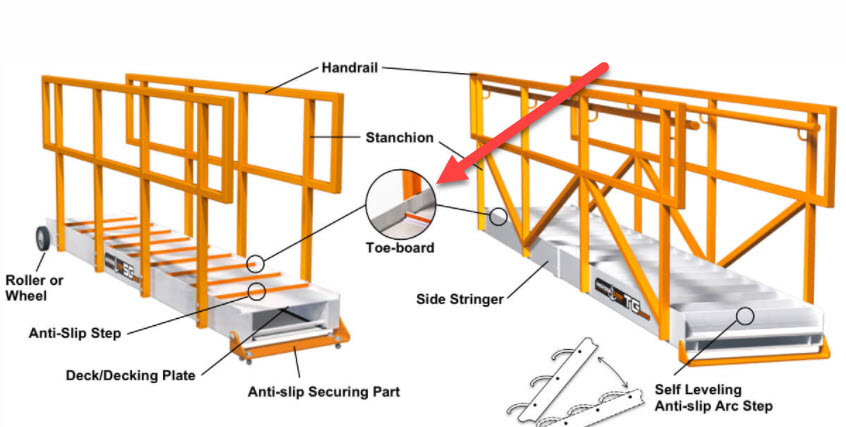
Toeboard in Safety Systems
These are not use alone, it works as part of a complete fall protection system, which may include:
- Guardrails
- Midrails
- Safety gates
- Access platforms
For example, on a gangway, a toeboard helps ensure that loose items don’t slip off the edge, especially in busy industrial environments.
OSHA Requirements for Toeboards
The Occupational Safety and Health Administration (OSHA) sets specific standards for toeboards under regulations such as:
- 1910.28(b)(3)(iv)
- 1910.28(b)(3)(v)(B)
- 1910.28(c)(1)
- 1910.29(k)
Key Requirements
1. Height
- Must have a minimum vertical height of 3.5 inches (9 cm)
2. Clearance
- Gap between the toeboard and surface should not exceed 0.25 inches (0.5 cm)
3. Strength
- Must withstand at least 50 pounds (222 N) of force applied in any direction
These requirements ensure that toeboards are strong enough to effectively stop falling objects and provide reliable protection.
It prevents tools, materials, and debris from falling off elevated surfaces, protecting workers below.
They are use on scaffolds, platforms, rooftops, gangways, and ladders.
Yes, OSHA requires these in many situations to prevent falling object hazards.
OSHA requires a minimum height of 3.5 inches.
They mainly prevent objects from falling, but they can also provide limited foot-level protection for workers.