


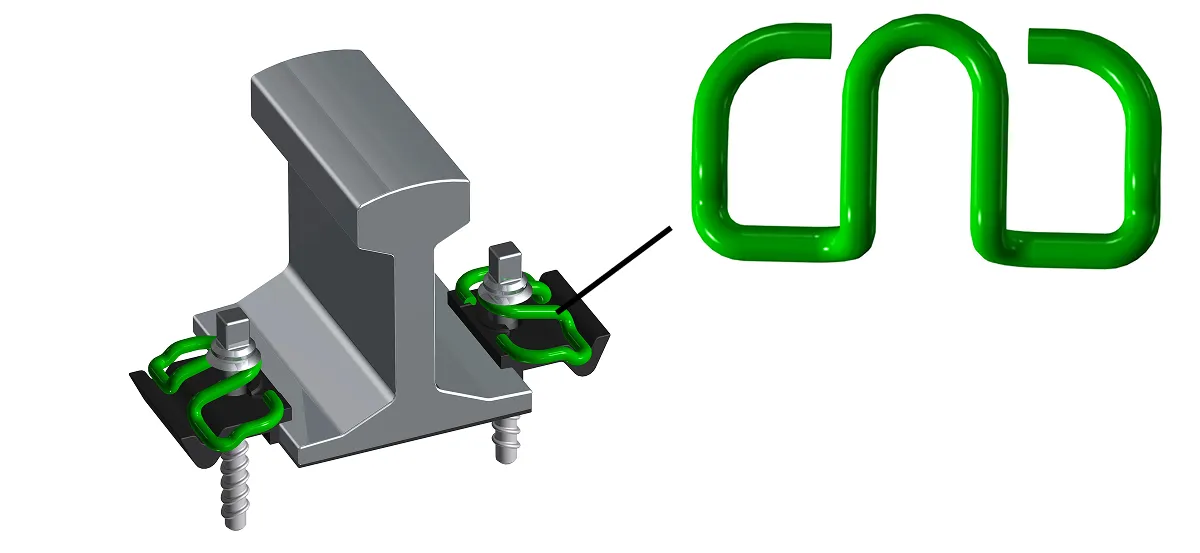
SKL rail clips are specialized tension clamps designed to provide permanent elastic clamping for turnout parts on concrete bearers. These clips fasten to baseplates mounted on concrete sleepers using screws and plastic dowels, creating a durable and insulated connection. The design is particularly effective for concrete railway infrastructure where traditional fastening methods may be less suitable. Why does this matter? Concrete sleepers are strong and durable, but they do not hold screws or spikes the way wood sleepers do. They solves this problem by using a baseplate that anchors into the concrete. The clip then presses down on the rail with spring tension, holding it securely while still allowing controlled movement. If your facility handles railcars, you probably use railcar loading systems that rely on well-maintained tracks secured with SKL rail clips.
How an SKL Rail Clip Works
The gets its name from its manufacturer and design series. Here is how it works:
- A baseplate is mounted to the concrete sleeper
- Plastic dowels and screws secure the baseplate
- The fits into the baseplate
- The clip presses down on the rail foot
- Spring tension provides elastic clamping force
- The clip allows controlled rail movement
Parts of an SKL Rail Clip Assembly
A complete assembly includes several components working together. Here are the main parts:
- SKL clip – The tension clamp shaped like a wire loop
- Baseplate – Cast iron or steel plate mounted to the sleeper
- Plastic dowels – Insulated anchors inserted into concrete
- Screws – Secure the baseplate to the dowels
- Rail pad – Rubber or plastic cushion between rail and sleeper
- Insulating elements – Prevent electrical current through the clip
History of Rail Fastening Systems
Rail fastening technology has evolved significantly over time. Here is a brief history:
- 1515 – Wooden rails with wooden pegs
- 1700s – Iron straps on wooden rails
- 1800s – Cast iron rails with spikes
- 1900s – Steel rails with chair screws
- 1950s – Spring clips introduced
- 1970s – Concrete sleepers become common
- 1980s – SKL rail clips developed for concrete
Where SKL Rail Clips Are Used
They are found on many types of railway tracks. Here are the most common applications:
- Turnouts and switches
- Concrete sleeper tracks
- High-speed rail lines
- Heavy haul routes
- Bridge and tunnel tracks
- Industrial sidings
- Rail yard switching tracks
- Port and terminal tracks
SKL rail clips excel in high-stress applications such as turnouts, where rails experience lateral forces and complex loading patterns. The combination of elastic clamping and secure baseplate mounting ensures long-term stability. For chemical processing plants, well-maintained tracks with SKL rail clips ensure safe railcar movement during loading and unloading.
Benefits of SKL Rail Clips
They offers several important benefits for railway tracks. Here are the key advantages:
- Provides elastic clamping that absorbs vibration
- Works specifically with concrete sleepers
- Plastic dowels provide electrical insulation
- Requires less maintenance than rigid fasteners
- Holds gauge more consistently over time
- Resists loosening from vibration
- Can be installed and removed with simple tools
Developing specialized clips like SKL rail clips represents ongoing innovation in railway infrastructure technology. These fasteners solve problems that traditional spikes and screws cannot. For railcar loading, tracks secured with SKL rail clips provide the stability needed for safe tank car positioning.
SKL Clip vs Other Rail Fasteners
It is one of several rail fastening options. Here is how it compares:
SKL rail clip
- Tension clamp design
- Requires baseplate on concrete
- Excellent vibration resistance
- Provides electrical insulation
- Higher installation cost
E-type rail clip
- E-shaped spring steel
- Can mount directly to sleeper
- Also provides elastic clamping
- No built-in insulation
- Moderate cost
Rail spike
- Driven directly into wood sleeper
- No elastic properties
- Can work loose over time
- Low cost but high maintenance
Pandrol clip
- Similar to SKL design
- Different shape and mounting
- Also common on concrete sleepers
- Comparable performance
It is preferred for concrete sleepers because of its insulated design and secure baseplate mounting. For dry bulk loading, stable tracks with SKL rail clips keep railcars in position during filling.
Turnouts and High-Stress Applications
They are especially valuable in turnouts. Here is why:
What happens at turnouts
- Rails cross each other at angles
- Wheels strike the crossing nose
- Lateral forces are much higher
- Vibration is more severe
- Standard clips may not hold
How SKL clips help
- Stronger clamping force than standard clips
- Better resistance to lateral movement
- Maintains gauge through the turnout
- Requires less frequent retightening
- Extends turnout component life
The design is particularly effective for concrete railway infrastructure where traditional fastening methods may be less suitable. For pneumatic trailer loading, stable tracks with SKL rail clips keep trailers in position during high-pressure transfer.
Installation and Maintenance
Proper installation is important for performance. Here are key steps:
- Drill holes in the concrete sleeper
- Insert plastic dowels into the holes
- Position the baseplate over the dowels
- Drive screws through baseplate into dowels
- Torque screws to specified value
- Seat the into the baseplate
- Check that the clip presses firmly on the rail foot
During maintenance, workers check for:
- Loose screws
- Damaged or cracked clips
- Worn plastic dowels
- Corrosion on baseplate
- Proper clip tension
A well-maintained will last for decades. The plastic dowels provide electrical insulation and also resist corrosion. For safe track access during maintenance, railcar gangways help workers reach SKL rail clips for inspection.
Safety and Rail Fastening
Properly installed contribute to rail safety in several ways. Here is why they matter:
- Maintain proper track gauge
- Prevent rail rollover under heavy loads
- Reduce derailment risk
- Extend rail life
- Lower maintenance frequency
For worker protection during rail maintenance, fall protection systems keep employees safe while inspecting SKL rail clips. Safety gates provide secure access to track areas where maintenance occurs.
SKL Rail Clips in Extreme Conditions
They perform well in challenging environments. Here is how they handle different conditions:
Heat
- Tracks can reach 140°F in direct sun
- The allows rail expansion without buckling
- Spring tension maintains clamping force
Cold
- Tracks can drop below -40°F in some regions
- The clip allows rail contraction without breaking
- Steel remains flexible at low temperatures
Heavy loads
- Unit trains can weigh over 20,000 tons
- The absorbs impact forces
- Plastic dowels resist crushing
Wet and corrosive environments
- Clips are often coated or galvanized
- Plastic dowels do not rust
- Regular inspection catches issues early
For truck loading facilities near rail lines, SKL rail clips help maintain track stability for both rail and truck operations.
It is a specialized tension clamp that provides permanent elastic clamping for turnout parts on concrete bearers.
The clip fastens to baseplates mounted on concrete sleepers using screws and plastic dowels for a durable and insulated connection.
They are most commonly used on turnouts, concrete sleeper tracks, high-speed rail lines, and heavy haul routes.
Plastic dowels provide electrical insulation between the rail and the concrete sleeper, which is important for signaling systems.