


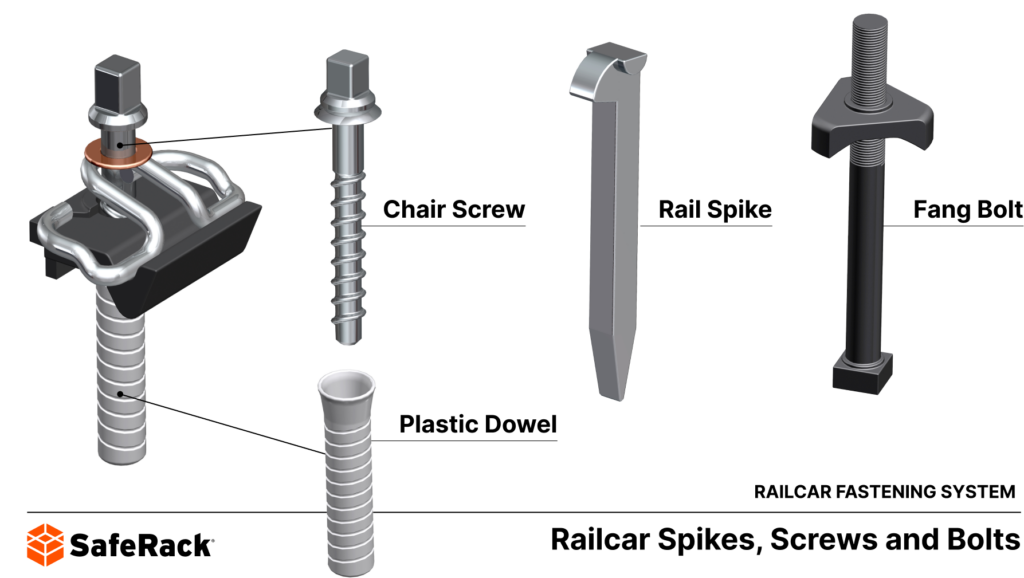
Chair screws, also known as coach screws, are large metal screws designed to fasten baseplates or rails directly to sleepers. Though more expensive to manufacture than rail spikes, chair screws provide twice the fixing power and accommodate spring washers for enhanced vibration resistance. These screws create threaded connections that resist loosening under dynamic loading conditions.
How Chair Screws Work
They works differently than a standard screw. Here is how it works:
- A pilot hole is drilled into the wooden sleeper
- It is threaded into the hole
- The screw head holds the baseplate or rail in place
- Spring washers add extra vibration resistance
- The threaded connection resists pulling out
They create a threaded connection that stays tight even under heavy vibration. The threads bite into the wood fibers, creating a lock that spikes cannot achieve. For upstream oil production, They are used on rail spurs serving drilling supply operations.
Chair Screws vs Rail Spikes
They offer significant advantages over traditional rail spikes. Here is the comparison:
Rail spikes
- Hammered directly into the sleeper
- No threads for holding power
- Can work loose over time
- Lower manufacturing cost
Chair screws
- Threaded into the sleeper
- Provide twice the fixing power
- Accommodate spring washers
- More expensive to manufacture
Though more expensive to manufacture than rail spikes,They provide twice the fixing power and accommodate spring washers for enhanced vibration resistance. For pipeline operations, They are used on rail tracks that serve pipeline construction and maintenance yards.
Parts of a Chair Screw
A complete chair screw assembly includes several components. Here are the main parts:
- Screw head – Typically square or hex for wrench tightening
- Threaded shaft – The portion that bites into the sleeper
- Spring washer – Optional but recommended for vibration resistance
- Baseplate – The plate held down by the screw
- Pilot hole – Pre-drilled hole in the sleeper
The threaded design of chair screws allows precise torque control during installation. Too loose and the rail moves. Too tight and the wood fibers can be crushed. For downstream petroleum, They are standard on tracks leading to distribution terminals.
Where Chair Screws Are Used
They are found on many types of railway tracks. Here are the most common applications:
- Wooden sleeper tracks
- Bridge track work
- Turnouts and switches
- Industrial sidings
- Curved tracks with high lateral forces
- Areas with heavy vibration
- Rail yard switching tracks
They are especially valuable on curves and turnouts where lateral forces are highest. The superior holding power prevents track shifting. For black liquor handling, They secure tracks at pulp and paper mill rail sidings.
Installation
Proper installation of chair screws is important for performance. Here are key steps:
- Drill pilot holes in the sleeper
- Pilot hole diameter is critical for holding power
- Insert the chair screw through the baseplate
- Thread the screw into the pilot hole
- Use a torque wrench to achieve proper tension
- Install spring washers if specified
The threaded design of chair screws allows precise torque control during installation. This is a major advantage over spikes, which have no torque specification. For green liquor processing, chair screws are inspected regularly as part of track maintenance programs.
Chair Screws for Different Sleeper Types
They work with different sleeper materials. Here is how:
Wood sleepers
- Screws thread directly into wood
- Pilot holes prevent splitting
- Very strong holding power
Composite sleepers
- Similar to wood but more uniform
- Chair screws work well
- Less risk of splitting
Concrete sleepers
- Require plastic dowels pre-inserted
- Screws thread into dowels
- They are used with dowel systems
These systems secure rails to various sleeper types while managing forces from heavy rolling stock and environmental factors. For tall oil and fatty acid facilities, chair screws secure tracks serving tank car loading positions.
Maintenance
They require periodic inspection. Here is what to check:
- Torque levels (should be within specification)
- Loose or missing spring washers
- Corrosion on the screw head
- Pull-out from the sleeper
- Stripped threads
A properly installed should last for decades. The wood sleeper may rot before the screw fails. Regular inspection catches problems early. For marine terminal operations, chair screws are used on rail tracks that connect to port facilities.
Safety and Worker Protection
Properly installed chair screws contribute to rail safety. Here is why they matter:
- Maintain proper track gauge
- Prevent rail movement under trains
- Reduce derailment risk
- Extend track maintenance intervals
Railroad infrastructure safety complements worker protection measures. SafeRack provides OSHA-compliant gangways and platforms for safe railcar access during loading operations. For commercial aviation GSE, similar fastening principles apply to aircraft maintenance rails.
They, also known as coach screws, are large metal screws that fasten baseplates or rails directly to sleepers.
They provide twice the fixing power of spikes and accommodate spring washers for better vibration resistance.
Spring washers maintain tension on the screw, preventing loosening under the dynamic loading conditions of passing trains.