


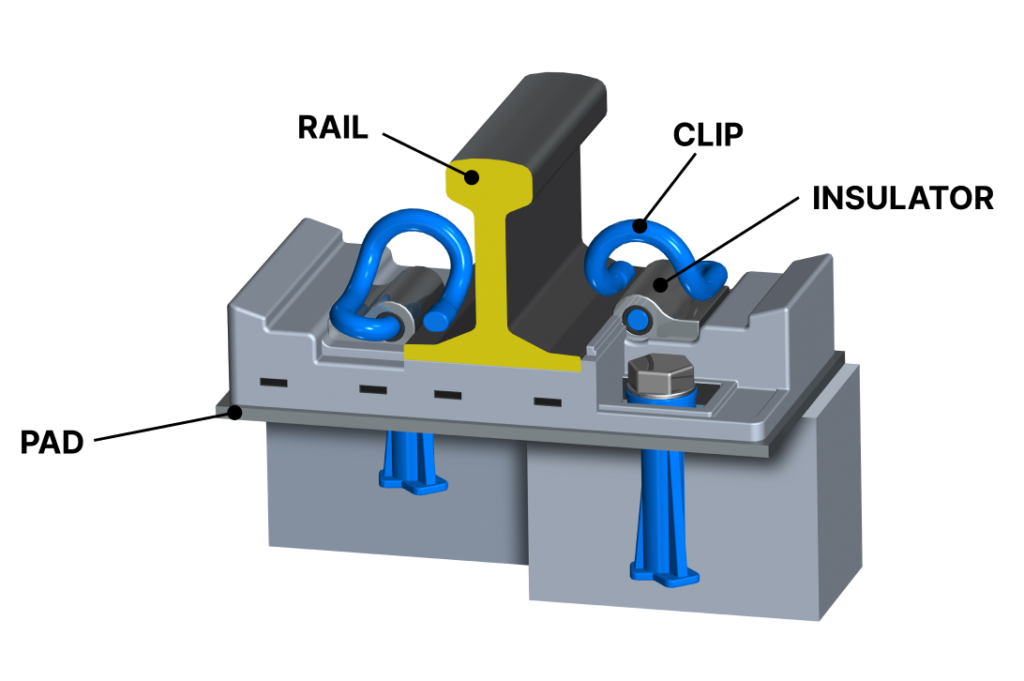
A rail clip is a critical fastening component used to secure steel rails to railway sleepers. It ensures a firm connection while allowing controlled flexibility to handle vibration, load, and temperature changes. A properly installed rail clip helps maintain track alignment and reduces stress on the railway structure.
In rail and industrial environments, safe operations also depend on systems like railcar loading solutions and railcar gangways to protect workers during loading and maintenance activities.
How a Rail Clip Works
It holds the rail firmly against the sleeper while allowing slight movement for expansion and contraction.
Working Function:
- Secures the rail to the sleeper
- Applies constant clamping force
- Absorbs vibration and shock loads
- Allows thermal expansion without damage
This flexibility helps maintain track integrity under continuous train movement.
Types of Rail Clips
Different rail clip designs are used based on track requirements.
- E-type – widely used elastic fastening system
- SKL – high-performance clips for heavy loads
- Fast clips – modern designs for quick installation
- Elastic – provide shock absorption and flexibility
Each type of rail clip is engineered for specific railway conditions and load capacities.
Role in Rail Fastening Systems
It is part of a complete rail fastening system that ensures track stability and safety.
System Components:
- Rail clips
- Rail chairs
- Tie plates
- Bolts and fasteners
- Anchors and screws
These components work together to keep rails aligned and secure under heavy loads and constant vibration.
In industrial rail facilities, additional systems like spill containment solutions and track pans help maintain safety and environmental compliance.
Applications
It is use in:
- Railway track systems
- Freight and passenger rail networks
- Industrial rail yards
- Mining and heavy transport rail systems
These environments often require safe access solutions such as loading platforms and gangways to support safe operations.
Benefits and Importance
Using a provides several advantages:
- Maintains track alignment and stability
- Absorbs vibration and reduces wear
- Allows thermal expansion and contraction
- Reduces maintenance costs
- Minimizes derailment risks
A well-designed rail improves the overall lifespan and safety of railway infrastructure.
Modern Rail Safety Integration
Rail infrastructure safety extends beyond tracks. Modern facilities integrate safety systems for loading and handling operations.
Solutions like fall protection systems and safety gates help protect workers in railcar loading zones and industrial environments.
It is a fastening device that secures rails to sleepers while allowing controlled flexibility.
It maintains track stability, absorbs shock, and reduces the risk of derailment.
Common types include E-type, SKL, fast, and elastic.
They are use in railway tracks, industrial rail systems, and transport networks.