


Rail ties, also known as sleepers, are critical components of railway tracks, ensuring stability, proper gauge, and safety for rail operations. They serve as horizontal supports positioned between rails, distributing the load from trains and maintaining track alignment. Modern railways use a combination of wood, steel, and concrete rail ties to meet performance, durability, and maintenance needs.
What Are Rail Ties and How They Work
It’s act as the foundation of railway tracks. Traditionally made from hardwoods such as oak, karri, or jarrah, they provide natural insulation and ease of installation for low-speed tracks. Today, steel and concrete rail ties are widely adopted in high-speed and heavy-load railway lines due to their superior strength, longevity, and resistance to environmental wear. They are integrated with fastening systems, including tie plates and clips, which secure the , distribute loads evenly, and prevent track deformation. Correctly installed rail ties ensure smooth operation and reduce risks of derailment.
Types of Rail Ties
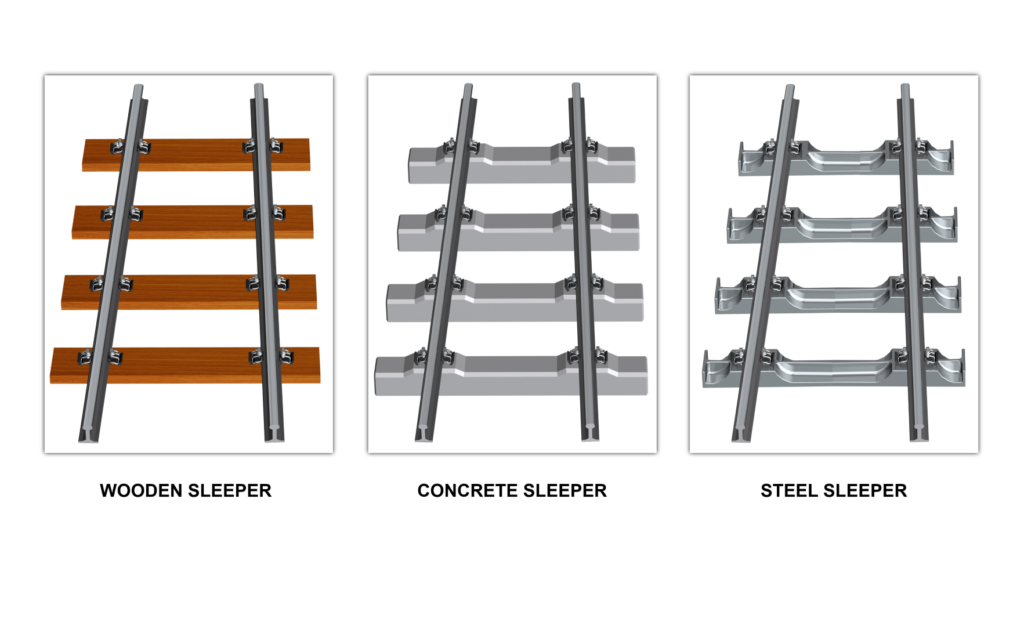
- Wooden Rail Ties: Traditional, cost-effective, easy to install, and ideal for light-traffic lines.
- Steel Rail Ties: High load-bearing capacity, durable, and suitable for heavy freight operations.
- Concrete Rail Ties: Long-lasting, low-maintenance, and resistant to weathering and decay.
Rail Fastening Systems & Modern Track Engineering
Rail fastening systems connect rails to sleepers through various mechanical components, creating stable track structures capable of supporting heavy rolling stock. The evolution from wooden rails in 1515 to modern concrete and steel infrastructure reflects centuries of engineering advancement. These systems must balance structural integrity with flexibility to accommodate dynamic forces and environmental conditions.
Steel sleepers handle heavy loads and adapt to various track specifications, while concrete offers the lowest cost, minimal maintenance, and longest service life. Tie plates positioned between sleepers and distribute loads and maintain gauge accuracy. SafeRack’s comprehensive safety solutions for railcar facilities include loading platforms, spill containment systems, and fall protection equipment that integrate with existing rail infrastructure.
Learn more: Core Components of a Rail Fastening System | Railroad Construction Facts
Benefits
- Maintain track stability and proper gauge spacing.
- Absorb vibrations, reducing wear on rails and rolling stock.
- Enhance safety for rail operations by preventing track misalignment.
- Provide long-term durability, especially steel and concrete options.
Applications
- Passenger and freight railways.
- High-speed train tracks.
- Industrial and mining rail lines.
- Integration with safety and railcar facility platforms.
Choice depends on load, speed, and maintenance. Concrete is best for heavy-duty and low-maintenance, while wood suits lighter traffic.
Wooden ties may last 20–30 years, while concrete and steel ties can last 50 years or more, depending on usage and environmental conditions.
Yes, properly installed rail ties ensure track stability, reducing derailment risks and enhancing operational safety.
Wooden ties are cost-effective and easy to handle, steel ties are durable and handle heavy loads, and concrete ties offer the longest life and minimal maintenance.