


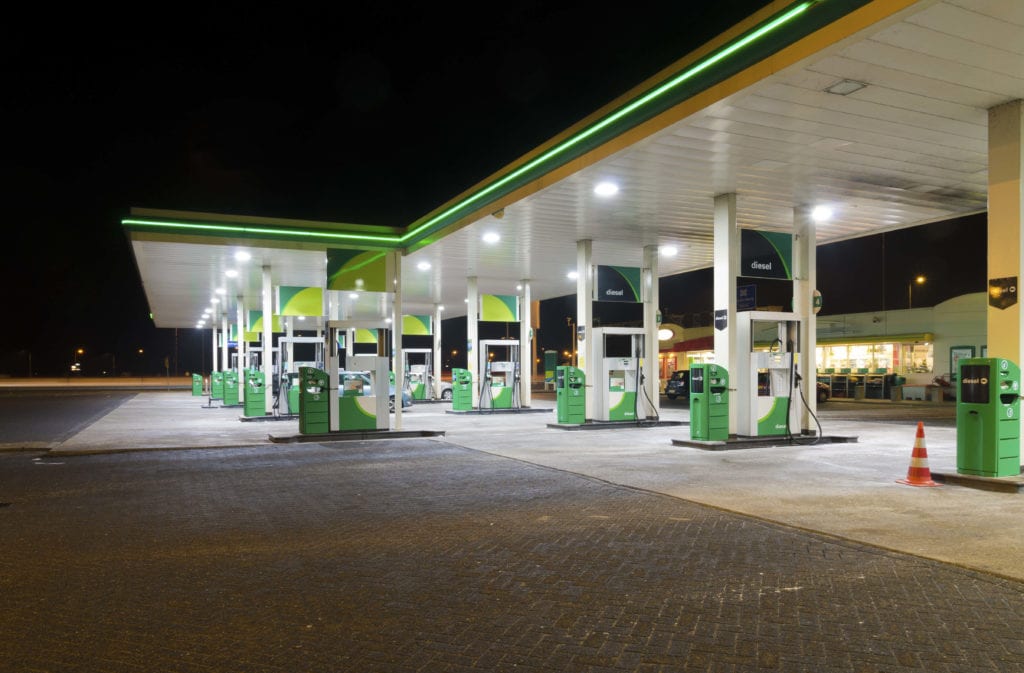
A Driveway at a gas station is the paved area designed for vehicle movement and access to fuel pumps. It allows cars to enter, position themselves safely, and refuel efficiently. A well-designed Driveway ensures smooth traffic flow, safety for customers, and proper access to fueling points.
How Driveway Works
It functions as the main circulation path within a fueling station. Vehicles use it to enter, navigate, and align with gas or diesel pumps.
- Providing direct access to fuel dispensing areas
- Guiding vehicle movement in a controlled flow
- Supporting safe entry and exit from the station
- Ensuring proper spacing between fueling lanes
Safety Features of Driveway
Safety is a major consideration in any design. One of the most important features is the installation of bollards.
- Protective bollards around pumps
- Marked driving lanes for better navigation
- Clear separation between walking and driving zones
- Impact protection for fueling equipment
Applications
- Gas and fuel stations
- Truck refueling depots
- Highway service stations
- Commercial fueling facilities
Benefits
- Efficient traffic flow: Reduces congestion during refueling
- Improved safety: Minimizes risk of vehicle collisions
- Better organization: Separates fueling lanes clearly
- Enhanced accessibility: Ensures easy access to pumps
Design Considerations
- Larger fuel stations require wider Driveway areas
- High-traffic locations need optimized circulation paths
- Proper spacing is essential for safe vehicle movement
- The layout must support multiple fueling points
A Driveway is the paved area where vehicles enter, move, and refuel at fuel pumps.
It ensures safe and organized vehicle movement within a fueling station.
Bollards, lane markings, and protective barriers are commonly used.
Yes, more fuel pumps require a larger and more organized Driveway.