


STAIRS-OSHA-Requirements
Categories:
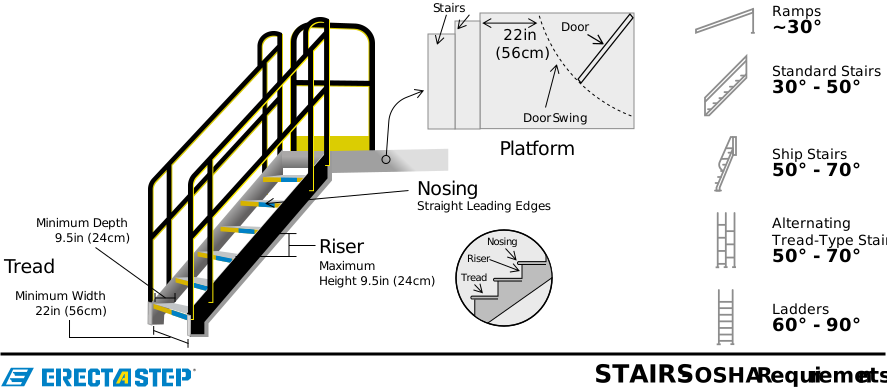
Stairs OSHA Requirements help ensure safe stair design, reduce fall risks, and improve workplace safety compliance across all industries.
Stairs OSHA Requirements define the safety standards set by the Occupational Safety and Health Administration for stair design, construction, and workplace use. These requirements ensure that stairs in industrial, commercial, and construction environments provide safe access between different elevation levels while reducing the risk of accidents. Stair-related incidents are common in workplaces, so following Stairs OSHA Requirements is essential for protecting workers and maintaining compliance with safety regulations. Proper stair design, installation, and maintenance help reduce fall hazards and improve workplace safety.
What Are Stairs OSHA Requirements?
Stairs OSHA Requirements are safety guidelines that regulate how workplace stairs must be built and used. These standards cover stair dimensions, materials, guardrails, handrails, and slip resistance to ensure safe movement in occupational environments. They are applied across industries where stairs are used for daily access between floors or elevated platforms.
Importance of Stairs OSHA Requirements
Workplace stairs must meet strict safety standards to prevent accidents and injuries.
Stairs OSHA Requirements are important because they:
- Ensure safe stair design and construction
- Reduce slip, trip, and fall hazards
- Improve worker safety during movement
- Support compliance with safety regulations
- Standardize stair safety across workplaces
- Improve accessibility between elevation levels
Without Stairs OSHA Requirements, stair-related workplace risks significantly increase.
Key features
- Uniform riser height and tread depth
- Slip-resistant stair surfaces
- Proper stair width for safe passage
- Strong handrails and guardrails
- Adequate lighting on stairways
- Structural load-bearing strength
- Secure installation and anchoring
These standards ensure stairs are safe for regular workplace use.
How Stairs OSHA Requirements improve safety
- Ensuring consistent stair dimensions
- Providing stable handrail support
- Reducing slipping hazards with proper materials
- Improving visibility with adequate lighting
- Strengthening stair structure and durability
- Supporting safe movement between levels
This helps reduce workplace accidents and injuries.
What are Stairs OSHA Requirements?
They are safety standards that regulate stair design, construction, and use in workplaces to ensure safe access and reduce accidents.
Why are Stairs OSHA Requirements important?
They are important because they help prevent slip, trip, and fall injuries in workplace environments.
Where do Stairs OSHA Requirements apply?
They apply in industrial, commercial, construction, and warehouse environments where stairs are used.
What do Stairs OSHA Requirements include?
They include rules for stair dimensions, handrails, slip resistance, lighting, and structural strength.