


Metal Canopy Operators Shelter
Categories: Shelters & Canopies SafeRack Facility
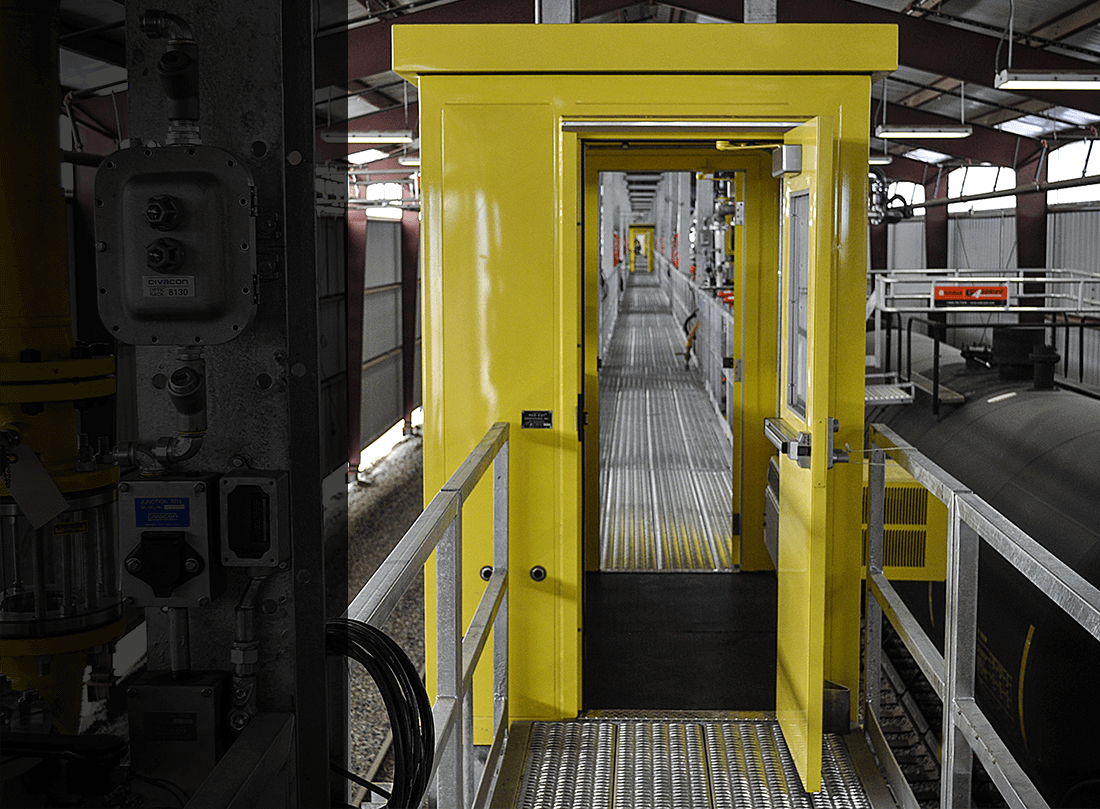
SafeRack installed a metal canopy operator shelter at this railyard onto the existing gangway, providing protection during harsh loading conditions.
Outdoor loading operations can expose workers to sun, rain, wind, snow, and airborne dust. At busy railyards and industrial loading facilities, operators need reliable protection while monitoring equipment, managing controls, and supporting loading activities. SafeRack installed a Metal Canopy Operators Shelter onto an existing gangway at a railyard, creating a protected workspace for operators during harsh loading conditions. The installation provides weather protection while allowing the existing access structure to remain part of the facility’s loading operation.
What Is a Metal Canopy Operators Shelter?
A Metal Canopy Operators Shelter is a protective structure designed to provide operators with a sheltered workspace at outdoor loading areas. It can help protect personnel, controls, paperwork, and sensitive equipment from changing weather conditions. For this railyard installation, the shelter was integrated with an existing gangway to provide protection directly where operators needed it. This approach allows facilities to improve working conditions without necessarily replacing the existing access infrastructure.
Importance of Metal Canopy Operators Shelter
Outdoor loading environments can expose workers and equipment to challenging conditions. A Metal Canopy Operators Shelter helps facilities by:
- Protecting operators from harsh weather
- Providing a dedicated sheltered workspace
- Supporting safer loading operations
- Helping protect controls and sensitive equipment
- Reducing exposure to sun, rain, wind, and dust
- Supporting year-round operations
- Improving operator comfort
- Helping maintain efficient loading workflows
- Adapting to demanding industrial environments
By creating a protected area near the loading operation, the shelter helps operators continue essential tasks with less exposure to outdoor conditions.
How Metal Canopy Operators Shelter Works
A Metal Canopy Operators Shelter is positioned where workers need protection during loading and monitoring activities. Depending on the facility layout, shelters can be installed directly on a platform, mounted to structural steel, or positioned near the loading area. For this railyard project, SafeRack installed the shelter onto an existing gangway. The canopy creates a covered workspace while maintaining convenient access to the loading area and existing equipment. The structure can also be configured with features such as doors, windows, roofing, siding, insulation, lighting, HVAC, and electrical provisions depending on the facility’s requirements.
Key Features
- Metal canopy construction
- Integration with existing gangways
- Weather-protected operator workspace
- Durable industrial structure
- Customizable dimensions
- Multiple canopy configurations
- Optional doors and windows
- Insulation options
- HVAC and lighting options
- Electrical and data provisions
- Impact-resistant glazing options
- Suitable for demanding outdoor environments
- Factory-fabricated construction
Applications
A Metal Canopy Operators Shelter can be used in:
- Railyards
- Outdoor loading racks
- Industrial terminals
- Bulk material facilities
- Chemical processing facilities
- Petroleum loading areas
- Manufacturing plants
- Transportation facilities
- Industrial control areas
These environments often require protected workspaces where operators can monitor processes and equipment while remaining close to loading and transfer operations.
Railyard Operator Shelter Installation
This railyard required additional protection for operators working around an existing gangway during harsh loading conditions. Rather than replacing the existing access structure, SafeRack installed a metal canopy shelter directly onto the gangway. The installation created a covered workspace that helps protect operators from outdoor weather while allowing them to remain close to the loading operation. The solution demonstrates how a customized shelter can be integrated with existing facility infrastructure to improve working conditions and operational efficiency.
Custom Shelter Configuration
Every industrial facility has different space, equipment, and operational requirements. A Metal Canopy Operators Shelter can be configured to match the available footprint, required height, canopy span, and surrounding equipment. Facilities can select different door, window, roofing, siding, and flooring configurations according to their operational needs. Additional options such as climate control, lighting, outlets, and wiring provisions can also support more demanding applications. This flexibility allows the shelter to protect without unnecessarily interfering with existing loading equipment or worker access routes.
Protection for Harsh Industrial Conditions
Outdoor loading areas can expose operators and equipment to changing weather throughout the year. A properly designed Metal Canopy Operators Shelter provides a more controlled workspace where personnel can monitor loading activities, operate controls, and complete routine tasks. For facilities operating in demanding environments, an all-steel structure can provide the durability needed for long-term use. Additional features can be incorporated to improve comfort, visibility, and protection according to the site’s specific requirements.
What is a Metal Canopy Operators Shelter used for?
It provides a protected workspace for operators working at outdoor loading areas, railyards, terminals, and other industrial facilities.
Why is a Metal Canopy Operators Shelter important?
It helps protect operators from sun, rain, wind, snow, and airborne dust while supporting safer and more productive loading operations.
Can the shelter be installed on an existing gangway?
Yes. The railyard project demonstrates that a shelter can be integrated with an existing gangway to provide protection where operators need it.
Can the shelter be customized?
Yes. Shelters can be configured with varying dimensions, canopy spans, doors, windows, roofing, siding, and additional equipment to meet site requirements
Where are these operator shelters commonly used?
They are commonly used at railyards, loading racks, industrial terminals, chemical facilities, petroleum operations, manufacturing plants, and other outdoor industrial loading areas.