


Importance of Accessing Emergency Shut Off Valves in Natural Gas Facilities
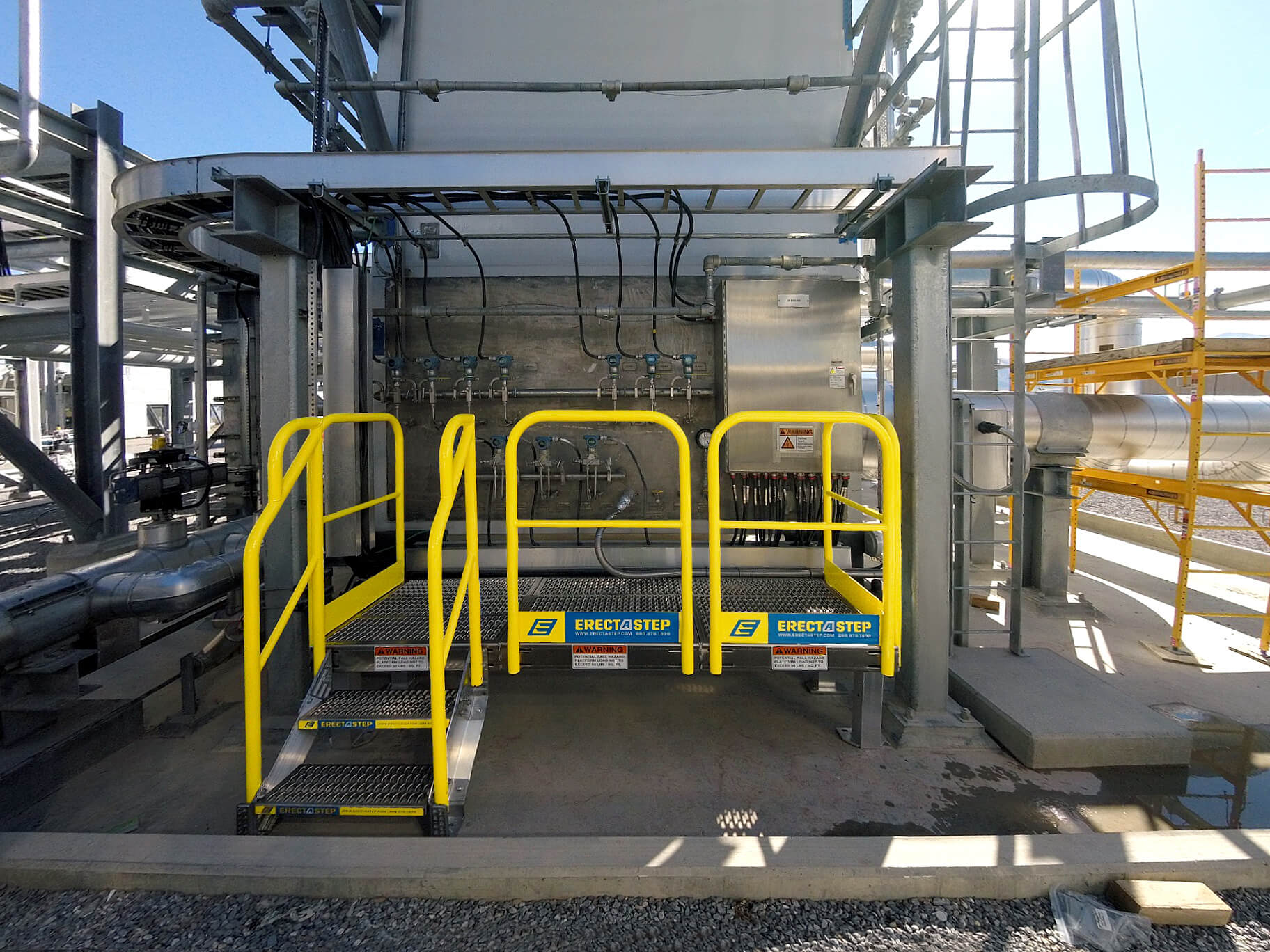
Shut-off valves are essential for natural gas installations because natural gas is a volatile substance that needs to be handled with extreme care. Shut-off valves help ensure the safe operation and shut down of natural gas systems during normal operations or emergencies, reducing the risk of accident and injuries.
Natural gas facilities rely on shut-off valves to control and stop gas flow during normal operations, maintenance activities, or emergencies. Because natural gas is highly volatile, workers need safe and reliable access to these valves when inspection, repair, or emergency shutdown procedures are required. In many facilities, valves are positioned at elevated or difficult-to-reach locations, creating an access challenge for maintenance personnel. Natural Gas Accessing Emergency Shut Off Valves requires a stable working surface that allows personnel to reach valve locations without relying on ladders, scaffolding, or improvised access methods. Properly designed work platforms can provide workers with a designated area for performing maintenance and repair tasks while incorporating features such as guardrails and handrails where appropriate.
What Is Natural Gas Accessing Emergency Shut Off Valves?
Natural Gas Accessing Emergency Shut Off Valves refers to providing workers with safe access to emergency shut-off valves installed throughout natural gas facilities. These valves are an important part of natural gas systems because they allow gas flow to be stopped when required during operations or emergency situations. Access can become more challenging when valves are installed above ground level or in locations that are difficult for workers to reach. Work platforms provide a stable surface from which personnel can access these valve locations for inspection, maintenance, and repair activities.
Why Access to Emergency Shut-Off Valves Is Important
Natural gas facilities can involve elevated work areas, heavy equipment, and other operating conditions that require careful attention to worker access and safety. Since shut-off valves may need to be reached during both routine work and emergency situations, having an appropriate access solution can help workers perform required tasks more efficiently. Natural Gas Accessing Emergency Shut Off Valves can be supported by dedicated work platforms that create a defined working area around difficult-to-reach valve locations. Rather than depending on temporary or improvised access methods, workers can use a purpose-designed platform to reach the equipment they need to service. Work platforms can also incorporate safety features such as guardrails and handrails. The appropriate configuration depends on the facility layout, valve location, and access requirements.
How Work Platforms Support Valve Access
Work platforms provide a stable area where workers can stand while performing tasks around shut-off valves. This can be particularly useful when valves are positioned at elevated locations or where surrounding equipment makes direct access difficult. For Natural Gas Accessing Emergency Shut Off Valves, the platform can be positioned to provide practical access to the required valve location. Depending on the facility layout, platforms may also be designed to move or be repositioned when access points are located throughout a larger or more complex facility. This type of access solution can support maintenance and repair work while giving workers a more defined working area than ladders or other temporary access methods.
Key Features of Work Platforms for Natural Gas Facilities
Work platforms used around natural gas equipment can be designed around the specific access conditions of the facility. Important considerations may include:
- Stable working surfaces for personnel accessing elevated valves
- Guardrails to help protect exposed platform edges
- Handrails that support controlled movement onto and around the platform
- Configurations suited to valves located in difficult-to-reach areas
- Designs that can accommodate the layout and surrounding equipment
- Options that can be moved or repositioned where facility conditions require flexible access
Natural Gas Accessing Emergency Shut Off Valves should take into account the location of the valves and the tasks workers need to perform. A properly configured platform can provide a dedicated access area for maintenance and repair activities.
Applications in Natural Gas Facilities
Natural gas is used extensively for energy generation, with facilities involved in extraction, transportation, processing, and power generation. Natural gas power plants can include simple-cycle, combined-cycle, and cogeneration facilities, each with different operating equipment and maintenance requirements. Within these environments, work platforms may be used where shut-off valves and other equipment are positioned above ground level or in areas that are otherwise difficult for workers to access. They can support personnel performing inspection, maintenance, and repair tasks around natural gas systems. Natural Gas Accessing Emergency Shut Off Valves is particularly relevant where facility layouts place critical valves in elevated or constrained locations. A dedicated platform can provide a more practical working area for personnel who need to reach these valves.
Installation Considerations
Installing an access platform for emergency shut-off valves begins with understanding the location of the valves and the surrounding facility conditions. The platform needs to provide practical access to the work area while accommodating the equipment and structures already present at the facility. Natural Gas Accessing Emergency Shut Off Valves may involve access points positioned at different elevations or in locations surrounded by other equipment. For this reason, the platform configuration should be based on the actual site requirements rather than relying on a one-size-fits-all arrangement. Where valves are distributed throughout a larger facility, movable or repositionable platform designs may also provide flexibility for accessing different locations. Guardrails, handrails, and other applicable safety features can be incorporated according to the platform design and site requirements.
Why are work platforms needed for emergency shut-off valves?
Emergency shut-off valves can be installed at elevated or difficult-to-reach locations. Work platforms provide a stable area for workers to access the valves during inspection, maintenance, repair, or shutdown activities.
Can work platforms be used around natural gas equipment?
Yes. Work platforms can provide access to equipment and valve locations within natural gas facilities where workers need a designated working surface.
What safety features can work platforms include?
Depending on the application and design, work platforms can include features such as guardrails and handrails to help provide safer access and movement around elevated work areas.
Are work platforms useful when valves are located in difficult areas?
Yes. Natural Gas Accessing Emergency Shut Off Valves can be challenging when valves are positioned at heights or surrounded by other equipment. A properly configured work platform can provide a more practical access area for workers.
Can work platforms be repositioned within a facility?
Some work platforms can be designed to be moved or repositioned as needed. This can be useful in larger or more complex facilities where valve locations are distributed across different areas.