


Grounding System Station
Categories: Grounding & Monitoring Bulk Chemical Energy – Petroleum, LPG, Solar Civacon Railcar Truck
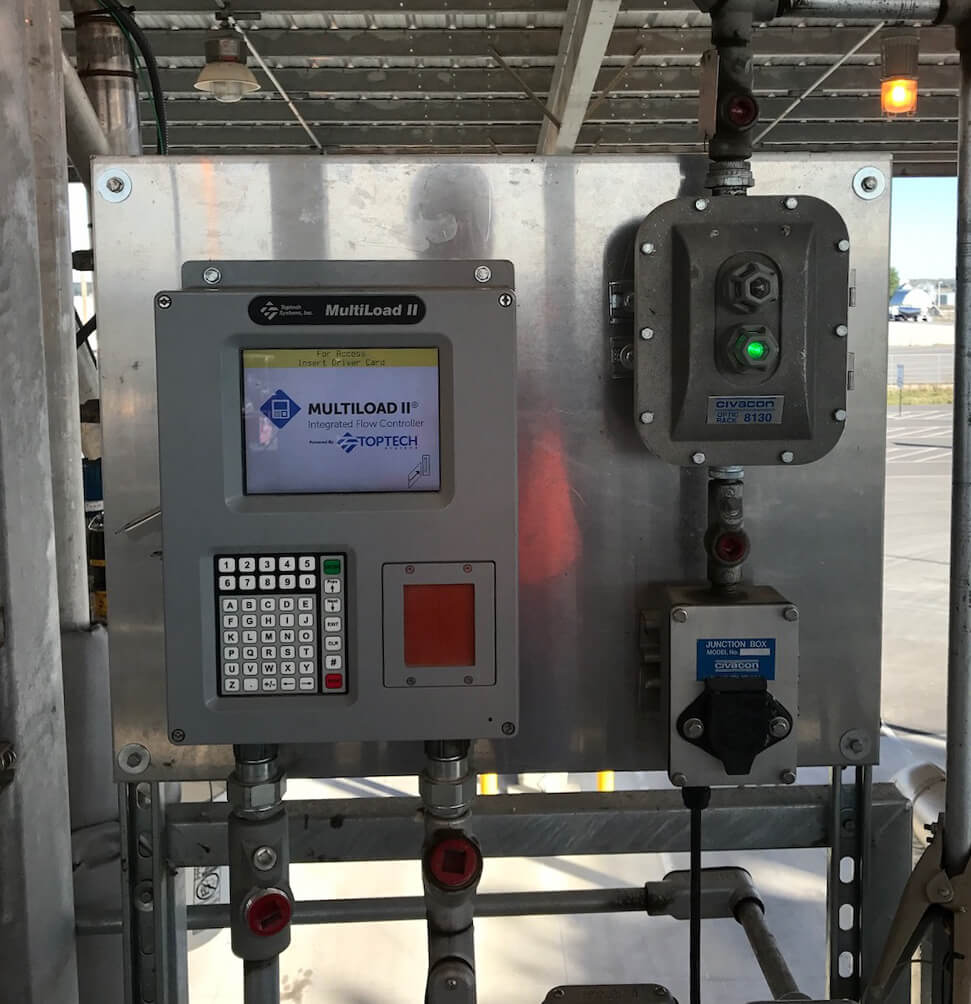
Ground Protection System
Hazardous material loading operations require reliable static electricity control, especially when transferring fuel, volatile chemicals, and other flammable products. A Grounding System Station provides a controlled way to connect railcars or trucks to ground and verify that a safe grounding path is available before product transfer begins. SafeRack integrates grounding and monitoring into loading rack systems to help operators manage static-related risks during transfer operations. By connecting grounding equipment with loading platforms, gangways, loading arms, pumps, valves, and rack controls, the system can provide clear status feedback and help prevent product movement when a safe ground has not been established.
What Is a Grounding System Station?
A Grounding System Station is a monitored grounding solution designed to establish and verify an electrical connection between a vehicle and earth during loading operations. The system uses a grounding clamp, monitoring equipment, and control connections to confirm that the grounding path meets the required conditions before transfer begins. SafeRack systems can verify a low-resistance grounding path, typically less than 10 ohms, and provide visual status through green and red LED indicators. The monitoring system can also provide permissive or non-permissive signals to connected rack controls.
Why Is a Grounding System Station Important?
Static electricity can develop during the movement and transfer of fuels and chemicals. Product flow, hose movement, splashing, and other loading activities can contribute to static charge. In hazardous environments, even a relatively small electrical discharge can become an ignition source when combustible vapors are present. A Grounding System Station helps address this risk by continuously verifying the grounding connection rather than relying only on a passive cable or ground lug. If the grounding path becomes unacceptable during transfer, the system can move into a non-permissive condition and can be integrated with controls that stop flow or alert operators.
How Does a Grounding System Station Work?
The process begins when an operator connects the grounding clamp to the railcar, tanker, or other equipment being loaded. The monitoring system evaluates the grounding connection and confirms whether an acceptable path to earth is present. Once the connection meets the required conditions, the Grounding System Station can provide a permissive signal to the loading rack. This signal can be interlocked with pumps, valves, or other transfer equipment so product movement can begin only after grounding has been verified. During loading, the system can continue monitoring the connection. If resistance rises or the grounding connection is interrupted, the system can change to a non-permissive state, helping prevent continued transfer under an unsafe grounding condition.
Key Features
- Monitored grounding for railcar and truck loading operations
- High-integrity grounding clamps with retractable, chemically resistant cable
- Ground verification with a typical resistance threshold of less than 10 ohms
- Green and red LED indicators for clear grounding status
- Permissive and non-permissive control signals for loading rack interlocks
- Explosion-proof or intrinsically safe controller options
- Junction boxes and stowage hardware for organized installation
- Equipment capable of recognizing legitimate road tanker or railcar connections
- Multi-point monitoring options for multiple equipment locations
- Integration with loading platforms, gangways, loading arms, pumps, valves, and other rack controls
Applications
SafeRack grounding and monitoring systems can support a range of hazardous material transfer applications. They can be integrated into railcar loading areas, truck loading racks, and other bulk transfer points where static electricity needs to be controlled. Depending on the installation, a Grounding System Station can also support drums, IBC stations, and multiple rail loading spots through independent monitoring channels. SafeRack solutions can be applied across oil and gas, petroleum, LPG and LNG, and other hazardous chemical handling environments.
Talk to SafeRack About Grounding Protection
Reliable grounding is an important part of controlling static-related risks during hazardous material transfer. SafeRack can integrate grounding monitoring with existing or planned loading infrastructure and help connect static control with the broader safety functions of the loading rack. SafeRack also offers on-site safety walk-throughs to help identify potential points of failure and evaluate existing static-control measures. Contact SafeRack to discuss a grounding solution designed around your loading operation, equipment, and control requirements.
What is the purpose of a Grounding System Station?
Its purpose is to establish and monitor a grounding connection between loading equipment and earth. The system verifies the grounding condition before and during hazardous product transfer and can connect with rack controls to prevent transfer when grounding is not acceptable.
How does the system verify grounding?
A grounding clamp connects to the vehicle, while the monitoring equipment checks the electrical path to earth. SafeRack systems can verify a low-resistance connection, typically less than 10 ohms, before providing a permissive signal.
Can grounding monitoring be integrated with loading rack controls?
Yes. The grounding monitoring system can provide permissive and non-permissive signals that can be integrated with pumps, valves, loading arms, and other rack controls.
Can one system monitor multiple loading locations?
Yes. Multi-point configurations can monitor several pieces of equipment or loading locations through independent channels, including multiple rail spots, drums, and IBC stations.
What standards can SafeRack grounding systems support?
SafeRack can deploy grounding systems that follow recognized static-control guidelines, including NFPA 77, IEC 60079-32, and API RP 2003, depending on the application and system configuration.