


Crossover Stairs Create Convenient Passages Blocked by Obstructions
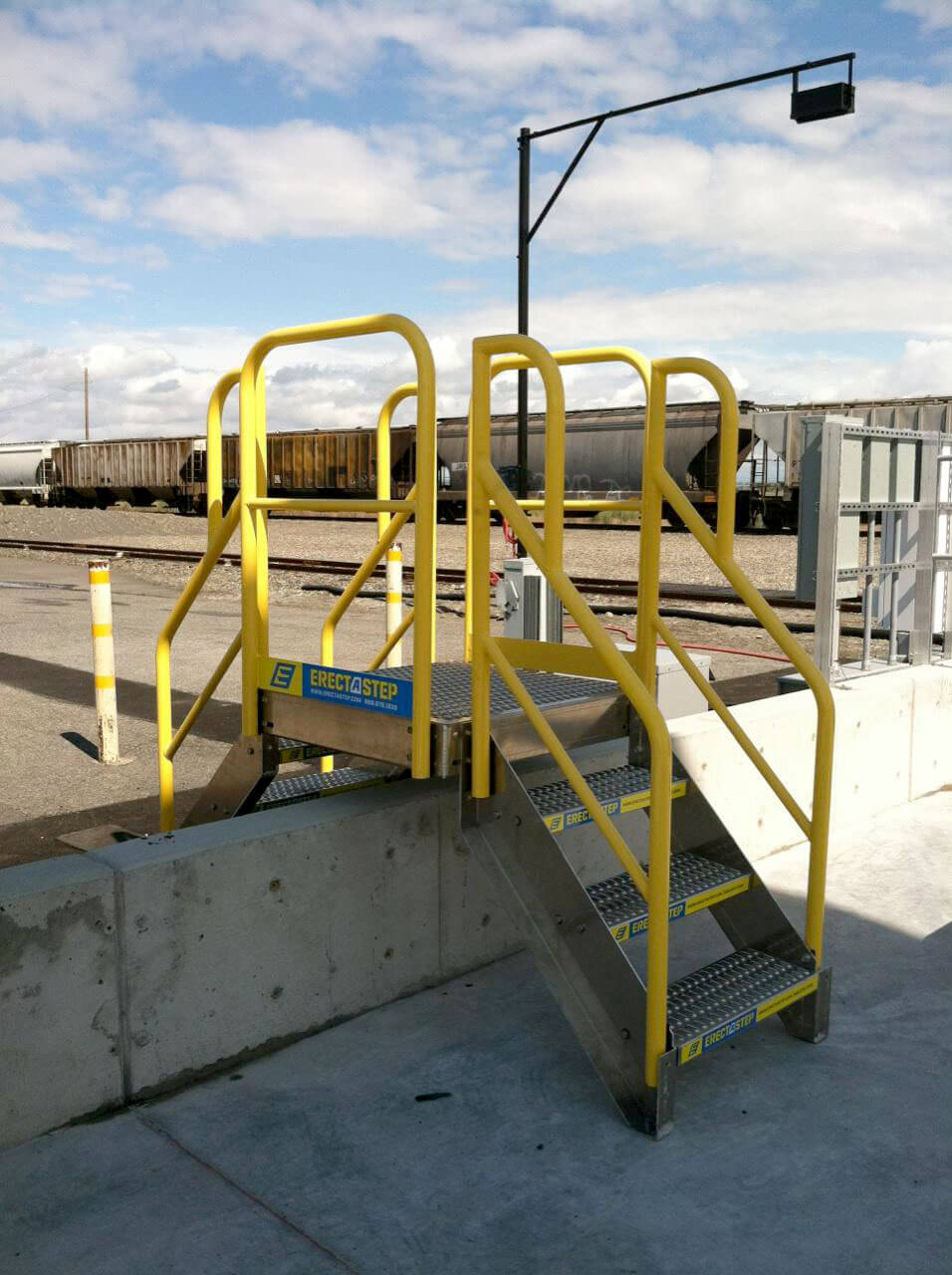
Taking proactive steps toward workplace safety requires selecting solutions that fit your facility’s unique needs while ensuring a safer environment for both employees and your business.
Crossover stairs are a critical industrial safety solution designed to provide safe, elevated passage over obstructions such as pipes, ducts, machinery, and other equipment commonly found in industrial and commercial environments. They help workers move safely across complex layouts where direct walking paths are blocked or unsafe, improving both access and operational flow.
In many workplaces, safety is often overlooked, even though slips, trips, and falls remain among the leading causes of workplace injuries and fatalities. According to the Occupational Safety and Health Administration (OSHA), crossover stairs address these risks by creating stable, controlled walking routes that reduce hazards, improve visibility of safe pathways, and help prevent accidents in busy industrial settings.
What Are Crossover Stairs?
Crossover stairs are elevated access structures designed to provide safe passage over industrial obstacles such as pipes, conveyor systems, HVAC ducts, machinery, and other equipment that block ground-level movement. They are commonly used in industrial and commercial facilities where direct walking paths are not available or safe, helping workers move efficiently across complex work environments.
Safe Access Over Industrial Obstacles
These systems help eliminate unsafe shortcuts, such as climbing over equipment or taking hazardous ground-level routes when pathways are blocked. By creating a clear and designated crossing point, crossover stairs improve movement flow, reduce confusion in busy work areas, and support better organization within the facility.
Key Features of Crossover Stairs
- Dual stair access on both sides for easy entry and exit
- Central elevated platform for stable crossing
- Heavy-duty handrails for improved grip and support
- Full guardrails for fall protection
- Non-slip walking surfaces for added safety
- Durable industrial-grade construction for long-term use
- OSHA-compliant design standards
Improving Workplace Safety and Compliance
Workplace safety depends on awareness, proper training, and the right equipment. Crossover stairs support these safety goals by reducing hazardous movement, improving access to equipment, and helping facilities maintain safer, more controlled working conditions in compliance with industrial safety standards.
Benefits of Crossover Stairs
Using Crossover Stairs improves workplace safety and operations by:
- Preventing falls and injuries
- Improving movement efficiency
- Reducing workplace hazards
- Supporting safer industrial workflows
- Enhancing accessibility in restricted areas
- Improving compliance with safety standards
They provide a reliable and long-term safety solution for industrial facilities.
Applications
Crossover Stairs are commonly used in:
- Manufacturing plants
- Industrial processing facilities
- Warehousesand logistics centers
- Pipeline and utility areas
- HVAC and ducting systems
- Equipment maintenance zones
In these environments, Crossover Stairs help ensure safe movement over obstacles.
What are Crossover Stairs used for?
Crossover Stairs are used to provide safe elevated access over industrial obstacles such as pipes, machinery, and ducts.
How do Crossover Stairs improve safety?
They improve safety by preventing workers from climbing over hazards and providing stable, guarded walking platforms.
Where are Crossover Stairs commonly used?
They are commonly used in industrial plants, warehouses, manufacturing facilities, and utility areas.
Why are Crossover Stairs important in workplaces?
They are important because they reduce slip, trip, and fall risks while improving safe movement in industrial environments.
What materials are used in Crossover Stairs?
They are commonly made from durable metals such as steel or aluminum for strength, safety, and long-term use.