


Conveyor Belt Crossover Installation
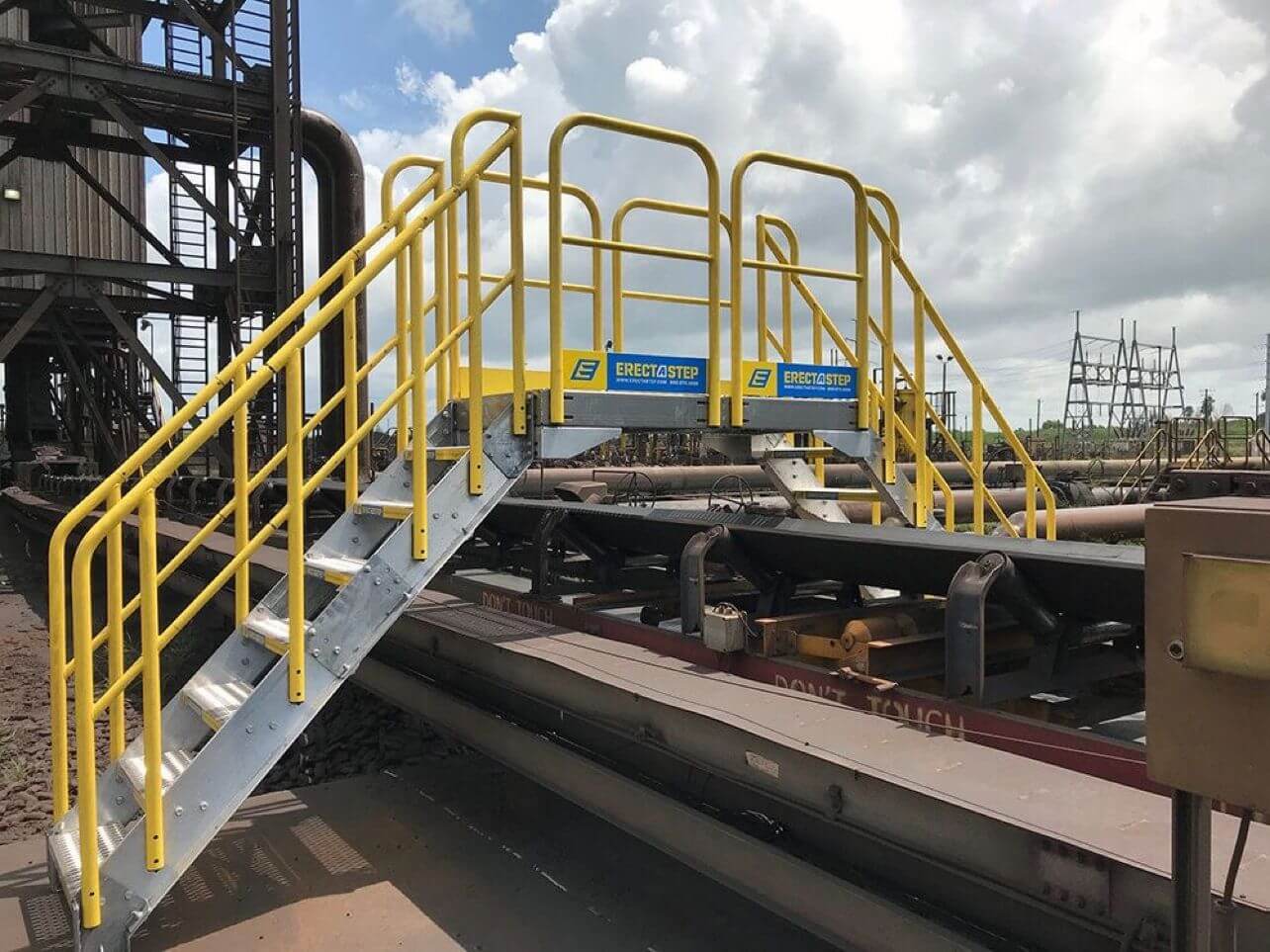
Whether located inside or outside, conveyor belts can hinder operational efficiency and create significant safety concerns. Depending on the configuration, workers may be required to walk long distances to get around a conveyor belt. Others may attempt to climb over the conveyor belt, resulting in serious or even fatal injuries.
Conveyor systems are essential in many industrial facilities, but they can also create serious safety and efficiency challenges when workers need to move across them. Without a safe crossing point, employees may take long detours or attempt unsafe shortcuts, increasing the risk of injury and slowing down operations. The Conveyor Belt Crossover Installation provides a safe, engineered solution that allows workers to cross conveyor systems securely. It improves site accessibility, reduces unsafe climbing, and supports efficient movement across industrial environments while maintaining OSHA-compliant safety standards.
What is Conveyor Belt Crossover Installation?
A Conveyor Belt Crossover Installation is a purpose-built access system designed to allow safe passage over conveyor belts in industrial facilities. It typically includes stairs, elevated platforms, handrails, and slip-resistant surfaces that create a controlled walkway above conveyor systems. This installation helps workers move between areas of a facility without interrupting conveyor operations or exposing themselves to unnecessary risks.
Importance of Conveyor Belt Crossover Installation
Providing safe access across conveyor systems is essential for maintaining workplace safety and operational efficiency.
The Conveyor Belt Crossover Installation is important because it:
- Reduces the risk of accidents from climbing over conveyors
- Improves safe movement across industrial sites
- Supports OSHA-compliant access practices
- Enhances workflow efficiency and reduces downtime
- Eliminates long walking detours around conveyor systems
- Improves overall site organization and safety
- Supports safer industrial operating environments
Without proper crossover systems, conveyor areas become high-risk zones for workplace injuries.
How Conveyor Belt Crossover Installation Works
The Conveyor Belt Crossover Installation creates a raised walkway over conveyor systems. Workers use stairs to access an elevated platform, cross safely over the conveyor, and descend on the other side. This controlled pathway ensures that workers never need to step onto or climb over conveyor equipment. The system is designed to maintain continuous operation of the conveyor while providing safe access across it.
Key Features
- OSHA-compliant safety design
- Heavy-duty industrial construction
- Slip-resistant stair treads and walking surfaces
- Integrated handrail protection
- Elevated crossover platform system
- Suitable for indoor and outdoor environments
- Designed for harsh industrial conditions
- Stable and secure access structure
Applications
The Conveyor Belt Crossover Installation is commonly used in:
- Manufacturing plants
- Bulk material handling facilities
- Warehouses and logistics centers
- Mining and processing operations
- Agricultural processing facilities
- Cement and aggregate plants
- Industrial conveyor systems
These environments require safe crossing solutions to maintain productivity and protect workers.
It is used to provide safe access over conveyor belts so workers can move between areas without interrupting operations or risking injury.
Why is Conveyor Belt Crossover Installation important?
It improves workplace safety, reduces accidents, and ensures efficient movement across conveyor systems in industrial facilities.
Can Conveyor Belt Crossover Installation be used outdoors?
Yes. It is designed to withstand harsh environmental conditions and can be installed in outdoor industrial settings.
Does Conveyor Belt Crossover Installation support OSHA compliance?
Yes. It is designed to meet OSHA-compliant safety requirements for elevated access and workplace movement.
Where is Conveyor Belt Crossover Installation commonly used?
It is commonly used in manufacturing plants, warehouses, bulk handling facilities, and industrial conveyor environments.