


Introduction
Rail Pad and Rail Insulator are essential components used in modern railway systems to improve track stability, reduce vibration, and protect infrastructure.
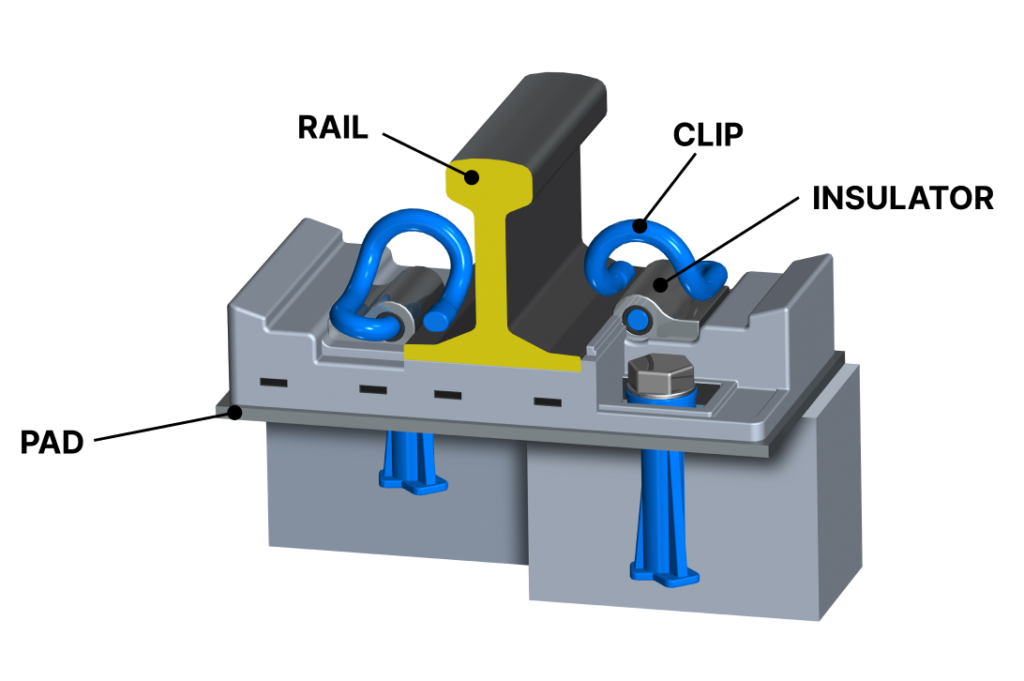
Rail pads are elastic polyurethane layers placed between the rail and sleeper, while rail insulators provide electrical isolation and help maintain proper rail positioning. As a result, both components play a key role in extending the lifespan of railway tracks.
What Are Rail Pads and Rail Insulators?
- Rail Pads
- Positioned between rails and sleepers
- Made from elastic materials like polyurethane
- Absorb vibration and reduce impact forces
- Rail Insulators
- Installed between rails and fastening components
- Provide electrical insulation
- Help maintain correct rail gauge
For example, in industrial rail environments, railcar loading systems are commonly used alongside track infrastructure for efficient operations.
How They Work
Rail Pad and Rail Insulator systems function together to manage stress, vibration, and electrical flow in railway tracks.
- Distribute load evenly across sleepers
- Reduce wear and tear on rail components
- Prevent metal-to-metal contact
- Isolate electrical currents for signaling systems
In addition, facilities handling rail operations often use spill containment systems to protect the environment during loading activities.
Benefits of Rail Pad and Rail Insulator
Using components offers several important advantages:
- Vibration reduction improves ride quality and track stability
- Extended lifespan of rails and sleepers
- Lower maintenance costs due to reduced wear
- Improved safety through better load distribution
- Electrical insulation for signaling reliability
Moreover, gangway systems are used to ensure safe worker access during railcar operations.
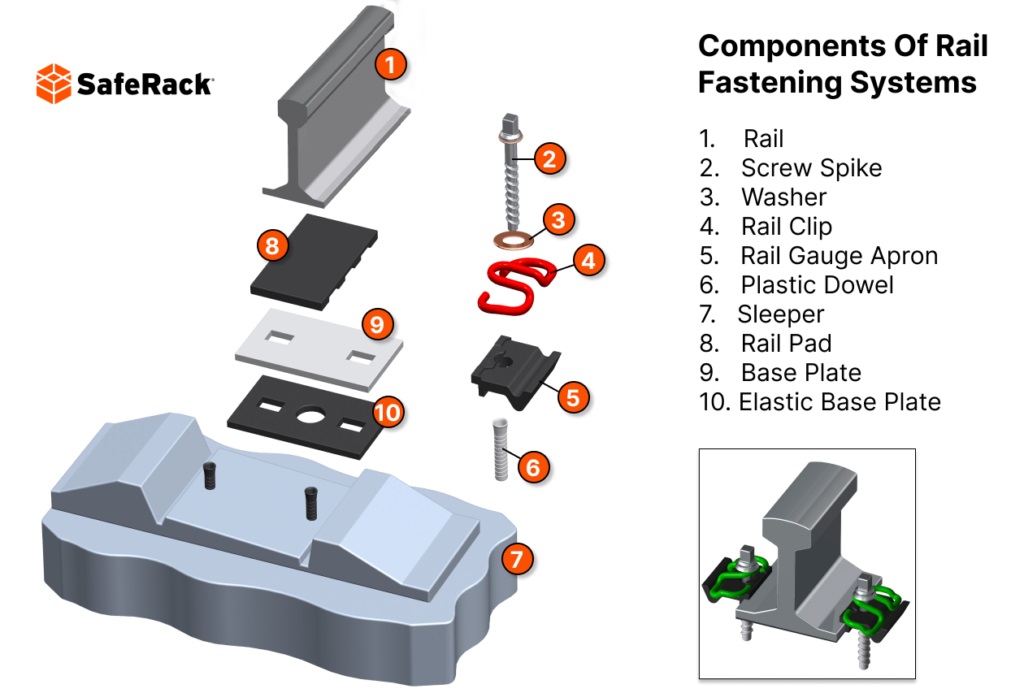
Overview of Rail Fastening Systems
Modern railway systems rely on multiple components working together. A rail fastening system secures rails to sleepers and maintains track geometry under heavy loads.
Typical components include:
- Rail anchors
- Tie plates
- Chairs
- Bolts and fasteners
- Rail pads and insulators
These systems have evolved significantly, improving both safety and durability in railway infrastructure.
Additionally, loading arms and couplings are used in railcar fluid transfer systems to ensure safe operations.
Applications
Components are use in:
- Railway tracks and transit systems
- Industrial rail yards
- Bulk material transport systems
- Oil and gas rail terminals
In these environments, terminal equipment solutions help improve operational efficiency.
Furthermore, grounding and monitoring systems are use to control static electricity during transfer operations.
Why They Are Important
Without proper Rail Pad and Rail Insulator systems:
- Tracks would experience excessive vibration
- Components would wear out faster
- Electrical systems could malfunction
- Maintenance costs would increase
Therefore, these components are essential for maintaining safe and reliable railway operations.
It reduces vibration and distributes loads between the rail and sleeper.
It provides electrical insulation and maintains proper rail positioning.
They improve safety, reduce maintenance, and extend track lifespan.
They are use in railway tracks, industrial rail systems, and transport networks.