


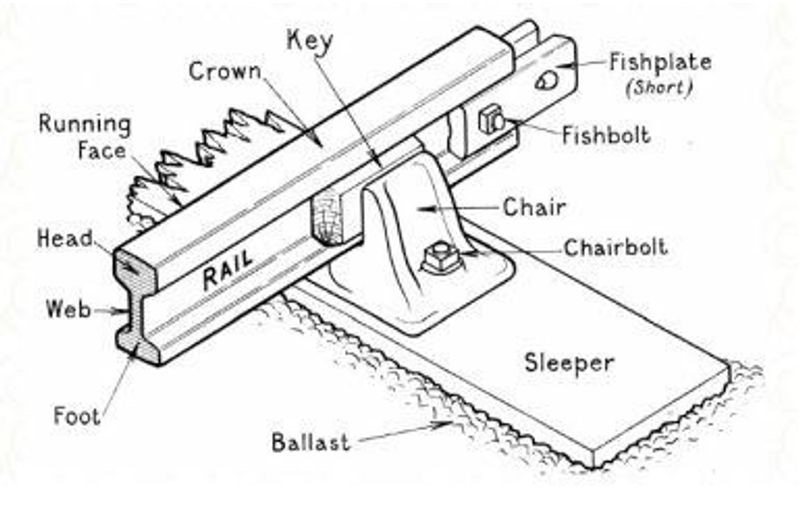
A rail chair is a key component of rail fastening systems used to support and secure railway tracks. It consists of two jaws and a rail seat that hold the rail firmly in place on sleepers. The main function of a It is to distribute the load from the rail evenly to the sleepers, ensuring track stability and uniform weight distribution.
In railway and industrial environments, safe operations often extend beyond tracks to loading and maintenance areas. Systems such as gangways and railcar gangways help ensure safe worker access during rail operations.
How a Rail Chair Works
It is installed between the rail and the sleeper and secured using screws and a steel locking key.
Working Process:
- Rail is placed into the rail seat of the chair
- Chair is fixed to the sleeper using screws or fasteners
- Steel key locks the rail in position
- Load from passing trains is transferred evenly to sleepers
This system ensures that the rail remains stable under heavy vibration and load conditions.
Role in Rail Fastening Systems
It is part of a larger rail fastening system that keeps railway tracks stable and aligned.
Main Components of Rail Fastening Systems:
- Rail chairs
- Tie plates
- Spikes and screws
- Rail anchors
- Bolts and fasteners
Together, these components ensure safe and reliable railway operations under continuous load and vibration.
For detailed engineering context, systems like loading platforms and pipe racks are also used in rail-adjacent industrial facilities.
Types of Rail Chairs
Different designs are use depending on rail and sleeper requirements.
- Fixed rail chairs – permanently secured for standard tracks
- Adjustable rail chairs – allow alignment corrections
- Heavy-duty rail chairs – used for high-load railway lines
- Specialized rail chairs – designed for unique track systems
Each type ensures proper alignment and load distribution.
Applications
It is use in:
- Railway track construction
- Freight and passenger rail systems
- Industrial rail yards
- Mining and heavy transport rail networks
Rail safety also extends to loading areas where spill containment systems and loading arms and couplings are use to support safe material transfer operations.
Importance of Rail Chair in Rail Safety
The plays a critical role in maintaining railway safety and performance.
Key Benefits:
- Ensures uniform load distribution
- Maintains track alignment and stability
- Reduces wear on sleepers and rails
- Prevents derailment risks
- Improves long-term track durability
Proper rail fastening systems help maintain safe rail operations even under extreme loads and environmental conditions.
Modern Rail Safety Integration
Modern rail infrastructure is not limit to tracks alone. Safety systems are integrate across loading and maintenance areas.
Facilities often use fall protection systems and safety gates to protect workers during railcar loading and unloading operations.
It is a rail fastening component that supports and secures rails on sleepers.
It distributes rail load evenly to sleepers and maintains track stability.
It is use in railway tracks, freight systems, and industrial rail infrastructure.
Yes, it is a key structural component of rail fastening systems.