


In fall protection, lower levels are those areas or surfaces to which an employee can fall. Such areas or surfaces include, but are not limited to, ground levels, floors, platforms, ramps, runways, excavations, pits, tanks, material, water, equipment, structures, or portions thereof. Understanding what constitutes a lower level is essential for proper fall protection planning.
OSHA Definition of Lower Levels
OSHA provides a clear definition of lower levels. Here is what the regulation says:
- Ground levels
- Floors of any kind
- Platforms and walkways
- Ramps and runways
- Excavations and pits
- Tanks and vessels
- Material (piles of product, supplies, etc.)
- Water (rivers, ponds, tanks, oceans)
- Equipment (machinery, vehicles, etc.)
- Structures of any kind
Lower levels are not just the ground. Any surface below the worker counts. If you fall from a platform onto a pile of boxes, those boxes are a lower level. If you fall into a tank, the tank bottom is a lower level. For downstream petroleum operations, identifying lower levels is part of every hazard assessment.
Examples of Lower Levels
Here are specific examples of lower levels in industrial settings:
In a refinery or chemical plant
- Ground level below a loading rack
- Equipment such as pumps and vessels
- Piping and pipe racks
- Tanks (inside or on top of)
- Excavations for maintenance
On a loading dock
- The dock floor below a raised platform
- A truck bed next to the dock
- The ground outside the dock door
- A pit where a dock leveler sits
In a warehouse
- The warehouse floor below a mezzanine
- Conveyor equipment
- Pallets of stacked product
- Forklift or other vehicles
For fractionation and refining, lower levels include tank tops, vessel manways, and equipment platforms.
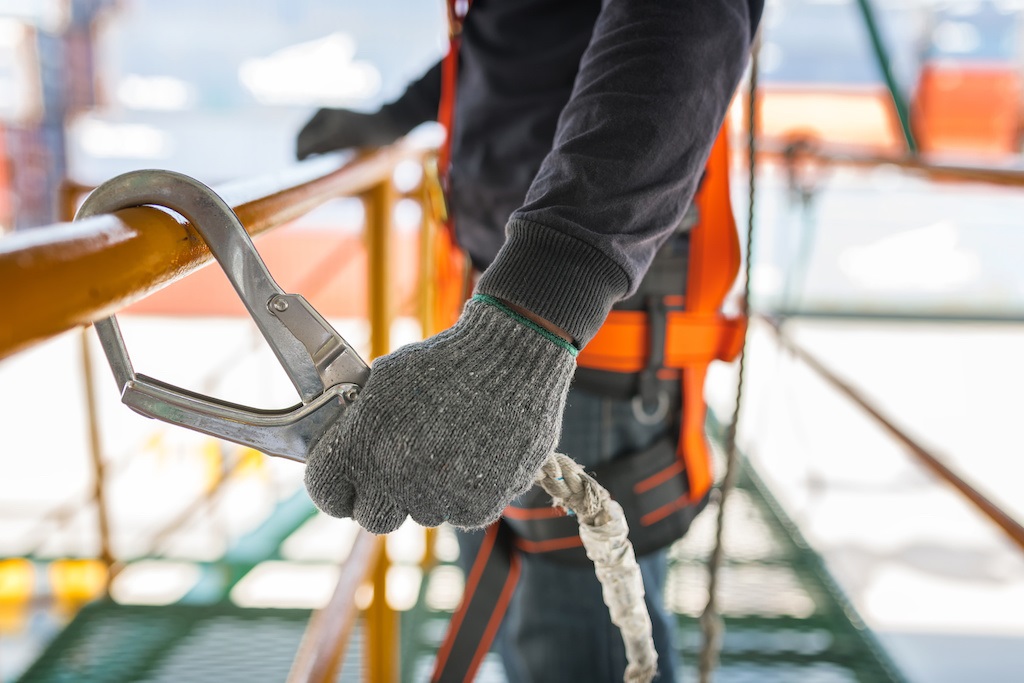
Why Every Fall to a Lower Level Matters
Fall protection for any height fall is critical. Here is why lower levels matter even for short falls:
- Falls from 4 feet can cause serious injury
- Falls from 6 feet can be fatal
- The surface type affects injury severity
- Water falls carry drowning risk
- Falls onto equipment cause impalement
- Falls into tanks or pits cause confined space hazards
OSHA requires fall protection at 4 feet in general industry. The lower level does not have to be far away to be dangerous. For liquefied natural gas facilities, lower level hazards are identified during safety walks and job hazard analyses.
Lower Levels at Loading Racks
Loading racks present unique lower level hazards. Here is what to watch for:
Ground level below the rack
- The most common lower level
- Concrete, asphalt, or gravel surfaces
Tanker truck tops
- When loading from a platform, the truck top is a lower level
- Distance from platform to truck top may be only a few feet
Railcar tops
- Similar to trucks, railcar tops are lower levels
- May have walkways or be open
Equipment below
- Pumps, piping, and valves below the platform
- Worker could fall onto or into equipment
For dry bulk loading systems, lower level protection requires guardrails or personal fall arrest systems. Pneumatic trailer systems also require fall protection for workers exposed to lower level hazards.
Lower Levels in Marine Environments
Marine operations have unique lower level considerations. Here is what makes them different:
Water as a lower level
- Falling into water adds drowning risk
- Cold water causes hypothermia
- Currents can carry workers away
- Rescue is more difficult
Barge and ship decks
- Decks below gangways are lower levels
- May be wet, slippery, or cluttered
Docks and piers
- Water surface below the dock edge
- Piles and pilings below
For cruise ship and ferry operations, lower level protection includes handrails and non-slip surfaces on gangways. Barge loading facilities require fall protection for workers exposed to water lower levels.
Guardrails for Lower Level Protection
Guardrails are the primary protection against falls to lower levels. Here are the requirements:
- Top rail at 42 inches plus or minus 3 inches
- Mid rail halfway between top rail and walking surface
- Toe board at 4 inches to prevent kicked objects from falling
- Guardrail must withstand 200 pounds of force
Guardrails protect workers passively. No training or equipment is needed beyond installation.
For hopper car loading, guardrails on platforms prevent falls to lower levels below the railcar. Silo valve access platforms require guardrails to protect workers from falls to lower levels.
Personal Fall Arrest for Lower Levels
When guardrails are not possible, personal fall arrest systems protect workers from lower level falls. Here is what is needed:
- Full body harness to distribute fall forces
- Anchorage point capable of 5,000 pounds
- Lanyard or self-retracting lifeline
- Adequate clearance below to avoid hitting the lower level
Personal fall arrest systems must be designed so the worker does not hit the lower level during a fall. For black liquor handling, workers accessing elevated equipment need fall protection from lower level hazards. White liquor processing facilities also require fall protection for workers exposed to lower levels.
Lower Levels and OSHA Compliance
OSHA requires fall protection for falls to lower levels at certain heights. Here are the triggers:
| Industry | Height Trigger | Standard |
|---|---|---|
| General industry | 4 feet | 1910.28 |
| Construction | 6 feet | 1926.501 |
| Longshoring | 8 feet | 1918 |
| Marine terminals | 4 feet | 1917 |
Fall protection for any height fall is critical for any company. Even if the height is below OSHA’s trigger, good safety practice still requires protection. For green liquor processing, workers must be protected from falls to lower levels during maintenance and inspection. Tall oil and fatty acid facilities have elevated equipment that requires fall protection to lower levels.
Training for Lower Level Hazards
Workers must understand lower level hazards. Here are key training points:
- Identify all lower levels in the work area
- Recognize that short falls cause injuries
- Use guardrails where provided
- Wear fall protection equipment correctly
- Never remove or modify guardrails
- Report damaged fall protection equipment
For upstream oil production, workers are trained to identify lower level hazards at well sites and production facilities. Pipeline operations also require training on lower level hazards at pump stations and valve sites.
Lower Levels in Construction and Excavation
Construction sites have unique lower level hazards. Here is what to watch for:
Excavations and trenches
- The bottom of an excavation is a lower level
- Falls into trenches cause serious injuries
- Guarding or covers may be required
Unprotected edges
- Roof edges and floor openings
- Stairwell openings during construction
- Leading edges on structural steel
Formwork and rebar
- Falling onto rebar causes impalement
- Formwork creates multiple lower levels
For cement and frac sand mines, lower level hazards include excavation edges and equipment platforms. Commercial aviation GSE maintenance platforms require fall protection to prevent falls to lower levels.