


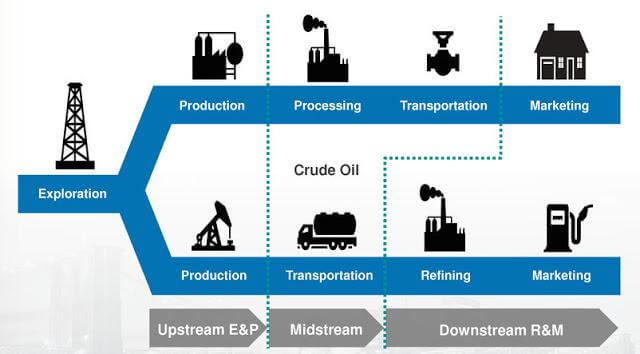
Downstream refers to the segment of the oil and gas industry that deals with everything that happen after hydrocarbons are extracted from a well. This stage focuses on refining, processing, purifying, and distributing oil and gas products to end-users. Downstream ensures that crude oil and natural gas are transformed into usable fuels and petrochemical products efficiently and safely.
How Downstream Works
The downstream process involves multiple steps to convert raw hydrocarbons into finished products:
- Refining: Crude oil is processing in refineries to produce fuels such as gasoline, diesel, and jet fuel.
- Purification: Unwanted substances are remove from hydrocarbons to meet quality and safety standards.
- Blending: For instance, products may have additives, such as aromatics, mixed into them to enhance performance or to meet regulatory requirements.
- Distribution: Refined products are transported through pipelines, trucks, and storage facilities to reach service stations, industrial users, and other end-points.
By managing these processes, downstream operations ensure safe, reliable, and high-quality delivery of oil and gas products.
Applications
Downstream operation are critical across the energy and industrial sectors:
- Fuel Supply: Providing gasoline, diesel, and jet fuel for transportation.
- Petrochemical Production: Supplying feedstock for plastics, lubricants, and other chemical products.
- Pipeline Distribution: Transporting refined products to storage facilities, retail outlets, and industrial clients.
- Energy Regulation: Ensuring compliance with safety and environmental standards in all refining and distribution operations.
Benefits
- Converts crude oil and gas into usable products for consumers and industries.
- Ensures high-quality fuels and petrochemicals meet regulatory standards.
- Supports efficient transportation and delivery of energy products.
- Reduces environmental and safety risks by following strict industry protocols.
Downstream operations are essential for turning natural resources into the products that power modern society, from fuels for vehicles to materials for industrial and household use.
Downstream refers to all activities that occur after extraction, including refining, processing, and distribution of oil and gas products.
Gasoline, diesel, jet fuel, lubricants, petrochemicals, and other refined products.
At refineries, chemical plants, storage facilities, and through transportation pipelines to end-users.
Downstream ensures that hydrocarbons are convert into safe, usable products and delivered efficiently to industries and consumers.