


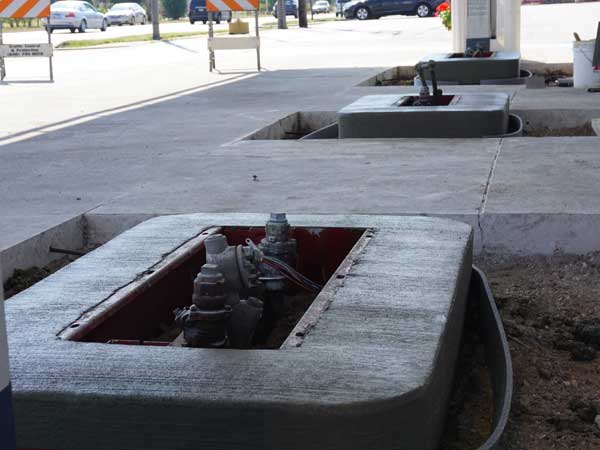
Dispenser platforms are installed between the dock surface and a fuel dispenser to elevate the dispenser cabinet above the surrounding area. This elevation improves access, organization, and overall safety at fueling locations.
These platforms are commonly referred to as gas islands and are used in both commercial and industrial fueling environments.
Purpose of Dispenser Platforms
Raising the dispenser cabinet creates a functional space beneath the unit. This space is used to route and protect fuel piping, electrical connections, and related components required for dispenser operation. Proper elevation also helps separate sensitive equipment from surface-level hazards such as water, debris, and incidental contact.
Where Dispenser Platforms Are Used
These are typically found in:
- Fueling stations
- Industrial loading docks
- Fleet fueling areas
- Maintenance and service yards
They are often part of a broader fueling infrastructure that includes docks, access platforms, and safety equipment.
Why Proper Installation Matters
Correct installation ensures that fuel lines and power connections remain accessible while minimizing exposure to damage. A well-designed platform also supports safer maintenance activities and contributes to an organized fueling layout.
Its primary function is to raise the fuel dispenser above the dock surface and provide space underneath for piping and power connections.
Yes. Gas islands is another common term used to describe dispenser platforms.
The space allows for safe routing of fuel pipes and electrical connections while keeping them protected from surface-level interference.
Yes, they are commonly installed as part of new builds or retrofitted into existing fueling areas.
Elevating the dispenser helps reduce accidental contact with equipment and supports safer access during maintenance and operation.