

Closed loading with vapor recovery keeps gases from exiting into the atmosphere and is also a safety precaution for workers and operators bulk transferring hazardous chemicals into containers such as tanker trucks and railcars. Using loading arms with a vapor recovery attachment contains fumes and gases from escaping, especially with the turbulence created when transferring bulk liquids and chemicals.
How Closed Loading Works
They creates a sealed system between the storage tank and the receiving container. Here is how it works:
- A loading arm connects to the tanker truck or railcar
- A second line connects for vapor return
- Liquid flows into the container
- Vapors pushed out by the liquid flow back through the vapor line
- The vapor returns to the storage tank or goes to a vapor recovery unit
- No vapors escape to the atmosphere
Why Vapor Recovery Is Important
They with vapor recovery serves several critical purposes. Here is why it matters:
- Prevents flammable vapors from reaching ignition sources
- Protects workers from breathing toxic fumes
- Reduces air pollution and ground-level ozone
- Recovers product that would otherwise be lost
- Meets environmental regulations
- Prevents fines and violations
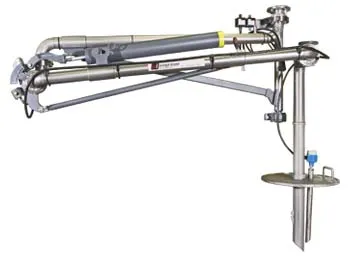
Vapor Recovery Loading Arms
A specialized loading arm is the key to closed loading. Here is what you need to know:
Product line
- Carries the liquid from storage to the truck or railcar
- Typically the larger diameter line
- Made of compatible materials for the chemical
Vapor return line
- Carries displaced vapors back to storage
- Smaller diameter than product line
- Must be vapor-tight
Top Loading vs Bottom Loading
It can be done from the top or bottom of the tanker. Here is how they compare:
Top closed loading
- Access through hatches on top of the tanker
- Requires fall protection for workers at height
- Top loading arms reach down into the tank
- Vapor recovery is integrated into the same arm
Bottom closed loading
- Connects at ground level through API couplers
- No need to climb on top of the truck
- Bottom loading arms connect at grade
- Vapor recovery is a separate connection
Both methods achieve closed loading goals. The choice depends on the product and facility layout. For oil and gas facilities, bottom closed loading is common for gasoline and diesel.
Preventing Pressure Hazards
They requires careful pressure management. Here are the risks:
Over-pressurization
- Too much vapor returned too quickly
- Can burst tanks or rupture hoses
- Often caused by blocked vents or stuck valves
Under-pressurization (vacuum)
- Vapor returns faster than liquid flows
- Can collapse tank walls or implode containers
- Often caused by closed vents or frozen valves
Environmental Regulations
They helps facilities comply with environmental laws. Here are the key regulations:
- EPA requires vapor recovery for certain chemicals
- OSHA mandates worker exposure limits
- TCEQ (Texas) has strict air quality rules
- Local air districts may have additional requirements
- Failure to comply results in fines
Benefits of Closed Loading
They offers several important benefits. Here are the key advantages:
- Zero emissions during normal operation
- Protects workers from chemical exposure
- Prevents fires and explosions from vapors
- Recovers valuable product that would otherwise be lost
- Meets EPA, OSHA, and TCEQ requirements
- Improves community relations
- Reduces odor complaints
Equipment for Closed Loading
A complete system requires several components. Here is what is needed:
- Vapor recovery loading arms with dual lines
- Swivel joints for arm movement
- Breakaway couplings for emergency disconnects
- Overfill protection to prevent spills
- Grounding and earthing for static control
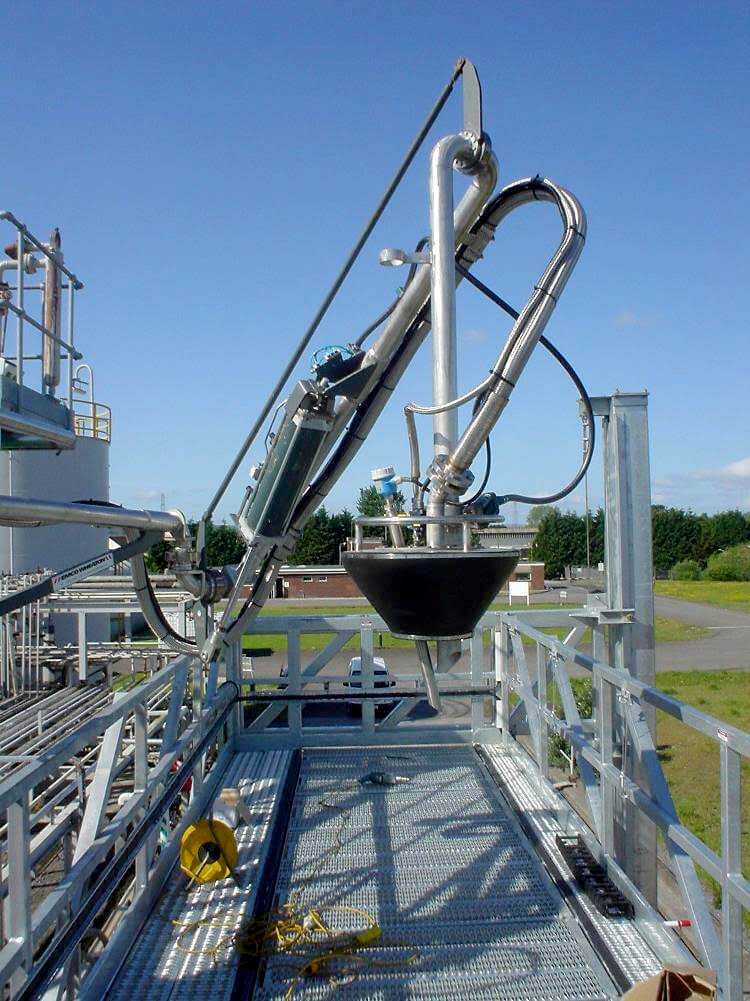
For worker safety, loading platforms provide access for top closed loading. Safety gates protect workers at platform edges.
Worker Safety During Closed Loading
They protects workers, but safe procedures are still required. Here are key safety measures:
- Use fall protection systems for top loading
- Wear body harnesses when working at height
- Keep drench showers and eyewash stations nearby
- Ensure spill containment is in place
- Use railcar track pans for rail loading
It is a bulk transfer method that captures vapors using a vapor recovery system instead of releasing them to the atmosphere.
They prevents toxic and flammable vapors from exposing workers or creating explosion risks during bulk transfers.
Its uses dual-line loading arms with separate passages for product flow and vapor return to the storage tank.
Improper venting can cause over-pressurization (explosion) or under-pressurization (implosion) of tanks during closed loading.