


Biosolids are the nutrient-rich organic solids produced when domestic sewage is treated at a wastewater treatment plant (WWTP). During the treatment process, liquids are separated from solids, and those solids undergo additional physical, chemical, and biological treatment—such as anaerobic digestion, composting, or heat drying—to produce a stabilized, semi-solid material suitable for beneficial reuse.
The terms “biosolids” and “sewage sludge” are often used interchangeably by the public, but the EPA typically reserves “biosolids” for sewage sludge that has been treated to meet the standards in 40 CFR Part 503 and is intended for land application as a soil conditioner or fertilizer.
How Biosolids Are Produced
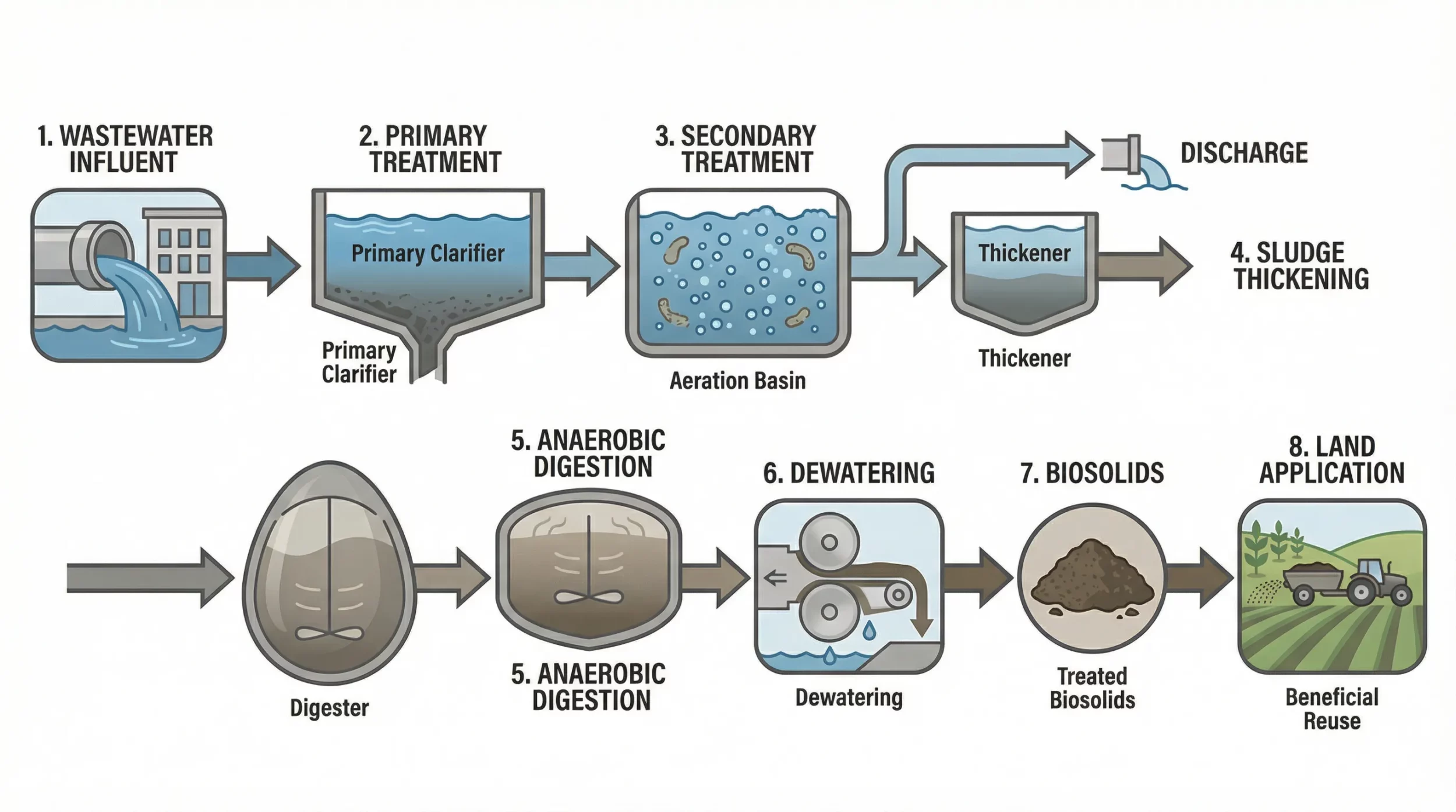
Biosolids are a byproduct of the standard wastewater treatment sequence:
- Preliminary treatment removes large debris and grit.
- Primary treatment settles suspended solids out of the wastewater as sludge.
- Secondary treatment uses biological processes to break down dissolved organic matter, generating additional solids.
- Sludge treatment thickens, digests, and stabilizes the collected solids into biosolids ready for reuse or disposal.
The microorganisms used in secondary treatment eventually become part of the solids stream themselves, contributing to the final biosolids volume.
Class A vs. Class B Biosolids
The EPA classifies biosolids into two categories based on pathogen reduction levels:
| Class A | Class B | |
|---|---|---|
| Pathogen level | Below detectable limits (fecal coliform, salmonella) | Significantly reduced but not eliminated |
| Treatment standard | Process to Further Reduce Pathogens (PFRP) | Process to Significantly Reduce Pathogens (PSRP) |
| Typical processes | Composting, heat drying, pasteurization, advanced anaerobic digestion | Conventional anaerobic digestion, lime stabilization |
| Use restrictions | Unrestricted — lawns, gardens, parks, agricultural land | Restricted — agricultural land with site management practices and buffer zones |
Both classes must meet the same heavy metal concentration limits under EPA Part 503.
Land Application and Beneficial Reuse
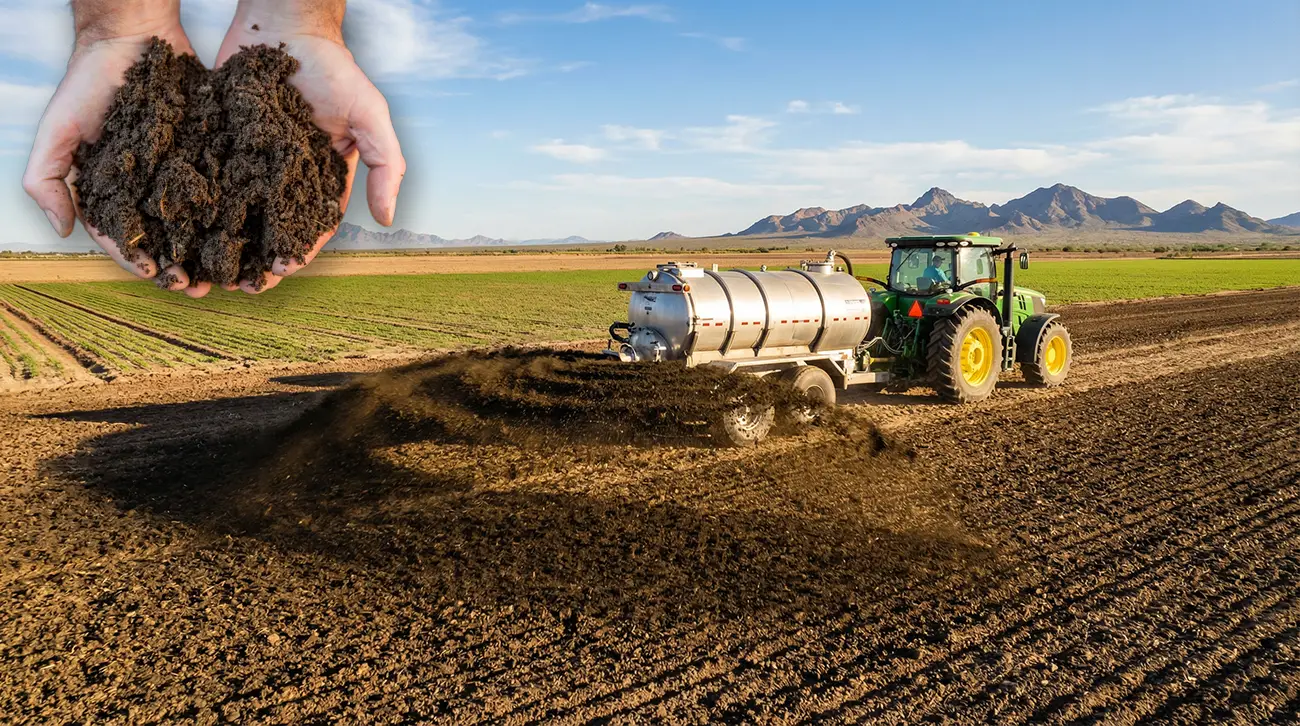
Land application is the most common beneficial use of biosolids, accounting for over half of all biosolids produced in the United States. This involves spraying, spreading, injecting, or incorporating biosolids into soil to condition it or fertilize crops.
Biosolids can be applied to agricultural land, forests, rangelands, mine reclamation sites, parks, golf courses, and home gardens. Documented environmental benefits include:
- Improved soil health and structure
- Carbon sequestration
- Reduced demand on non-renewable fertilizer resources (especially phosphorus)
- Lower greenhouse gas emissions compared to landfill disposal
- Successful vegetation establishment on disturbed or damaged soils
Regulatory Framework
In the United States, biosolids management is governed by EPA 40 CFR Part 503, which sets standards for pollutant limits, pathogen reduction, vector attraction reduction, and management practices for land-applied biosolids. State environmental agencies—such as the Arizona Department of Environmental Quality (ADEQ)—administer these programs locally and may impose additional requirements.
Farmers have used sewage-derived soil amendments since the 1920s, and decades of scientific research have confirmed that biosolids contain nutrients comparable to animal manures.
Connection to Loading Infrastructure
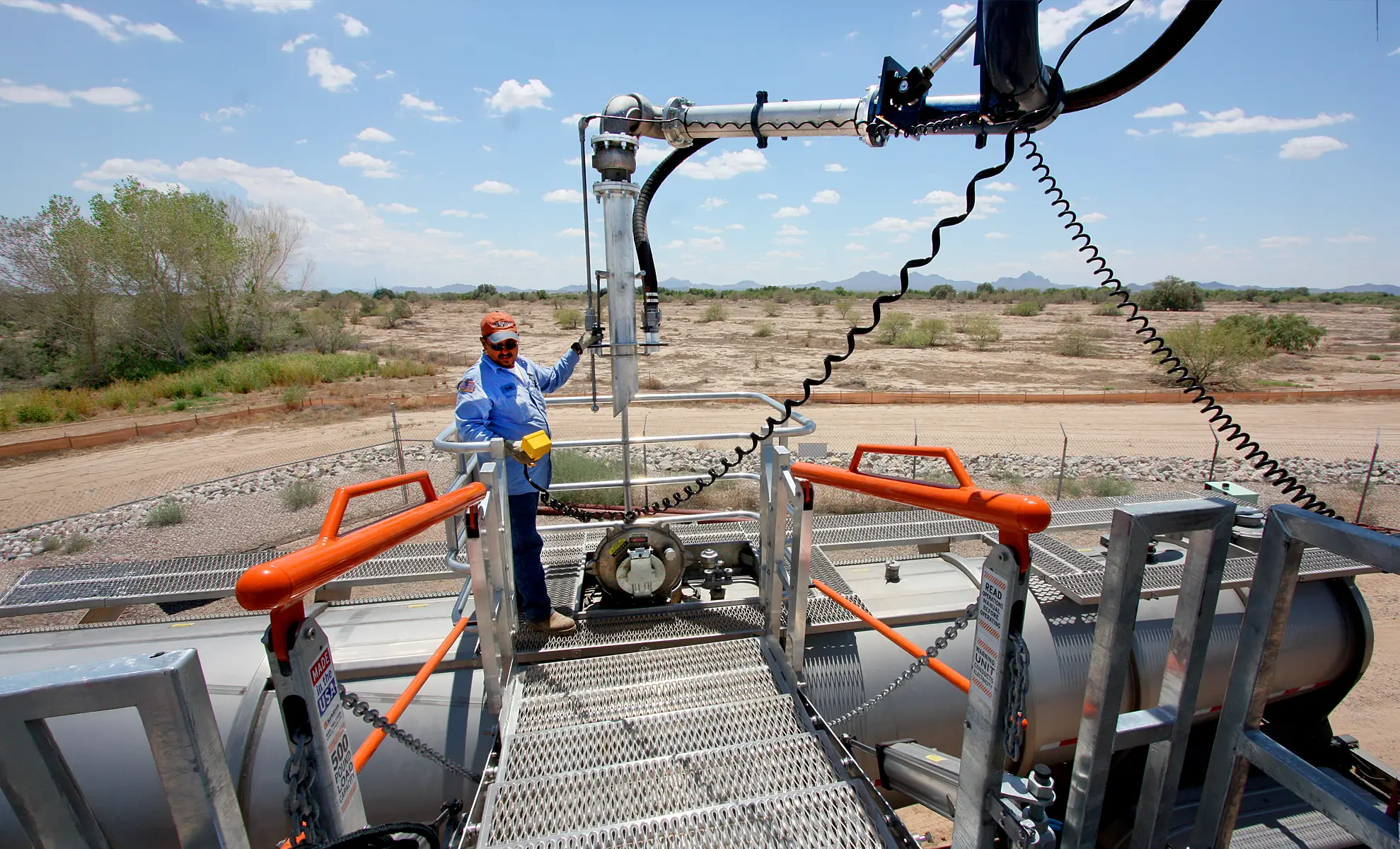
At facilities like the Marana, Arizona WWTP, liquid biosolids (typically 3–8% solids) must be transferred from treatment systems into tanker trucks for transport to land application sites. This transfer requires purpose-built loading infrastructure—gangway access platforms, top loading arms, and fall protection systems—to keep operators safe while working at tanker-top elevation. SafeRack provides integrated gangway and loading arm systems designed for wastewater and biosolids handling operations.
Spill Containment
SPCC and EPA compliant solutions. Railcar track pans, truck spill containment, drum and IBC spill pallets, and industrial containment berms.

Loading Arms & Couplings
Truck, rail, and marine bulk fluid transfer top/bottom loading arms, couplings, swivel joints, hoses, and breakaways.
Truck Gangways
The industry’s safest and most ergonomic gangway for truck loading and access.
Pipe Racks
Prefabricated Pipe Racks Constructed Faster and Easier Than Ever Before
Tools and Loading Accessories
A comprehensive range of facility and loading terminal equipment, accessories and safety solutions.
Frequently Asked Questions
Sewage sludge is the raw solid material separated during wastewater treatment. Biosolids are sewage sludge that has been treated to meet EPA Part 503 standards for pathogen and pollutant reduction, making it suitable for land application.
When treated and applied according to EPA 40 CFR Part 503 regulations, biosolids are considered safe for land application. Independent studies have found that risks to human health from land-applied Class B biosolids are low when regulatory guidelines are followed.
Biosolids are rich in nitrogen, phosphorus, and organic matter—nutrients essential for plant growth that are comparable to those found in animal manures.[14][11]
Biosolids can be applied to agricultural land, forests, rangelands, mine reclamation sites, parks, golf courses, and residential gardens, depending on their classification (Class A or Class B) and local regulations.
Class A biosolids have been treated to eliminate detectable pathogens and can be used without site restrictions. Class B biosolids have significantly reduced pathogen levels but require site management practices such as buffer zones and public access restrictions.
Liquid biosolids are typically pumped into tanker trucks at the wastewater treatment plant using top loading arms and then transported to permitted land application sites. Dewatered or dried biosolids may be hauled in dump trucks or containers.
Liquid biosolids are typically pumped into tanker trucks at the wastewater treatment plant using top loading arms and then transported to permitted land application sites. Dewatered or dried biosolids may be hauled in dump trucks or containers.
The EPA sets federal standards under 40 CFR Part 503. State environmental agencies administer biosolids programs and may enforce additional requirements beyond federal minimums.