





The major aim of wastewater treatment is to remove as much of the suspended solids as possible before the remaining water, called effluent, is discharged back to the environment. As solid material decays, it uses up oxygen, which is needed by the plants and animals living in the water.
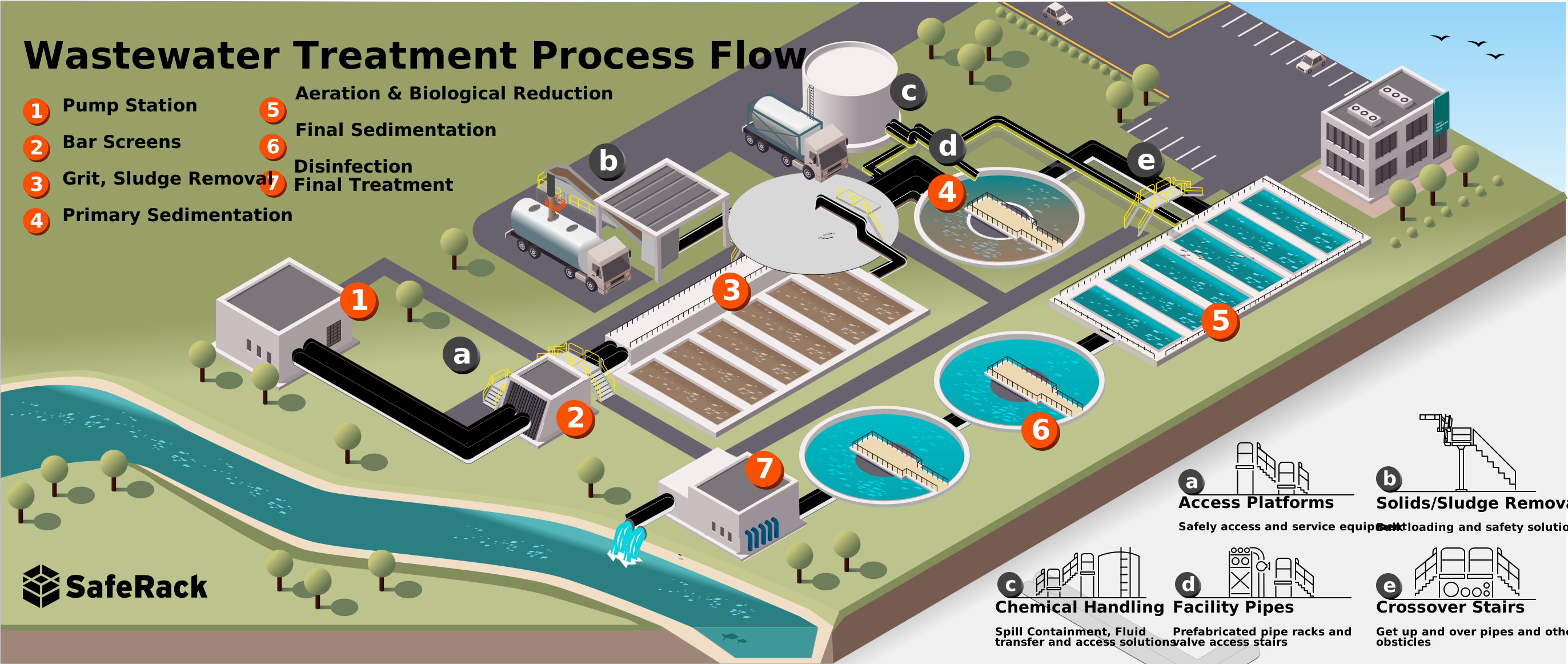
“Primary treatment” removes about 60 percent of suspended solids from wastewater. This treatment also involves aerating (stirring up) the wastewater, to put oxygen back in. Secondary treatment removes more than 90 percent of suspended solids.
Steps in the wastewater treatment process
1. Pumping
The wastewater system relies on the force of gravity to move sewage from your home to the treatment plant. So wastewater-treatment plants are located on low ground, often near a river into which treated water can be released. If the plant is built above the ground level, the wastewater has to be pumped up to the facility. From here on, gravity takes over to move the wastewater through the treatment process.
2. Screening
Wastewater entering the treatment plant includes items like wood, rocks, and even dead animals. Unless they are removed, they could cause problems later in the treatment process. Most of these materials are sent to a landfill.
3. Removing grit and sludge
Wastewater then enters the second section of sedimentation tanks. Here, the sludge (the organic portion of the sewage) settles out of the wastewater and is pumped out of the tanks. Some of the water is removed in a step called thickening, and then the sludge is processed in large tanks called digesters.
4. Sedimentation – removing scum
As sludge settles to the bottom of the sedimentation tanks, lighter materials float to the surface. This ‘scum’ includes grease, oils, plastics, and soap. Slow-moving rakes skim the scum off the wastewater surface. Scum is thickened and pumped to the digesters along with the sludge.
Many cities also use filtration in sewage treatment. After the solids are removed, the liquid sewage is filtered through a substance, usually sand, by gravity. This method removes almost all bacteria, reduces turbidity and color, removes odors, reduces iron levels, and removes most other solid particles that remain in the water. Water is sometimes filtered through carbon particles, which removes organic particles. This method is used in some homes, too.
5. Aerating and Biological Reduction
One of the steps that a water treatment facility can do is to just shake up the sewage and expose it to air. This causes some of the dissolved gases (such as hydrogen sulfide, which smells like rotten eggs) to be released from the water, making it taste and smell bad. Wastewater enters a series of long, parallel concrete tanks. Each tank is divided into two sections. In the first section, air is pumped through the water.
As organic matter decays, it uses up oxygen. Aeration replenishes the oxygen. Bubbling oxygen through the water also keeps the organic material suspended while it forces ‘grit’ (coffee grounds, sand, and other small, dense particles) to settle out. Grit is pumped out of the tanks and taken to landfills.
6. Final sedimentation
Sedimentation is a physical water treatment process using gravity to remove suspended solids from water. For sedimentation to take place, the solids being deposited must be denser than the medium in which they reside.
The final sedimentation process is important for wastewater treatment plants because it removes large particles that other systems miss and could damage pumps or pipes if left behind as treated water flows into rivers and oceans. Additionally, final sediments can provide a nutrient-rich sludge that can be used as an agricultural fertilizer. The final step of sedimentation also allows operators of wastewater treatment facilities to separate any remaining fine particles from chemical additives such as chlorine gas (Cl), aluminum sulfate (Al(SO)), ferric chloride (FeCl), etc., so these chemicals don’t end up back in the system
7. Disinfection – Killing bacteria
Finally, the wastewater flows into a ‘chlorine contact’ tank, where chlorine is added to kill bacteria that could pose a health risk, as is done in swimming pools. Chlorine is mostly eliminated as bacteria are destroyed, but sometimes it must be neutralized by adding other chemicals. This protects fish and other marine organisms, which can be harmed by the smallest amounts of chlorine.
The treated water (called effluent) is then discharged to a local river or the ocean.