

A railroad frog is a vital device in railway track systems that enables train wheels to shift smoothly from one track to another by bridging the gap where two rails intersect. This specialized track component, also called a common crossing, allows train wheels to move from one rail track to another at crossings or switches. It is engineered to support wheels and prevent derailment as they traverse the gap between rails.
The are essential for safe railway operations. Without them, trains could not change tracks or cross intersections. Every time a train switches tracks, Its is doing its job underneath.
For facilities that load and unload trains, railcar loading systems work alongside railways that use railroad frogs at their switching points.
Main Parts of a Railroad Frog
A railroad frog has several key components that work together. Here are the main parts:
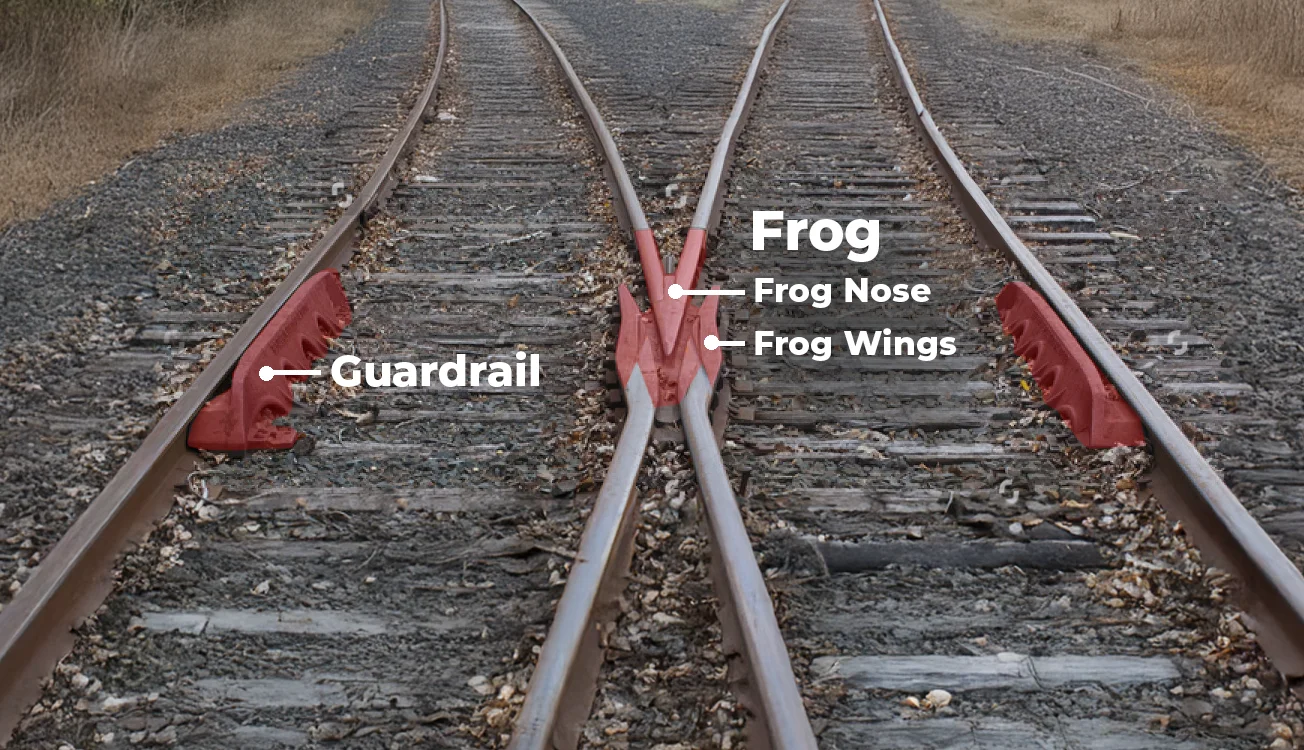
Crossing Nose – The point where rails intersect. This part takes the direct impact from passing wheelsets. It is the most heavily stressed part of the railroad frog.
Wing Rails – Guide rails that lead up to and away from the crossing nose. They support the wheels as they roll through the intersection. The wing rails keep the wheels moving in the right direction.
Guardrail – A rail installed alongside the running rails opposite the at a switch or crossing. Its primary purpose is to guide train wheels correctly through the frog section. This ensures the wheels stay aligned with the intended flangeway and prevents derailments as trains pass over the gap between rails.
For rail yard safety, fall protection systems are important for workers who inspect and maintain in switching yards.
How a Railroad Switch Works
A railroad switch allows trains to move from one track to another. Here are the main components of a complete switch system:
- Switch points – Movable rails that guide the train onto the new track
- Closure rails – Rails that connect the switch points to the frog
- Frog – The railroad frog where the two rails cross
- Guard rails – Keep wheels aligned through the frog
When a train approaches a switch, the switch points move to one side or the other. The wheels follow the points onto the new track. It is where the two tracks actually cross. The wheels pass through the frog without hitting the gap.
For bulk liquid transfer at rail facilities, loading arms are often positioned near on siding tracks.
Why Railroad Frogs Are Important
Its serve a critical role in rail safety and efficiency. Here is why they matter:
- Prevent derailments at track crossings
- Allow smooth wheel transitions between rails
- Reduce wear on train wheels and tracks
- Enable complex rail yard layouts
- Support higher train speeds through switches
Without a properly maintained , a train would derail every time it tried to switch tracks. The gap where two rails cross would catch the wheel flanges. The frog bridges that gap so the wheel rolls over smoothly.
For railcar maintenance facilities, work platforms give workers safe access to inspect railroad frogs from above.
Types of Railroad Frogs
There are several types and used for different applications:
Rigid frogs – One solid piece of cast metal. Used in low-speed applications like rail yards.
Spring frogs – Have a movable wing rail that springs back into place. Used where trains frequently pass through the frog in both directions.
Movable point frogs – Have a movable point that closes the gap. Used on high-speed main lines.
Bolted frogs – Made from bolted rail sections. Easier to repair and replace parts.
Manganese frogs – Made from high-manganese steel. Extremely durable and wear-resistant for heavy traffic lines.
For rail spill prevention, railcar track pans are often installed near railroad frogs at loading and unloading stations.
Grounding and monitoring systems help prevent static discharge on rail tracks near railroad frogs at chemical plants.
Where Railroad Frogs Are Used
Its show up in many different rail applications:
- Mainline railroad switches
- Rail yard switching ladders
- Industrial sidings
- Crossings where two tracks intersect
- Diamond crossings (two tracks crossing at grade)
- Terminal approach tracks
In the oil and gas industry, railroad frogs are common at refineries and distribution terminals where tank cars are switched.
Petroleum refineries receive crude oil by rail, so their track systems include many railroad frogs in the switching network.
Chemical processing plants use railroad frogs to route tank cars to different loading and unloading positions.
Railroad Frog Maintenance
Like any track component, railroad frogs need regular maintenance. Here is what rail workers check:
- Wear on the crossing nose (the most stressed part)
- Proper gap in the flangeway
- Loose bolts on bolted frogs
- Cracks in cast frogs
- Alignment with guard rails
- Buildup of debris in the flangeway
A worn railroad frog can cause rough rides, loud noises, and eventually derailments. Regular inspection prevents these problems.
For safe track access, railcar gangways help workers reach railroad frogs and other track components.
Safety gates protect workers crossing tracks near railroad frog locations.
Safety Around Railroad Frogs
Working near requires caution. Here are key safety measures:
- Never stand inside the frog when trains are moving
- Watch for wheel movement through the flangeway
- Use body harnesses when working at height near tracks
- Wear high-visibility clothing near rail operations
- Follow lockout tagout procedures for track maintenance
For facilities with railcar loading, drench showers and portable eyewash stations should be accessible near railroad frog maintenance areas.
Spill containment systems capture any chemical releases that might occur during railcar switching over railroad frogs.
A railroad frog is a track component that bridges the gap where two rails intersect so train wheels can cross smoothly.
The main parts are the crossing nose, wing rails, and guardrail opposite the frog.
A guardrail guides train wheels through the frog to keep them aligned with the flangeway and prevent derailment.
Railroad frogs are used at track switches, rail crossings, diamond crossings, and rail yard ladders.