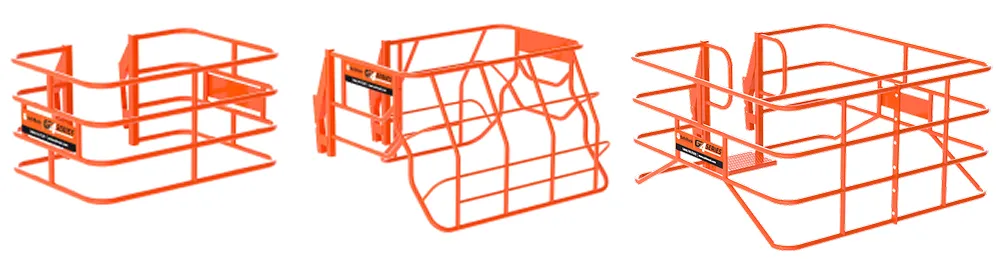


Proppant containers are standardized containers use to transport sand, typically frac sand, from the mine to the wellhead. Frac sand can also be transported and loaded into pneumatic or hopper trucks or railcars. These are designed specifically for the hydraulic fracturing industry, where large volumes of sand are needed at remote drilling locations. The sand inside these proppant containers is called proppant. It is used in the hydraulic fracturing process, commonly known as fracking. Proppant is mixed with water and chemicals to create a slickwater mix that helps mine petroleum fluids such as oil, natural gas, and natural gas liquids from sedimentary rock. For bulk material handling, pneumatic trailer loading systems work alongside proppant containers for efficient sand transfer.
What Is Proppant?
It is the sand or other material inside proppant containers. Here is what you need to know about proppant:
What proppant does
- Keeps fractures open after hydraulic fracturing
- Allows oil and gas to flow out of the rock
- Must be strong enough to withstand rock pressure
- Comes in different sizes for different formations
Types of proppant materials
- Natural sand (frac sand): most common
- Resin-coated sand: stronger bond
- Sintered bauxite: very high strength
- Kaolin clay: ceramic proppant
- Fused zirconia: ultra-high strength
- Walnut hulls: lightweight alternative
- Glass beads: specialized applications
Most proppant is treated sand designed to keep a fracture open to extract oil during the fracturing process. They protect this material from contamination during transport. For dry bulk loading, They are a key part of the supply chain.
How Proppant Containers Work
The are designed for efficiency at the well site. Here is how they work:
- Containers are filled at the frac sand mine
- Trucks or railcars transport proppant containers to the well site
- Containers are unloaded using pneumatic or gravity systems
- Sand flows from containers into blenders
- Blenders mix sand with water and chemicals
- The slickwater mix is pumped down the well
The standardized design of proppant containers means they fit on standard trucks and railcars. This makes logistics simpler and faster. For hopper car loading, proppant containers can transfer sand directly into rail hoppers.
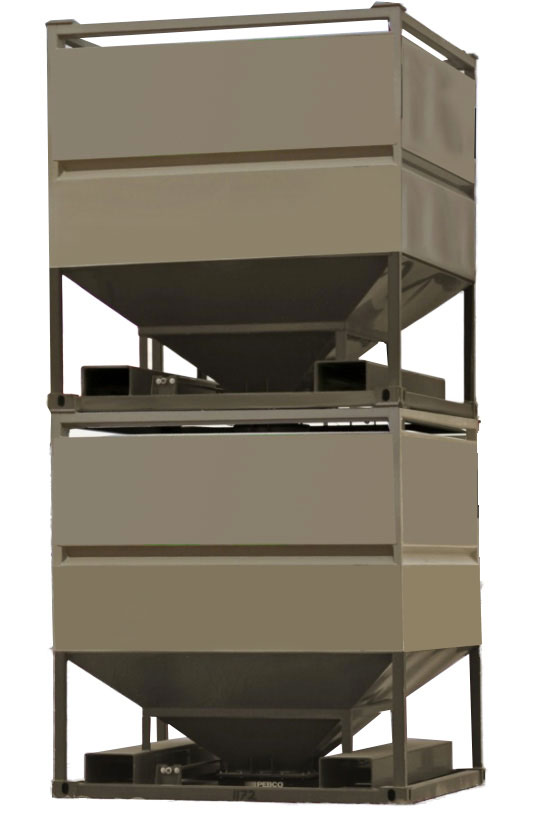
Frac Sand Transport by Truck
Frac sand is commonly transported in proppant containers on trucks. Here are the key numbers:
Weight limits for frac sand trucks
- Maximum allowed truck weight: 80,000 pounds
- Empty truck weight: approximately 30,000 pounds
- Maximum cargo load: 25 tons (50,000 pounds)
What this means for proppant containers
- Each truck can carry about 25 tons of frac sand
- Multiple truckloads are need for a single frack job
- A typical frack uses thousands of tons of sand
The following assumptions are use in determining sandbox truckloads for the hydraulic fracturing process. Proppant containers designed to maximize payload within these legal limits. For silo valve access, workers need safe ways to reach valves on proppant containers and storage silos.
Where Proppant Containers Are Use
The are use throughout the frac sand supply chain. Here are the main locations:
- Frac sand mines: where containers are fill
- Transload facilities: where sand moves between truck and rail
- Rail terminals: where proppant containers arrive by train
- Well sites: where containers are unload
- Storage yards: where containers wait for use
- Sand processing plants: where proppant is made
In the cement and frac sand industry, proppant containers are essential equipment. Frac sand mines produce the sand that fills proppant containers for delivery.
Types of Proppant Materials
Many different materials have been use as proppants. Here are the most common:
Natural proppants
- Northern white sand – high quality
- Brown sand – lower cost
- Ottawa sand – historically common
- Wisconsin sand – popular for fracking
Engineered proppants
- Resin-coated sand – prevents crush and flowback
- Ceramic proppant – very high strength
- Sintered bauxite – for deep wells
- Fused zirconia – extreme depth applications
Alternative proppants
- Walnut hulls – for low-pressure formations
- Glass beads – specialized applications
- Kaolin clay – ceramic precursor
It must be compatible with the specific type of proppant being transport. For frac sand storage, They keep material dry and clean.
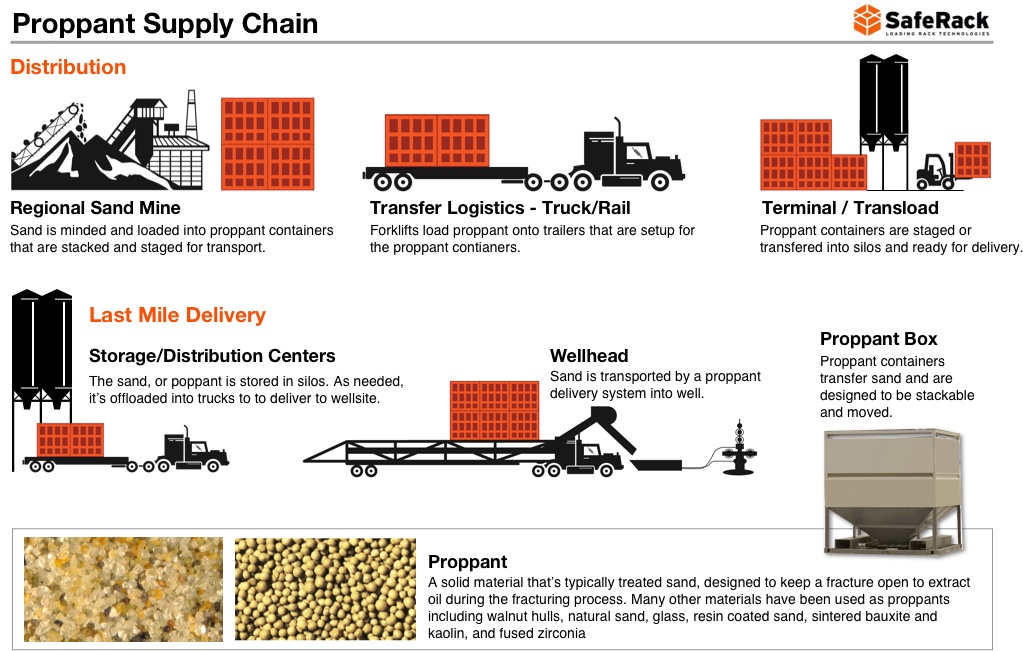
Benefits of Standardized Proppant Containers
Standardized proppant containers offer several important benefits. Here are the key advantages:
- Fit on standard trucks and railcars
- Quick loading and unloading
- Stackable for storage efficiency
- Protect sand from moisture
- Reduce dust emissions
- Enable just-in-time delivery
- Lower transport costs per ton
The standardized design of proppant containers has transformed the frac sand industry. Before these containers, sand was often haul in open trucks or bags. For bulk chemical plants, similar container systems use for other dry bulk materials.
Proppant Container Safety
Working with requires attention to safety. Here are key safety measures:
- Use fall protection when climbing on containers
- Install safety gates at loading platforms
- Provide body harnesses for workers at height
- Use loading platforms for safe access
- Train workers on proper container handling
For dust control, safety showers and eyewash stations should be accessible near proppant container unloading areas. Static grounding prevents static discharge when moving sand through proppant container chutes. Railcar track pans capture spills under proppant container rail unloading positions. Truck spill containment protects the ground where proppant containers loaded.
Proppant Container Loading and Unloading
They loaded and unloaded using several methods. Here are the most common:
Pneumatic unloading
- Uses air pressure to blow sand out of the container
- Sand moves through hoses to storage or blenders
- Creates dust that must be control
Gravity unloading
- Sand falls out of bottom gates
- Fastest method for large volumes
- Requires proper dust collection
Conveyor unloading
- Sand moves onto belt conveyors
- Good for continuous feeding
- Slower than gravity
Proppant containers designed to work with all three methods. The choice depends on the well site layout. For pneumatic trailer loading, proppant containers often feed directly into trailer systems.
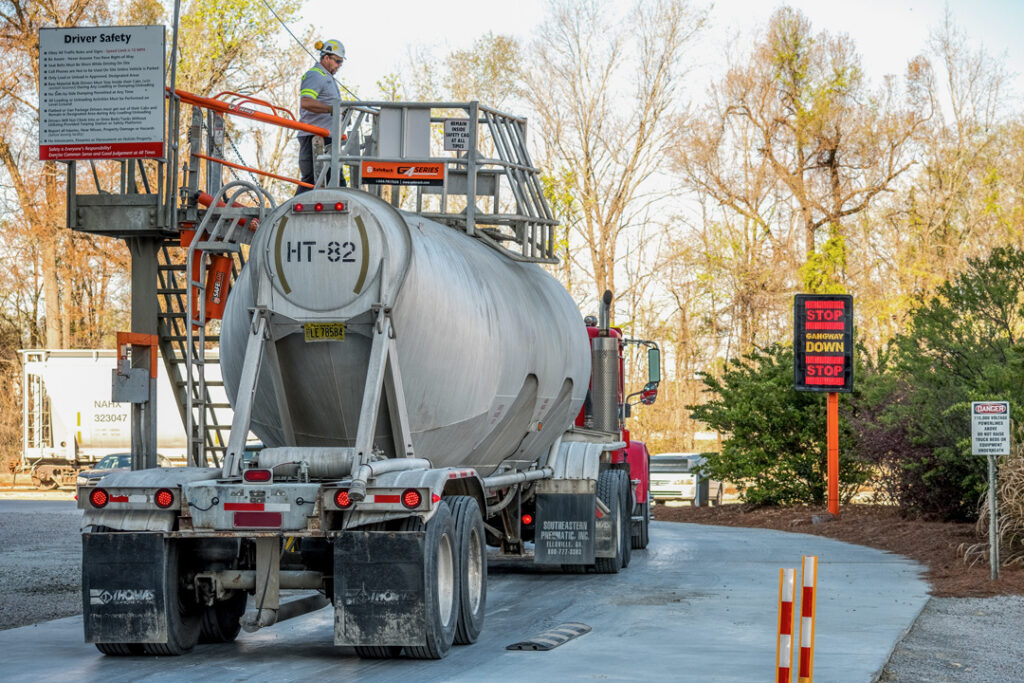
Proppant Container Access
SafeRack’s truck loading platforms provide safe, efficient, and compliant access for bulk loading and unloading operations. Designed to accommodate a wide range of truck configurations, our solutions enhance productivity while reducing risks. With custom-engineered designs, we ensure seamless integration into your existing infrastructure, delivering turnkey platforms that optimize workflow and safety.
How Much Frac Sand Can a Truck Carry?
The amount of frac sand a truck can carry is limit by weight regulations. Here are the calculations:
Weight calculation
- Maximum gross vehicle weight: 80,000 pounds
- Empty truck and trailer weight: 30,000 pounds
- Maximum sand weight: 50,000 pounds (25 tons)
Sand volume
- 25 tons of sand equals about 18 cubic yards
- Enough sand for a small stage of a frack job
- Large frack jobs need 50 to 100 or more truckloads
Proppant containers sized to maximize legal payload. Each container typically holds 25 tons of sand. For dry bulk handling, proppant containers are the standard unit of measure.
Proppant containers standardized containers used to transport frac sand from mines to wellheads for hydraulic fracturing.
Proppant mixed with water and chemicals to create slickwater that helps extract oil and natural gas from sedimentary rock.
A truck can carry a maximum of 25 tons (50,000 pounds) of frac sand due to the 80,000 pound gross weight limit.
Proppant materials include natural sand, resin-coated sand, sintered bauxite, kaolin, fused zirconia, walnut hulls, and glass beads.
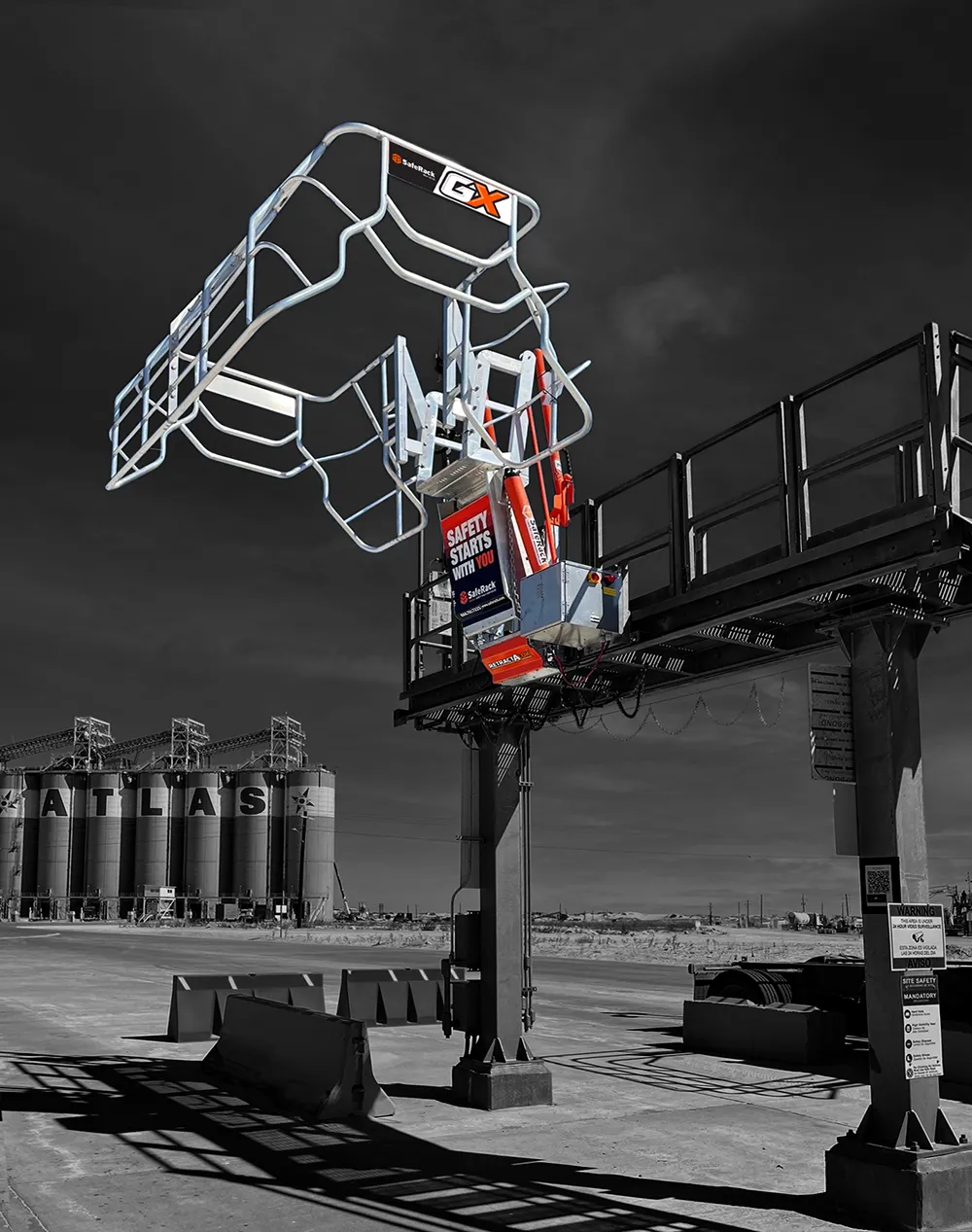
World’s #1 Selling Gangway
Access Gangways
SafeRack’s gangways are trusted worldwide to provide secure
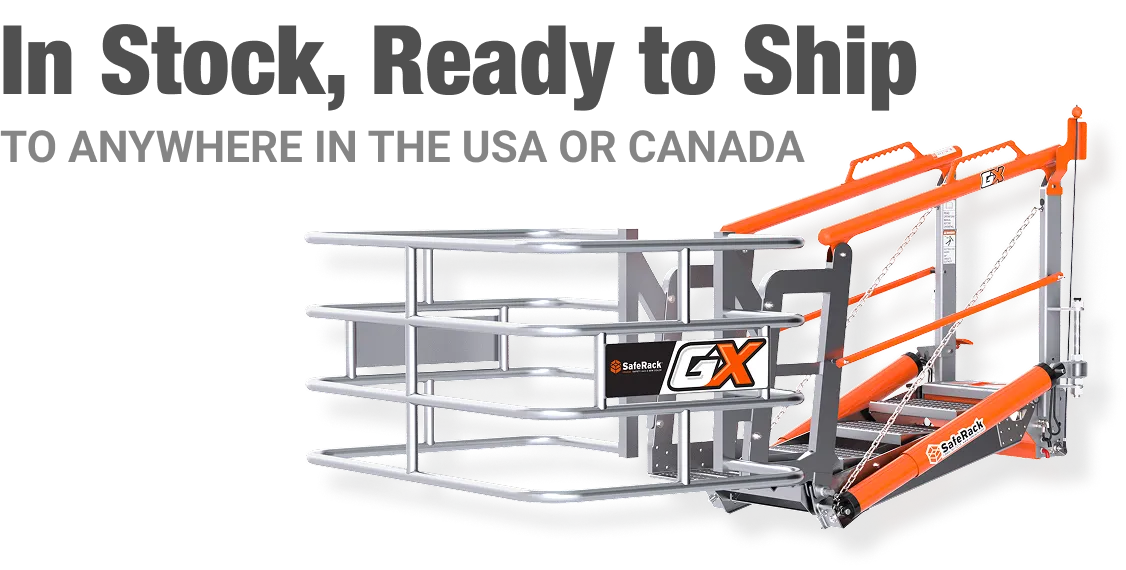
SafeRack’s systems combine advanced safety features, OSHA-focused design, and keep your loading racks running smoothly.
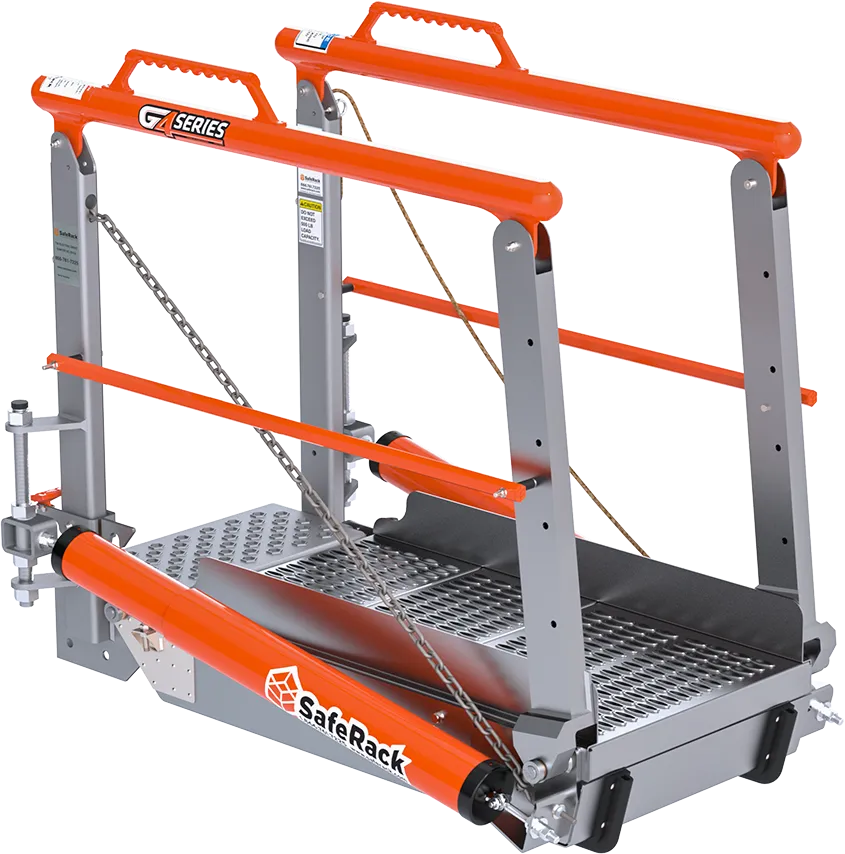
Self-Adjusting Stairs
Built to articulate and self-level, SafeRack’s SAS gangways are designed to accommodate varying heights of vehicles.

Flat Ramp Style
The SFR gangway is a flat ramp design with a slip-resistant surface. It is ideal for hopper cars and some trucks when the platform and vehicle heights are similar.

Attributes
Easily adjusts to different vehicle heights

85° Working Range
Options


Safety Cage
Material
Aluminum with stainless steel hardware
Load
500lbs Gangway
200lb Handrail
Safety Enclosures
Purpose-built cages safely enclose the operator for maximum fall prevention.