


Natural gas coming directly from a well contains many NGL liquids that are commonly remove. In most instances, (NGLs) have a higher value as separate products, and it is thus economical to remove them from the gas stream. The removal of gas liquids usually takes place in a relatively centralized processing plant and uses techniques similar to those used to dehydrate natural gas. There are two basic steps to the treatment of liquids in the natural gas stream. First, the liquids must be extract. Second, these liquids must be separated into their base components.
What Is the Composition of Natural Gas?
Natural gas is a mixture of hydrocarbon gases, and the ratio of these different components varies. The vast majority of gas, 70–90 percent, is methane. The remaining 10–30 percent is various NGLs, including ethane, propane, butane, and pentane. While NGLs are gaseous at underground pressure, the molecules condense at atmospheric pressure and turn into liquids. The composition of natural gas can vary by geographic region, the geological age of the deposit, the depth of the gas, and many other factors. Natural gas that contains a lot of NGLs and condensates is referred to as wet gas, while gas that is primarily methane, with little to no liquids in it when extract, is referr to as dry gas.
Processing Natural Gas
Producers process natural gas immediately after extraction to separate pure methane from other hydrocarbons and fluids, creating pipeline-quality dry natural gas.
Separation of NGLs
Once natural gas comes out of the wellhead, any oil and water present in the gas is removed either at the wellhead or at a nearby processing facility. Once the natural gas is transported to a nearby natural gas processing facility, other non-NGL liquids, such as sulfur, helium, and carbon dioxide, are removed, and then the NGLs are removed. The process of separating the NGLs from the natural gas stream is a complicated process involving multiple steps. Once NGLs are separated from the natural gas stream, they must then themselves be separated.
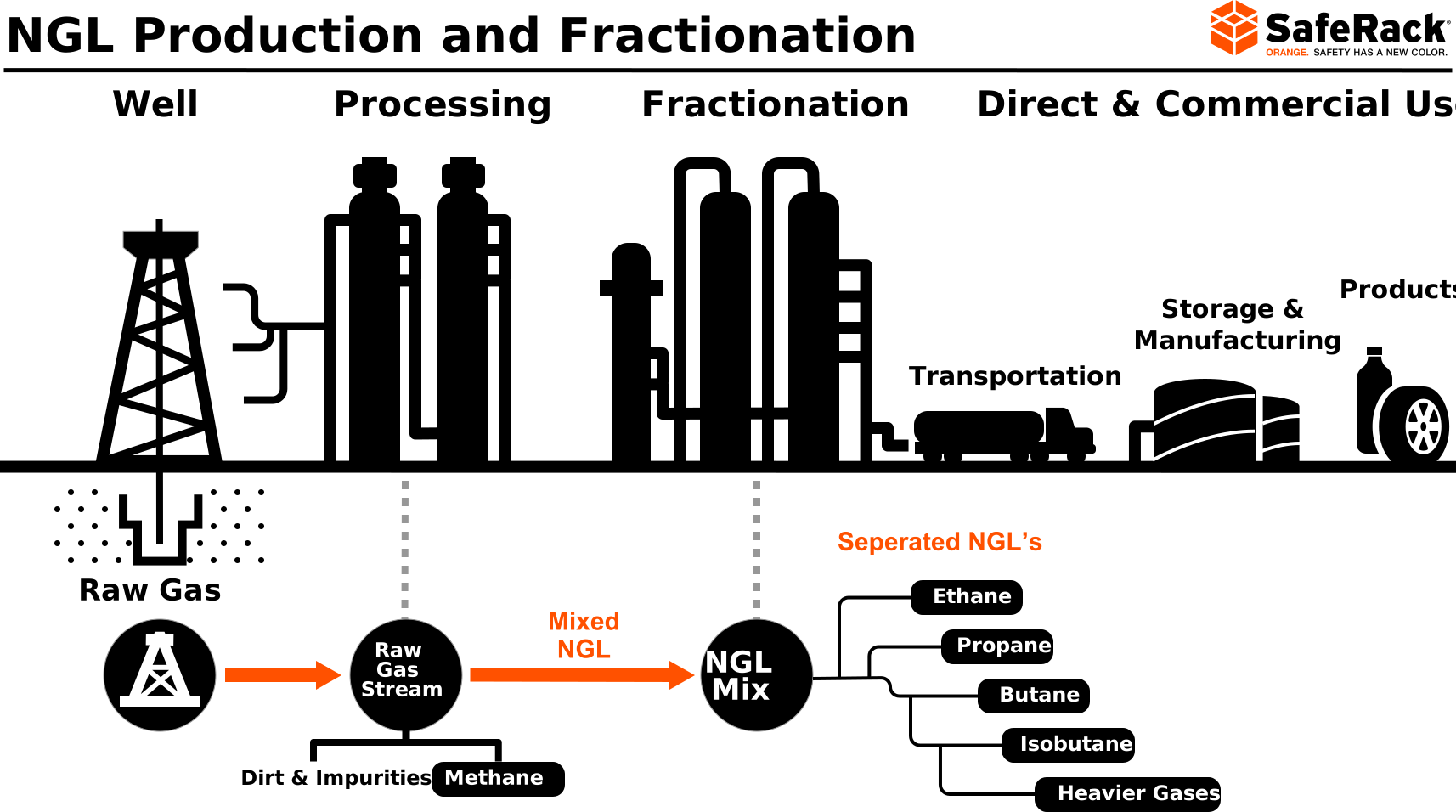
The process of separating various NGLs is called fractionation. Since each molecule (ethane, propane, etc.) has a different boiling point, the hydrocarbon stream goes through multiple fractionators, each with a different temperature. This removes a different NGL at each step, starting with the lightest hydrocarbons and working up to the heaviest. Operators typically remove ethane first, followed by propane, butane, and isobutane. Once they separate these NGLs and the natural gas meets pipeline quality standards, the company transports it to natural gas utilities, power generators, and industrial customers.
Source: The Role of Natural Gas Liquids (NGLs) in the American Petrochemical Boom
WHAT THE USED OF NGLS?
Of the approximately 1.36 billion barrels of U.S. NGLs produced in 2017, 33 percent was propane, 38 percent ethane, 12 percent pentane, 8 percent normal butane and 9 percent was isobutane.
Industries across the U.S. economy use NGLs for a wide range of purposes. Manufacturers use ethane almost exclusively to produce ethylene, which they then convert into plastics. Companies use propane mainly for heating and as a petrochemical feedstock. Producers typically blend butane and isobutane into petroleum products to create various fuels.
| NGL | Applications | Main Sectors |
|---|---|---|
| Ethane | Ethylene for plastics production; petrochemical feedstock | Industrial |
| Propane | Residential and commercial heating; cooking fuel; petrochemical feedstock | Industrial, Residential, Commercial |
| Butane | Petrochemical feedstock; blending with propane or gasoline | Industrial, Transportation |
| Isobutane | Refinery feedstock; petrochemical feedstock | Industrial |
| Pentane | Natural gasoline; blowing agent for polystyrene foam | Transportation |
| Pentanes Plug | Blending with vehicle fuel; exported for bitumen production | Transportation |
Benefits
- High economic value as separate hydrocarbon products.
- Essential for petrochemical feedstocks and plastics production.
- Versatile industrial and residential applications.
Supports energy independence and sustainability goals.
NGL Facilities and Installations
The largest customer for NGLs, particularly ethane, is the chemical industry. Ethane is valuable because the industry uses it to create ethylene (ethylene loading solutions), which is the raw ingredient in most types of plastics. Chemists convert ethane into ethylene through a complex process called cracking. Ethane cracker facilities heat the gas to approximately 1,500 degrees Fahrenheit to change the chemical composition of the ethane molecules resulting predominantly in ethylene. Operators rapidly cool the ethylene so they can transport it through pipelines in its liquid state. They then add other chemicals to create entirely new compounds, which manufacturers turn into many consumer products we use daily. In addition to ethylene, other chemicals derived from NGLs include propylene, benzene, methanol, and butadiene. Although we may not recognize their names immediately, these products are building blocks in consumer items and applications most of us use daily.
There are many immediate benefits of increased U.S. domestic natural gas production: lower costs for home heating and electricity; reduced emissions from power generation plants as they switch from coal and oil to natural gas, and a decreased reliance on foreign countries for energy. However, the secondary benefits of the domestic gas boom are also incredibly important to the U.S. economy. Increased domestic natural gas, oil, and NGL production are strengthening the refining and petrochemical industry, restoring the manufacturing sector, and making America a global energy superpower.
Industries separate Natural Gas Liquids, hydrocarbons in raw natural gas, for industrial and commercial use.
They have higher value as separate products, and their removal ensures pipeline-quality methane for distribution.
Ethane, propane, butane, isobutane, and pentane.
Industries use NGLs to produce petrochemicals, create fuels, provide heating, and supply feedstocks for a variety of consumer products.