


An Intermediate Bulk Container (IBC) tote tank is a reusable industrial container designed to store and transport bulk liquids, solvents, and granular materials. Industries such as food processing, chemicals, and pharmaceuticals frequently use IBC totes because they provide a cost-effective and space-efficient shipping solution.
Companies prefer these containers because they are stackable, durable, and capable of holding large product volumes. When businesses use them for liquid transfer, safety standards often require spill containment systems to comply with environmental regulations such as SPCC and EPA Container Storage Regulation 40 CFR 264.175.
Intermediate Bulk Container Tote Tank Capacity
Most IBC tote tanks hold 275 gallons, which is the most common industry size. However, manufacturers produce these containers in capacities ranging from 180 gallons to 550 gallons depending on the application.
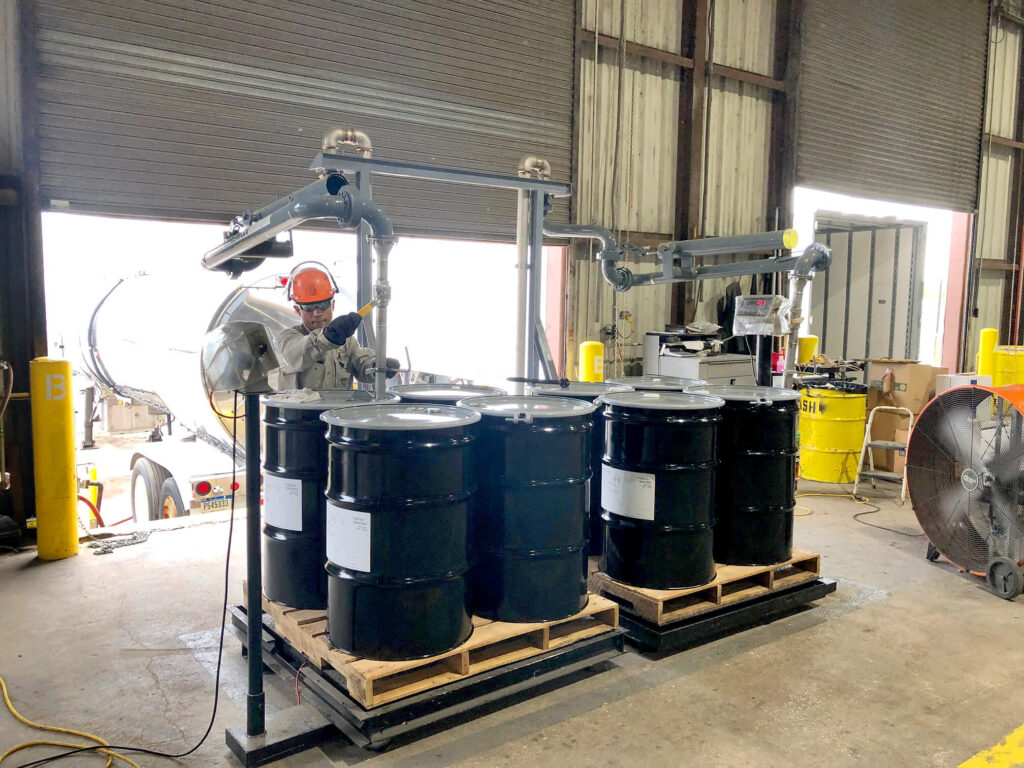
Compared to multiple 55-gallon drums, a single Intermediate Bulk Container provides the same storage capacity while using less floor space, which improves logistics and warehouse efficiency.
Materials Used for IBC Tote Tanks
Manufacturers produce IBC totes using several materials to match different industrial needs.
Plastic IBC Totes
Plastic Intermediate Bulk Container totes are widely used for liquid storage and transportation. They usually hold 275 to 330 gallons and provide the same capacity as several drums but require significantly less storage space.
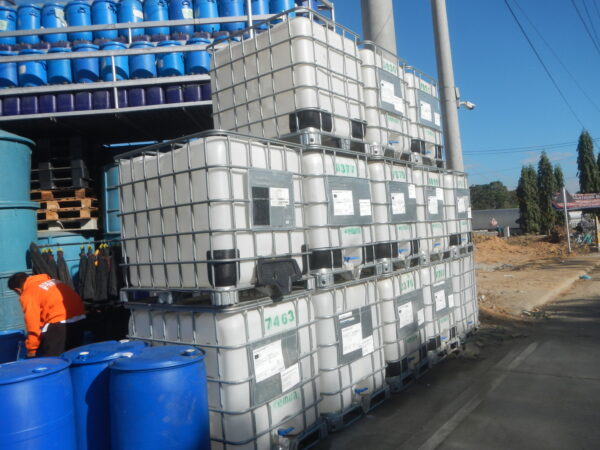
Plastic totes are commonly available in three conditions:
- New – new bottle, cage, and pallet
- Rebottled – new bottle with a reconditioned cage and pallet
- Refurbished – reconditioned bottle, cage, and pallet
Industries typically use plastic IBCs, as opposed to dry bulk bags to store liquids that require secondary spill containment systems.
Stainless Steel IBCs
Stainless steel IBC tanks offer high durability and corrosion resistance, making them ideal for demanding industrial environments.
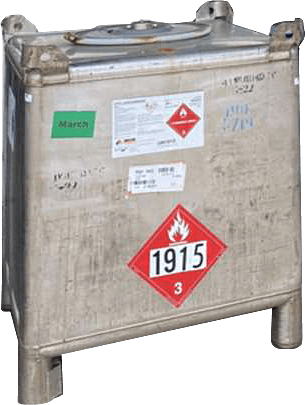
Typical features include:
- Capacity from 180 to 550 gallons
- Heavy-duty 10-gauge 304 stainless steel construction
- Sloped base for improved drainage
- 2-inch bottom outlet with stainless steel ball valve
- Large top-fill opening with sealed drum cover
- EPDM gaskets for secure sealing
These tanks often appear in food processing, pharmaceutical production, and chemical handling operations where cleanliness and durability matter.
Carbon Steel IBCs
Carbon steel Intermediate Bulk Container tanks provide a strong and economical option for industrial liquid storage.
Key characteristics include:
- 180- to 550-gallon capacity
- Heavy-duty 10-gauge carbon steel construction
- Sloped bottom for complete drainage
- 2-inch bottom outlet with stainless steel valve
- Threaded vent installed in the drum cover
- EPDM gaskets for leak prevention
These containers often serve industrial chemical and petroleum applications where strength and reliability are critical.
Benefits of Using IBC Tote Tanks
Companies choose IBC containers because they provide several operational advantages:
- Efficient bulk storage
- Reduced shipping costs
- Stackable design for warehouse optimization
- Reusable and durable construction
- Compatibility with spill containment systems
These benefits make IBC totes a practical solution for large-scale liquid handling and transport.
Industries use IBC totes to store and transport bulk liquids, chemicals, solvents, and granular materials safely.
Most standard IBC totes hold 275 gallons, although capacities range from 180 to 550 gallons.
Manufacturers typically build IBC tanks using plastic, stainless steel, or carbon steel depending on the application.
Yes. When storing liquids, regulations may require secondary spill containment systems to prevent environmental contamination.