


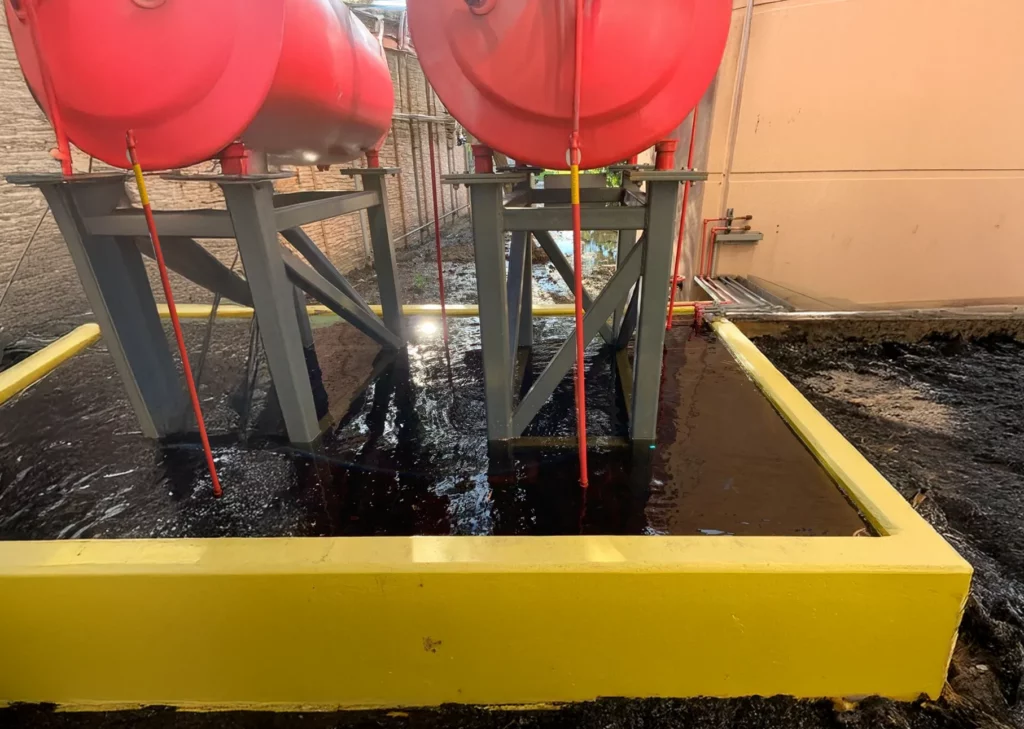
Freeboard containment is the extra space built into a secondary containment system to ensure safety and environmental protection. It accounts for additional volume caused by rainwater, snow, or other precipitation, keeping stored liquids secure and preventing overflow. By providing this buffer, freeboard the environment, reduces accidents, and helps facilities comply with regulatory requirements.
How Freeboard Containment Works
Freeboard containment works by reserving a margin above the maximum liquid storage level. This margin ensures that even when precipitation adds extra volume, the containment system can handle it without spilling.
- Works in tandem with spill containment structures, such as berms, dikes, or vaults.
- Designed for secondary containment systems around tanks, drums, or chemical storage areas.
- Prevents overflow during heavy rainfall or unexpected precipitation.
Why is Freeboard Important?
Freeboard is essential for compliance with environmental regulations, such as the EPA’s Spill Prevention, Control, and Countermeasure (SPCC) guidelines. These regulations require secondary containment systems to hold the full volume of the largest container and include sufficient freeboard to manage precipitation from major storm events, such as a 25-year, 24-hour storm. Without adequate freeboard, even minor rainfall could compromise the system’s effectiveness in preventing spill
Applications
Freeboard containment is widely apply across industries where liquids are stored, transported, or processe:
- Chemical plants are protected against hazardous chemical spills.
- Oil and fuel storage prevent fuel from leaking into the environment.
- Water treatment facilities are controlling overflow from storage tanks.
- Industrial storage yards ensure the safe containment of bulk liquids.
Benefits
- Enhanced safety reduces the risk of spills and environmental contamination.
- Regulatory compliance helps meet EPA and local spill containment standards.
- Operational reliability allows storage systems to function even during adverse weather.
- Environmental protection prevents chemicals and fuels from polluting soil and water sources.
Key Considerations for Freeboard
- Regulatory Compliance: SPCC regulations require secondary containment systems to account for both spill volume and precipitation. The common “110% rule” (containing 110% of the largest container’s volume) may need adjustment depending on local rainfall intensity or geographic factors.
- Engineering Practices: Determining sufficient freeboard requires engineering evaluations tailored to each site. Assessments consider drainage patterns, storm frequency, and historical precipitation data to ensure safety and compliance.
- Applications Beyond Land: Freeboard also applies to water-based spill containment systems, such as oil booms. Here, it refers to the portion of the barrier above the waterline that prevents waves from splashing over and spreading contaminants.
Synonyms for Freeboard
- Buffer Capacity: Refers to the additional space or volume reserved for unexpected scenarios like heavy rain.
- Overflow Margin: Highlights its role in preventing spills from exceeding containment limits.
- Safety Allowance: Emphasizes its purpose as a precautionary measure in containment design.
It provides additional storage capacity to handle precipitation, preventing overflow and protecting the environment.
Freeboard containment specifically reserves extra space above the storage level, while standard spill containment only handles leaks or spills.
Many industries follow EPA and local standards that recommend or require a minimum freeboard in secondary containment systems.
Yes, with proper engineering, exist spill containment areas can be modified to include adequate freeboard capacity.