


The free surface effect, commonly known as “sloshing,” describes the movement of liquids or unconstrained small solid materials, such as seeds, gravel, or crushed ore, inside a partially filled tanker. When a vehicle accelerates, brakes, or changes direction, the cargo shifts within the tank, generating internal forces that can affect stability and vehicle control. This behavior is similar to fluid motion, even in the case of loose solid materials.
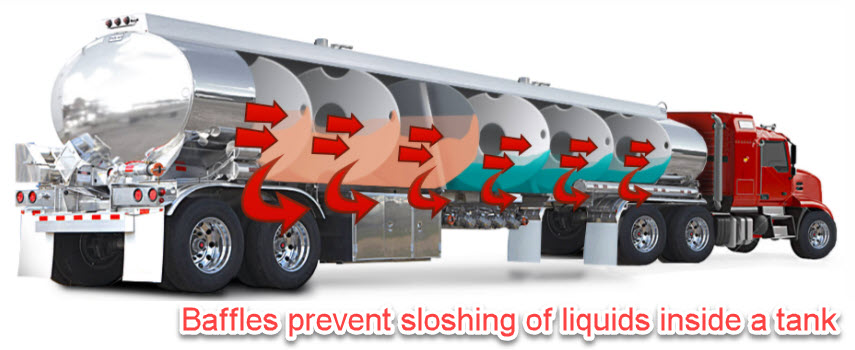
This effect becomes more significant when the tank is not fully filled, as the empty space allows greater movement of the contents. As a result, the free surface is a critical consideration in transportation and fluid handling systems, where maintaining balance and safety is essential. Proper design measures, such as compartmentalization or the use of baffles, can help reduce this movement and improve overall stability.
How Free Surface Effect Works
It’s occurs when liquids or loose materials move freely inside a partially filled container, such as a tanker or storage tank. This movement is influenced by external forces acting on the container.
- Slack Tank Condition: A partially filled tank allows the contents to move.
- Liquid or Loose Material Movement: Fluids and small solids behave similarly when shifting.
- Vehicle Motion Influence: Changes in speed or direction increase internal movement.
- Baffles: Installed inside tanks to reduce the free surface effect by limiting movement.
When a tank is full, known as “pressed up,” the free surface effect is minimized.
Applications
- Tanker Trucks: Transporting liquids such as fuel, water, or chemicals.
- Marine Vessels: Managing liquid cargo in ships and storage tanks.
- Industrial Storage Tanks: Controlling fluid movement in processing systems.
- Bulk Material Transport: Handling loose materials like gravel or seeds.
Benefits
- Improved Stability: Reduces shifting forces that can affect vehicle control.
- Enhanced Safety: Minimizes the risk of accidents during transport.
- Better Load Control: Maintains balance in moving vehicles and equipment.
- Efficient Design: Supports safer tank and container configurations.
Proper control of this effect ensures safer and more reliable transportation of liquids and loose materials.
Free surface effect is the movement of liquid or loose materials inside a partially filled container due to motion.
A slack tank is a partially filled tank where the free surface effect is most noticeable.
It can be reduced by using baffles or by filling the tank.
Yes, small loose solids like gravel or seeds can behave similarly to liquids when moving.