


Flexible tanks are bulk liquid transport solutions that use a large internal bladder installed inside a standard intermodal container. These systems provide a cost-effective alternative to traditional ISO tank containers for moving and storing non-hazardous liquids. Designed for efficiency and protection, flexible tanks help prevent fluid movement, reduce contamination, and maintain product quality during transit.
How Flexible Tanks Work
Flexible tanks consist of a durable bladder placed inside a 20-foot container. Once fill, the liquid is contained securely, while a bulkhead structure supports the bladder and prevents expansion beyond the container limits.
- Internal Bladder: Holds liquid securely and minimizes exposure to air.
- Bulkhead Support: Prevents the bladder from shifting or expanding outward.
- Protective Lining: Cardboard or membranes reduce the risk of punctures.
- Flexible Loading: Can be fill from the top or bottom, depend on requirements.
These systems are designed to ensure safe and stable transport of bulk liquids across long distances.
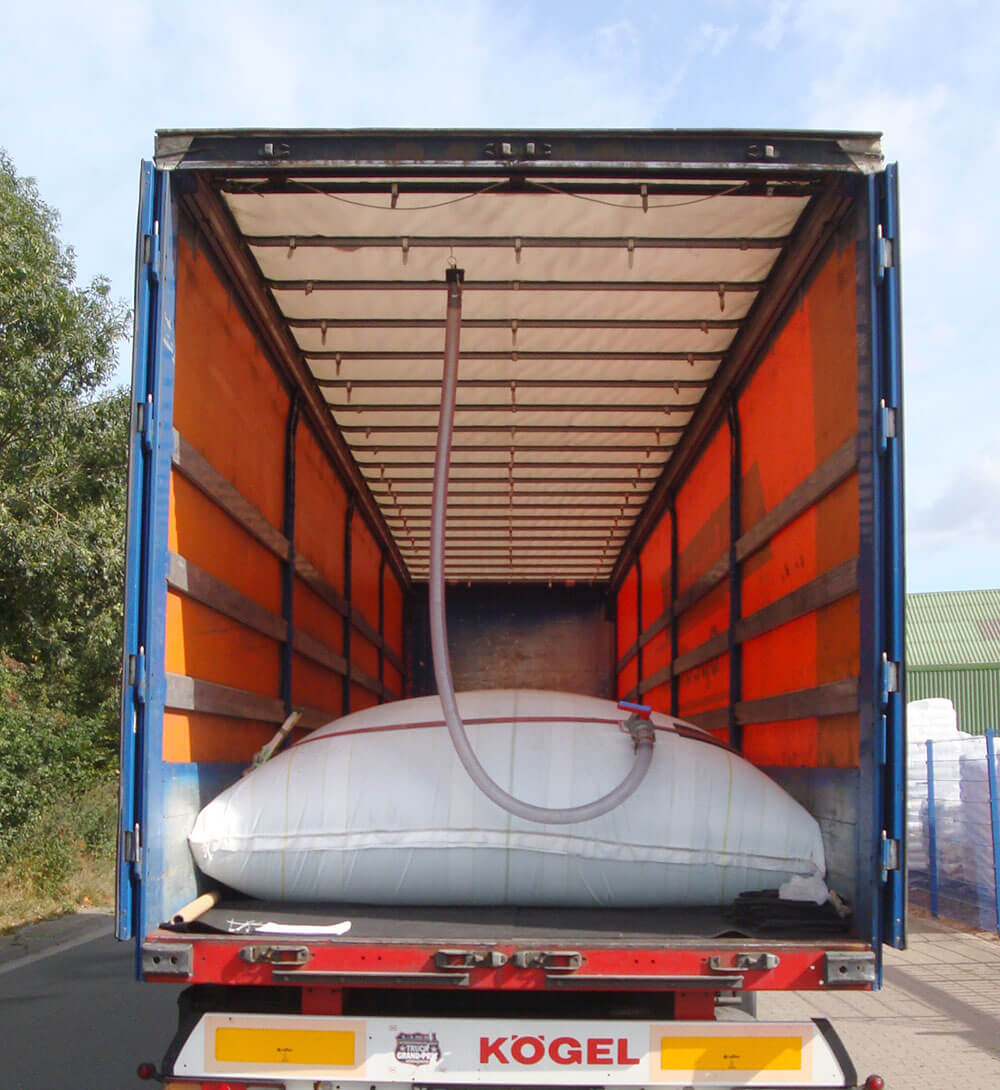
The internal bladder is suitable for food-grade liquids and nonhazardous liquids such as base oils, beer, wine, molasses, glycerine, fruit juices, latex, egg products, water, oils, bio-diesel, edible oils, wine, non-hazardous pharmaceuticals, chemicals, and even some dry cargo. The materials used in the production of flexi-bags (bladders) meet the United States Food and Drug Administration, ISO 9001:2008 compliant. The bladder also protects liquid from ambient air, therefore reducing oxidation.
Containers are commonly line with corrugated cardboard or protective membrane to prevent bladder punctures. Containers can have temperature control heating elements, aseptic filling, agitation for high-density products, ventilation.

Flexi bags can cost 50-80% less than traditional liquid containers like drums and ISO tanks, but are consider less environmentally friendly. Because about 5% of the liquid is left in the container, something that doesn’t happen with tank containers, flexible tanks may not make sense for expensive bulk liquids.
Applications
Flexible tanks are widely use for transporting non-hazardous and food-grade liquids, including:
- Food and Beverage Industry: Wine, juices, molasses, and edible oils.
- Chemical Industry: Non-hazardous chemicals and base oils.
- Pharmaceuticals: Transport of approved non-hazardous liquid products.
- Agriculture and Biofuels: Latex, biodiesel, and other liquid materials.
Benefits
- Cost-Effective: Lower transport costs compared to traditional tank containers.
- High Capacity: Can carry between 16,000 to 26,000 liters in one container.
- Product Protection: Reduces oxidation by limiting air exposure.
- Efficient Transport: Minimizes liquid movement and improves stability during transit.
While flexible tanks are economical, they may not be ideal for high-value liquids due to minimal residual product left after unloading.

ISO Tank, Tank Container, ISOtainers, Seatainer, Intermodal Container
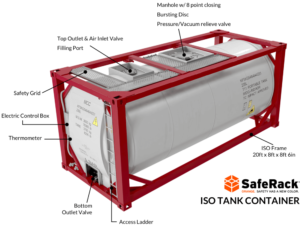
ISO Tanks, also known as ISOtainers or intermodal containers, are built to ISO (International Organization for Standardization) standards and are use to transport bulk cargo. They are suitable for various transportation modes, including truck, ship, and rail. These stainless steel containers are designe to carry both hazardous and non-hazardous products and are often insulate with layers of polyurethane and aluminum. Their standardized size and shape ensure structural integrity for handling with heavy equipment and allow them to withstand harsh environmental conditions during transport.
Flexible tanks are used to transport and store bulk non-hazardous liquid such as oils, beverages, and chemicals.
They use an internal bladder that reduces movement and limits exposure to air, preventing contamination and oxidation.
Yes, they are manufacture use materials that meet food-grade and industry standards.
They typically hold between 16,000 and 26,000 liters of liquid.