


Fire suppression risers are vertical pipes that serve as the backbone of a building’s sprinkler system. They connect the main water supply to the network of pipes feeding sprinkler heads in commercial, industrial, and residential buildings. Acting as a central hub, fire suppression risers house essential components such as control valves, drain valves, pressure gauges, and alarm switches, ensuring reliable water distribution in case of a fire. Proper design and installation of these risers are critical for safety and compliance with codes like NFPA 13.
How Fire Suppression Risers Work
A fire suppression riser ensures water flows efficiently to all sprinkler heads. The riser directs water through the vertical pipe and distributes it evenly across multiple floors or areas. Key features include:
- Control Valves regulate water flow and isolate sections of the system.
- Drain Valves allow maintenance and system testing without disruption.
- Pressure Gauges monitor water pressure for optimal system performance.
- Alarm Switches signal any faults or activation in the system.
During installation, fire suppression risers are carefully sized and positioned to meet building codes and hydraulic requirements, ensuring every sprinkler head receives adequate water in an emergency.
Use Case Example
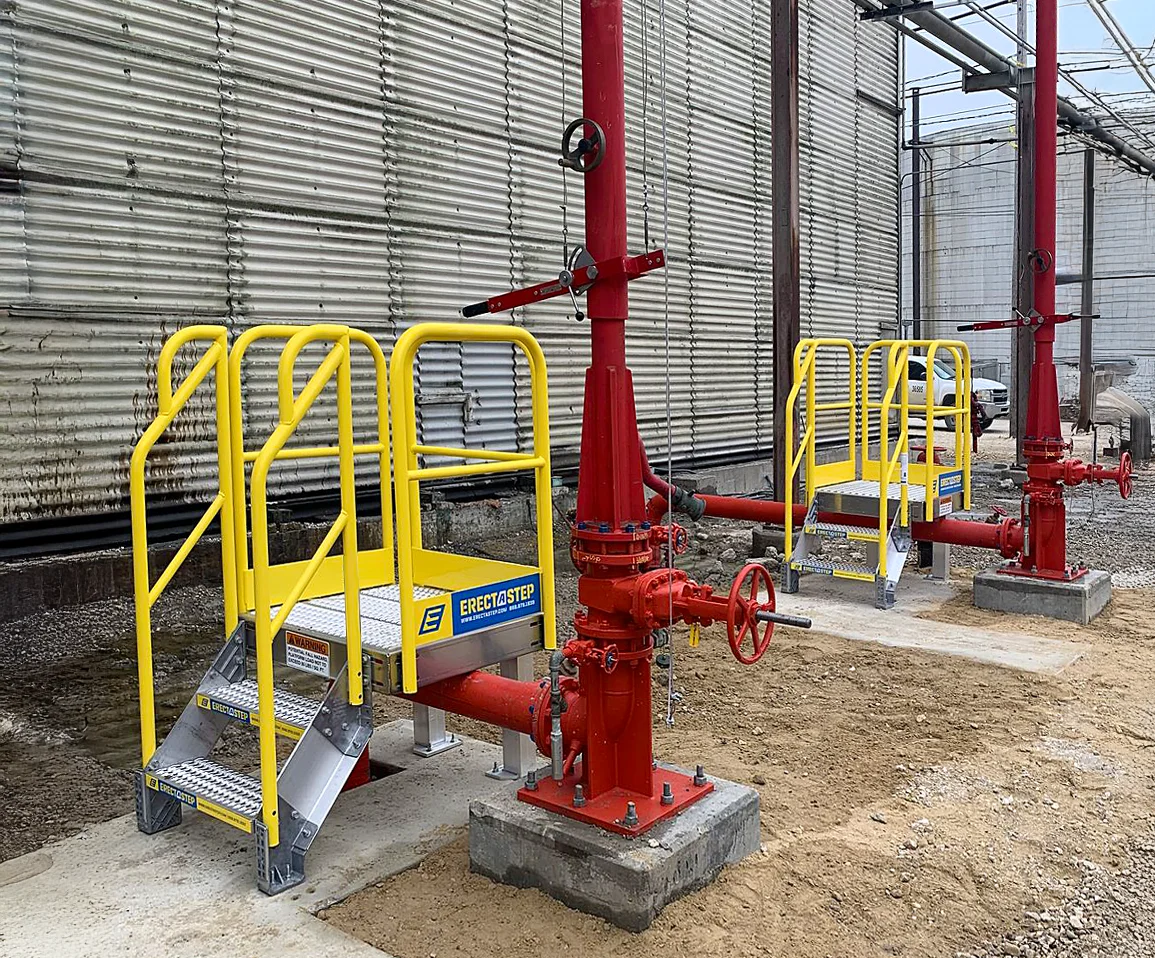
In a bulk chemical facility, the fire suppression riser ensures rapid water delivery to ceiling-mounted sprinkler heads. SafeRack evaluates sites to ensure riser configurations comply with NFPA and OSHA standards. During monthly inspections, facility teams access the riser’s drain and test valves to validate system performance and conduct maintenance.
Photo: ErectaStep stairs at a grain storage facility provide safe access to the manual control valves and test/drain valves of a fire suppression riser.
Applications
- Commercial buildings: Office towers, malls, and warehouses.
- Industrial facilities: Chemical plants, manufacturing units, and bulk storage facilities.
- Residential complexes: Multi-story apartments and high-rise buildings.
- Specialty sites: Laboratories, data centers, and grain storage facilities.
By acting as a central hub, these risers ensure that every area of the building receives fast, reliable water flow in emergencies.
Benefits
- Reliable fire protection ensures immediate water delivery to sprinklers.
- Regulatory compliance meets NFPA 13 and local safety standards.
- Ease of maintenance allows testing, drainage, and control without system downtime.
- Enhanced safety reduces risk to people, property, and critical assets.
Safety Considerations
- Be installed according to NFPA 13 standards and local codes.
- Include proper access for inspection, maintenance, and testing.
- Be regularly inspected to verify the functionality of valves, gauges, and alarm switches.
- Be integrate with building fire alarms for immediate response.
A fire suppression riser distributes water from the main supply to all sprinkler heads in a building efficiently.
Risers are requir in commercial, industrial, and large residential building where sprinkler systems are mandated by safety code.
Inspections should be perform monthly for drain and test valves, with a full annual check to comply with NFPA 13 standards.
Yes, risers are design to supply water to multiple floors, maintaining adequate pressure across all sprinkler heads.
Typical components include control valves, drain valves, pressure gauges, and alarm switches.