


A test/drain valve with a lever handle is a ball valve installed in fire sprinkler systems and industrial piping to facilitate system draining, pressure testing, and maintenance. The lever handle enables quick 90-degree opening or closing, making the valve ideal for routine control tasks or emergencies. These valves are usually found downstream of the control valve, adjacent to the riser, and discharge to a safe location. Why does this matter? Fire sprinkler systems need regular testing to ensure they work when needed. Its allows technicians to simulate sprinkler activation without flooding the facility. It also lets them drain the system for maintenance or repairs. The lever handle makes operation fast and simple. If your facility has a fire sprinkler system, you may need work platforms to safely access test/drain valves installed at height.
How a Test/Drain Valve Works
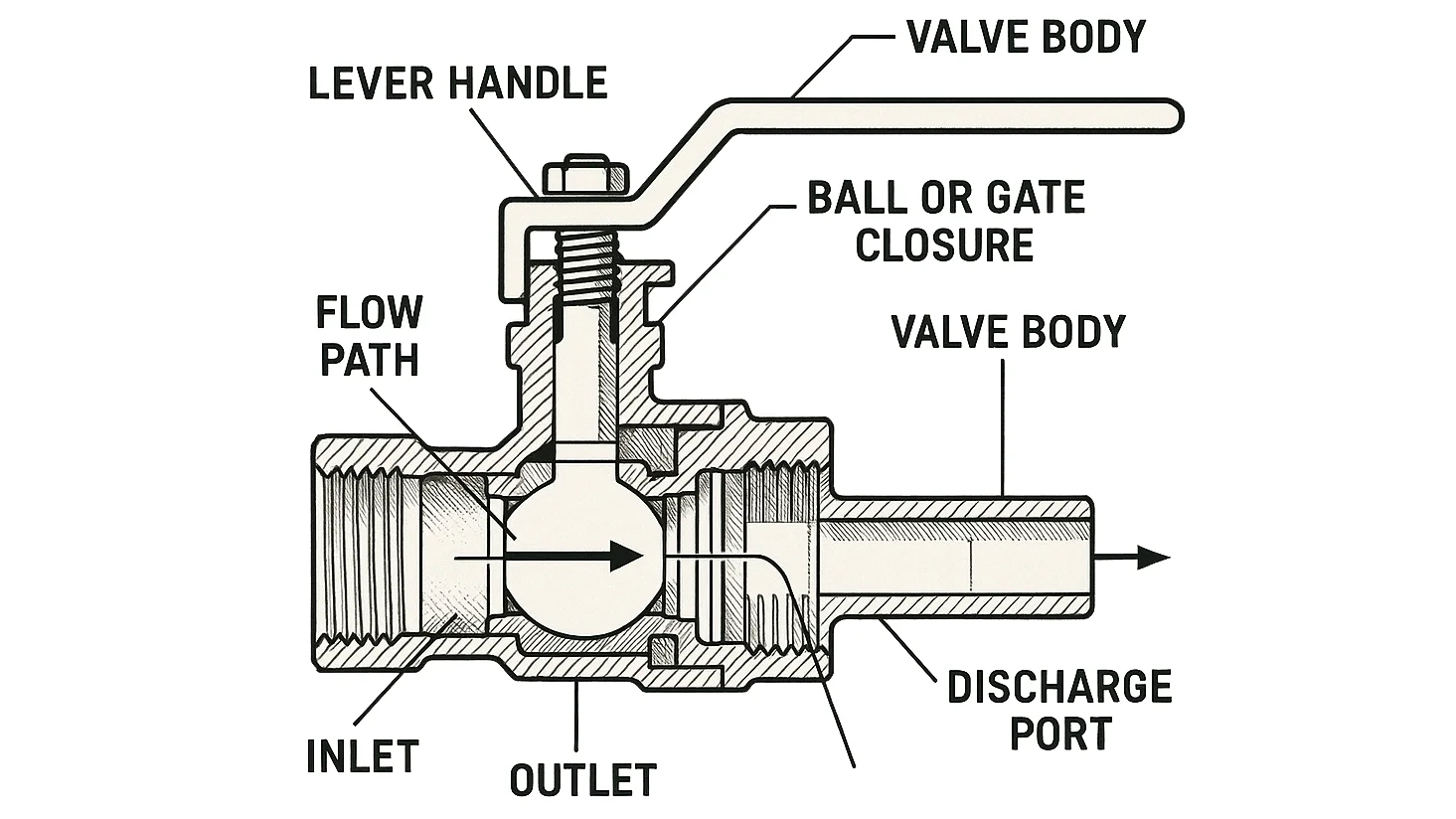
It is a type of ball valve. Here is how it works:
- A ball inside the valve has a hole through its center
- The lever handle turns the ball 90 degrees
- When the hole lines up with the pipe, water flows through
- When the ball is turned sideways, flow stops
- The lever position shows whether the valve is open or closed
The lever handle enables quick 90-degree opening or closing, making the ideal for routine control tasks or emergencies. Unlike gate valves that need many turns, It opens or closes with a quarter turn of the handle. For petroleum refineries, test/drain valves are important for maintaining fire protection systems that safeguard the facility.
Where Test/Drain Valves Are Located
They have specific locations in fire sprinkler systems. Here is where you will find them:
- Downstream of the main control valve
- Adjacent to the sprinkler riser
- At the lowest point of the system for draining
- Near the fire department connection
- At the end of branch lines
- On test headers for multi-zone systems
These valves are usually found downstream of the control valve, adjacent to the riser, and discharge to a safe location. The discharge point is important because water coming out of a test/drain valve could cause damage if not directed properly. For bulk chemical plants, proper placement of test/drain valves ensures fire protection systems work when needed.
Uses of Test/Drain Valves
They serve several important purposes. Here are the main uses:
System draining
- Removes water from pipes for repairs
- Prevents freezing in cold weather
- Allows component replacement
- Used during system modifications
Pressure testing
- Verifies system holds pressure
- Checks for leaks in piping
- Confirms valve operation
- Documents system integrity
Sprinkler testing
- Simulates sprinkler activation
- Verifies water flow alarms
- Tests fire pump operation
- Confirms proper valve function
Maintenance
- Isolates sections of the system
- Allows work on specific zones
- Provides access for inspection
- Enables routine servicing
In a manufacturing terminal, operators useing before and after fire sprinkler system inspections. For oil and gas facilities, regular testing with ensures fire protection systems remain reliable.
Lever Handle Benefits
The lever handle on a test/drain valve offers several advantages. Here is why it matters:
- Visual position indication (handle parallel = open, perpendicular = closed)
- Quick quarter-turn operation
- Easy to operate with gloves on
- Can be locked in position
- Requires less space than wheel handles
- Simple for emergency response
The quick-action handle allows for efficient water flow control when draining pipes or simulating sprinkler activation. Anyone can look at a test/drain valve and immediately know if it is open or closed. For chemical processing plants, workers need reliable test/drain valves that are easy to operate during emergencies.
Test/Drain Valve vs Other Valves
It is one of several valve types used in fire protection. Here is how it compares:
Test/drain valve (ball valve)
- Quarter-turn operation
- Visual position indicator
- Full flow when open
- Excellent for on/off service
Gate valve
- Multiple turns to open or close
- No visual position indicator
- Full flow when open
- Slow operation
Globe valve
- Multiple turns to open or close
- Good for throttling flow
- Restricted flow path
- Not ideal for quick operation
Butterfly valve
- Quarter-turn operation
- Disc visible in the pipe
- Some flow restriction
- Compact design
It is preferred for fire sprinkler testing because of its quick operation and clear position indication. For railcar loading systems, similar quarter-turn valves are used for emergency shutoffs.
Safety and Compliance
It play an important role in fire safety compliance. Here is what you need to know:
- NFPA codes require regular sprinkler system testing
- Test/drain valves enable this testing
- Proper operation prevents accidental flooding
- Valves must discharge to a safe location
- Annual inspections are required
- Documentation of tests must be kept
SafeRack’s safety experts guide facility personnel on proper valve operation to prevent accidental flooding and ensure compliance during annual evaluations.
For spill containment systems, proper drainage from test/drain valves helps prevent environmental releases. Railcar track pans capture water from test/drain valves during sprinkler system testing.
Accessing Test/Drain Valves
They are often located at height or in hard-to-reach places. Here is how facilities provide safe access:
- Work platforms for elevated valves
- Safety gates at platform openings
- Fall protection systems for worker safety
- Crossover stairs over pipes and equipment
- Rolling stairs for mobile access
- Roof access stairs for rooftop valves
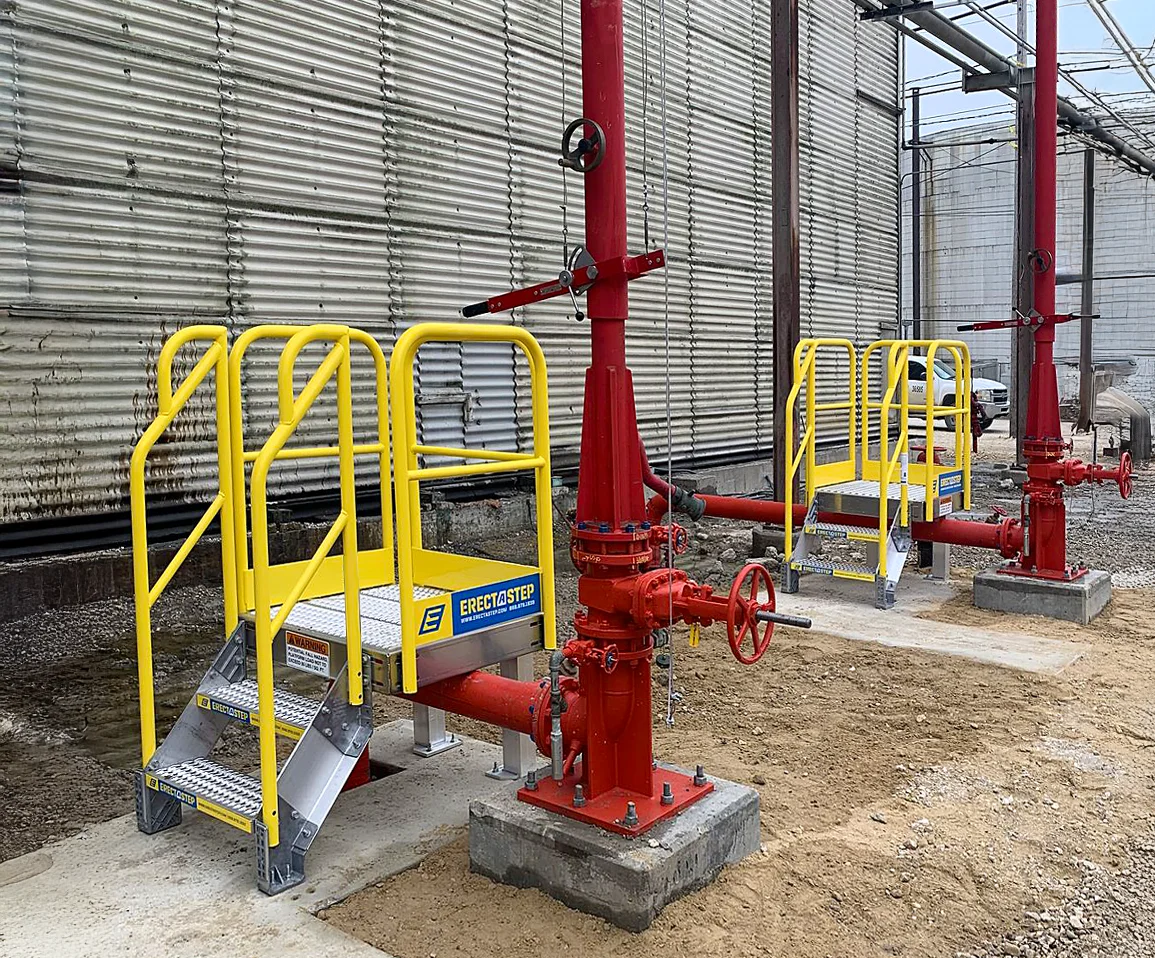
SafeRack’s ErectaStep stairs are often used at grain storage facilities for accessing manual control valves and test/drain valves on fire suppression risers. YELLOWGATE safety gates provide fall protection at access points to test/drain valves. Body harnesses keep workers safe when operating test/drain valves from elevated positions.
Testing Procedures
Proper use for sprinkler testing follows a specific procedure. Here are the steps:
- Notify facility personnel that testing will occur
- Ensure the discharge area is clear of people and equipment
- Slowly open the using the lever handle
- Observe water flow and pressure
- Verify that alarms activate properly
- Close the test/drain valve slowly
- Check for leaks at the valve seat
- Document test results
Manufacturing terminals employing SafeRack equipment use the test/drain valve before and after fire sprinkler system inspections. For loading platforms, nearby test/drain valves should be easily accessible for routine testing.
Maintenance of Test/Drain Valves
Like all mechanical components, test/drain valves need regular maintenance. Here is what to check:
- Look for leaks around the stem and body
- Operate the lever handle through full range
- Check for smooth operation without binding
- Verify the valve fully opens and closes
- Inspect for corrosion or damage
- Ensure the discharge pipe is clear
A poorly maintained may not work when needed. Regular testing of the valve itself is just as important as testing the sprinkler system. For truck loading facilities, test/drain valves on fire systems should be included in routine safety inspections. Grounding and monitoring systems help prevent static discharge near test/drain valves on flammable liquid systems.
it is a ball valve with a lever handle installed in fire sprinkler systems for system draining, pressure testing, and maintenance.
The lever handle turns a ball inside the valve 90 degrees to open or close the flow path quickly and easily.
They are usually found downstream of the control valve, adjacent to the riser, discharging to a safe location.
The lever handle enables quick quarter-turn operation and provides clear visual indication of whether the valve is open or closed.