


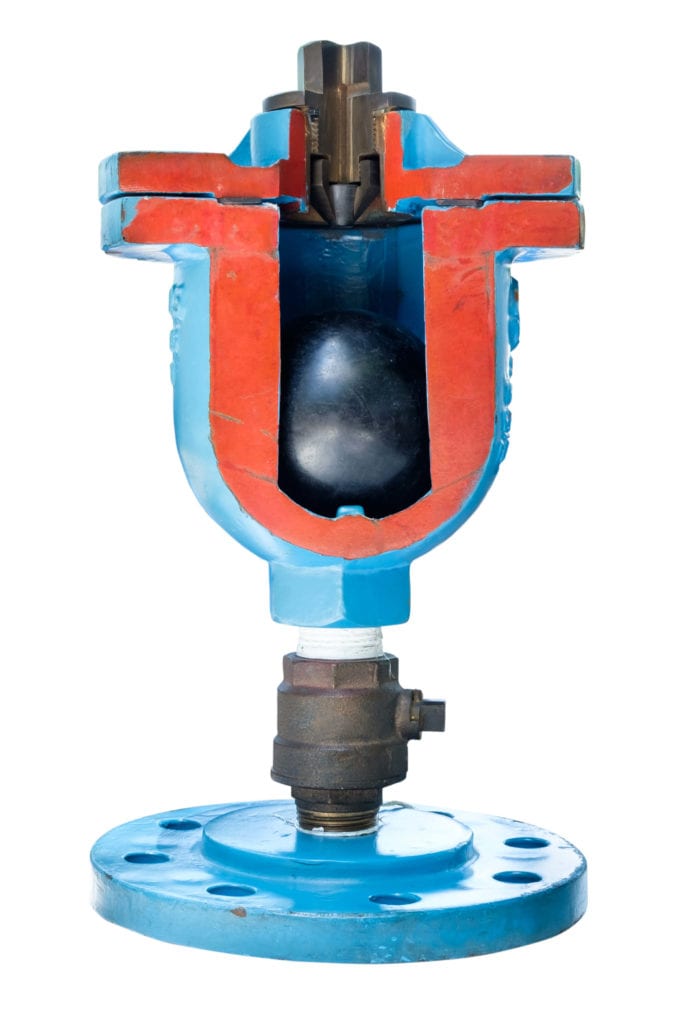
A ball float valve is a safety device used at fuel depots to control and stop the flow of liquid fuel during loading operations. It is commonly installed in systems that dispense fuel into tanker trucks to prevent overfilling and product loss.
This valve works automatically and does not require manual operation. Its main purpose is to stop fuel flow when certain limits are reached, helping protect both equipment and the environment.
How a Ball Float Valve Works
The valve operates using a simple two-state function:
- Open – fuel flows normally
- Closed – fuel flow is completely stopped
Inside the valve is a floating ball. When fuel rises and the ball reaches a specific level, it moves into position and blocks the outlet. Once the ball exceeds the diameter of the dispensing hose, the flow of liquid stops immediately.
This automatic action helps prevent spills and overfilling during fuel transfer.
Use in Vapor Recovery Systems
Ball float valves are commonly used in Stage II vapor recovery systems at fuel depots. These systems are designed to reduce fuel evaporation by maintaining pressure balance between tanks and dispensing points.
By stopping liquid fuel at the correct level, the valve supports vapor recovery equipment and reduces the amount of fuel lost to evaporation.
Environmental and Cost Benefits
Fuel evaporation is a serious concern for both environmental safety and operational costs. According to the Environmental Protection Agency (EPA), millions of gallons of gasoline are lost each year due to evaporation during storage and transfer.
Using proper flow-control devices helps:
- Reduce fuel loss
- Lower environmental impact
- Improve regulatory compliance
- Protect storage and transfer equipment
Common Applications
Ball float valves are typically found in:
- Fuel depots
- Tanker truck loading areas
- Vapor recovery systems
- Petroleum storage and transfer facilities
They are a standard safety component in regulated fuel handling environments.
It is used to automatically stop the flow of fuel during loading to prevent overfilling.
No, it works automatically based on fuel level.
They are commonly installed at fuel depots and tanker truck loading systems.
By reducing fuel evaporation and preventing spills, it lowers environmental impact.