Zinc (symbol Zn) is a versatile metal widely used in industrial and manufacturing applications, particularly for protecting other metals from corrosion. In its most common application, zinc is applied as a coating to steel or iron to prevent rust, a process known as galvanization. It’s a unique properties make it highly effective as both a physical barrier and a sacrificial anode, extending the lifespan of metals it coats.
How Zinc Works in Industrial Applications
The primary role of zinc in industrial use is corrosion protection. When steel or iron is coated with zinc through processes such as hot-dip galvanizing, the metal is immersed in molten zinc. This creates a durable, protective layer that shields the underlying metal from moisture, oxygen, and other corrosive agents.
They protects metals in two ways:
Physical Barrier: The zinc layer physically separates the metal from environmental elements, preventing water and oxygen from causing rust.
Sacrificial Protection: Zinc is more reactive than steel or aluminum, so it oxidizes first, sacrificing itself to protect the metal beneath.
These properties make a preferred choice for industrial parts exposed to harsh environments, ensuring durability and reliability over time
Why is zinc added to steel?
Zinc achieves “rust prevention” by oxidizing itself, providing the advantage of inhibiting corrosion and protecting the carbon steel underneath. Think of zinc as a protective layer that sacrifices itself to keep the steel intact. The process significantly increases the steel’s lifespan. It is a relatively quick process and pairs well with steel used in a wide range of products, as is common and inexpensive.
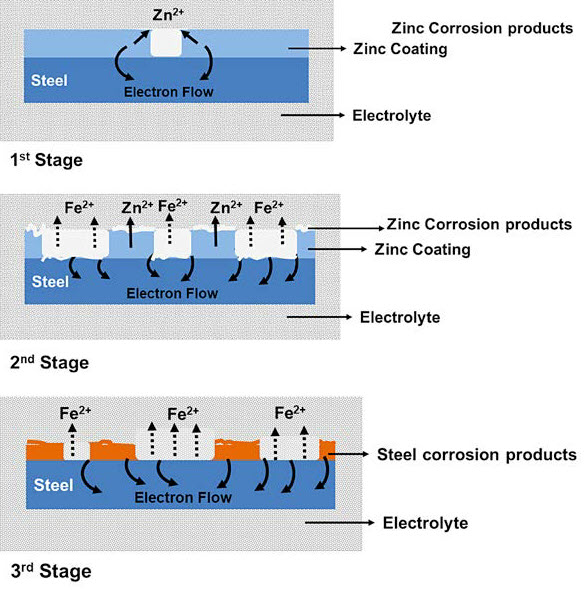
A coating of a zinc layer provides protection to minimize rusting and increase the lifetime of steel or aluminum. According to Figueira et al.:
The high corrosion resistance of galvanized steel is attributed both to the galvanic action of zinc and to the barrier effect of zinc products. Zinc has a low-self corrosion rate and, due to its low position in the galvanic series, is an efficient sacrificial anode for galvanic protection of the steel structure.
Lifted from Figueira et al. Corrosion of Hot-Dip Galvanized Steel Reinforcement
Advantages of Zinc as a Coating
This coatings and galvanization are use in a variety of industries and products, including:
Construction and Infrastructure: Protecting steel beams, bridges, and stair components from rust.
Automotive and Transport: Extending the life of vehicle frames, chassis parts, and other components.
Household and Industrial Equipment:Coating appliances, tools, and machinery parts to prevent corrosion.
Pipe and Storage Systems: Safeguarding water, chemical, and fuel tanks against deterioration
References:
Figueira, Rita & Silva, Carlos & Pereira, Elsa & Salta, M. (2014). CORROSION OF HOT-DIP GALVANIZED STEEL REINFORCEMENT. Artigo submetido em Junho de 2014 e aceite em Setembro de 2014. Corrosão e Protecção de Materiais. 33. 51.
Benefits
Provides outstanding rust prevention for steel and aluminum.
Acts as a sacrificial anode to protect the base metal.
Offers an economical and reliable method for corrosion protection.
By applying coatings, industries can enhance the durability of their products, reduce maintenance costs, and ensure safer, long-lasting performance in challenging environments.
Why is zinc use on steel?
Zinc is apply to steel to prevent rust and corrosion, extending the metal’s service life.
What is galvanization?
Galvanization is the process of coating steel or iron with zinc to provide corrosion protection.
How does zinc protect metal?
Zinc works as both a physical barrier and a sacrificial anode, oxidizing first to protect the metal beneath.
Where is zinc commonly use?
Zinc coatings are use in construction, automotive parts, household equipment, and industrial machinery.
Bulk Chemical Market Specialist – Ray has been with SafeRack since 2003 and currently serves as a Market Specialist, offers insights into the impact of material choices on safety, productivity, and overall business success, particularly regarding stairs and access solutions.