


Truck spotting is the art of assisting truck drivers in maneuvering their vehicles to park or depart. While it may seem like a simple task, truck spotting can be challenging and even dangerous if not done properly. To be successful, truck spotters must be aware of the blind spots around the truck and the truck’s turning radius. They must also communicate clearly with the driver, using hand signals, radios, or cameras. Why does this matter? Large trucks have huge blind spots. A driver cannot see directly behind the truck or close to the front bumper. The acts as the driver’s eyes in these dangerous areas, preventing collisions with people, equipment, or structures. If your facility handles truck deliveries, you need truck loading systems that work alongside trained truck spotting personnel.
Why Truck Spotting Is Important
It is an essential service for many businesses. Here is why it matters:
- Trucks have large blind spots where the driver cannot see
- Turning radius requires extra space for safe maneuvering
- Loading docks have tight spaces and obstacles
- Pedestrians and equipment are often nearby
- Backing accidents are a leading cause of truck fatalities
Although truck spotting can be challenging, it is an essential service for many businesses that rely on truck or tank deliveries, particularly those in the loading and unloading industries. By working together, truck drivers and truck spotters can ensure that deliveries are made safely and on time. For petroleum refineries, truck spotting is critical when tank trucks position at loading racks.
Spotter Hand Signals
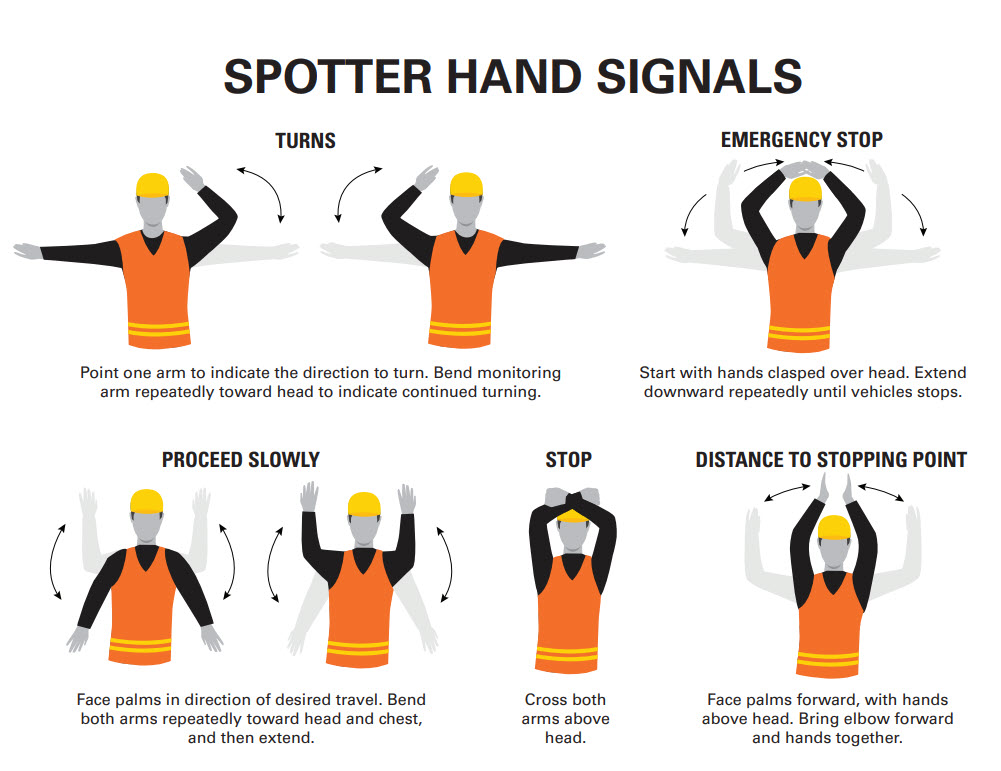
The use of predetermined hand movements is one of the prominent reasons why truck spotting works. Here are the standard hand signals based on your image:
Proceed Slowly
- Face palms in direction of desired travel
- Bend both arms repeatedly toward head and chest
- Then extend arms
Stop
- Cross both arms above head
- Bring elbows forward and hands together
Emergency Stop
- Start with hands clasped over head
- Bend arms downward repeatedly until vehicle stops
Turns
- Point one arm to indicate direction to turn
- Bend monitoring arm repeatedly toward head to indicate continued turning
Distance to Stopping Point
- Face palms forward with hands above head
These signals may not be conventional everywhere, but they are widely recognized in truck spotting operations. For bulk chemical plants, consistent truck spotting hand signals prevent miscommunication.
Blind Spots and Turning Radius
Understanding truck limitations is essential. Here is what spotters need to know:
Blind spots (no-zones)
- Directly behind the truck for up to 200 feet
- Directly in front of the truck close to the bumper
- Along the passenger side of the truck
- Along the driver side (smaller blind spot)
Turning radius challenges
- Trucks need extra space to turn right
- The rear wheels take a shorter path than the front
- This difference is called off-tracking
- Spotters must watch both ends of the truck
Communication Methods
Truck spotting requires clear communication. Here are the main methods:
Hand signals
- Visual and immediate
- No equipment needed
- Requires line of sight
- Standard signals prevent confusion
Two-way radios
- Works around corners
- Clear audio communication
- Batteries can die
- Requires training
Cameras
- Driver sees what spotter sees
- Best for complex maneuvers
- Expensive to install
- Not available on all trucks
The use of predetermined hand movements is one of the prominent reasons why truck spotters assist drivers in parking their vehicles without compromising their vehicles or the safety of people nearby. For chemical processing, truck spotting often uses a combination of hand signals and radios for safety.
Where Truck Spotting Is Used
It is used in many industries and locations. Here are the most common:
- Loading docks and warehouses
- Tank truck loading racks
- Construction sites
- Refinery and chemical plants
- Distribution centers
- Port and terminal facilities
- Tight urban delivery locations
- Fleet maintenance yards
Spotting for Tank Trucks
They present special challenges for truck spotting. Here is what makes them different:
- Longer and heavier than standard trucks
- Higher center of gravity (rollover risk)
- Liquid surge affects stopping distance
- Need precise positioning under loading arms
- Hazardous materials require extra caution
The requires spotters who understand liquid load dynamics. A tank truck that stops too suddenly can cause a dangerous surge. For loading arms, precise truck spotting ensures the arm reaches the truck connection point.
Safety Around Loading Docks
it at loading docks requires special attention. Here are key safety measures:
- Keep the area clear of pedestrians
- Use safety gates at dock edges
- Install dock levelers for smooth transitions
- Use truck chocks and blocks to prevent movement
- Ensure good lighting for night spotting
Loading platforms give truck spotters a safe vantage point. YELLOWGATE safety gates protect spotters and drivers at dock access points.
Fall Protection for Spotters
They often work at height on loading racks. Here is what they need:
- Fall protection systems for elevated platforms
- Body harnesses when working near edges
- Safety gates at platform openings
- Handrails and guardrails around spotting positions
- Work platforms for stable footing
They cannot help the driver if they fall themselves. Good fall protection is essential. For marine gangways, similar fall protection principles apply for spotters near water.
Training for Truck Spotters
Proper training makes effective. Here are key training topics:
- Understanding truck blind spots
- Learning standard hand signals
- Knowing facility layout and hazards
- Practicing with different truck types
- Emergency procedures
- Communication protocols
It is a skill that improves with practice. Experienced spotters learn to anticipate problems before they happen. For transloading skids, truck spotting training helps drivers position accurately for product transfer.
it is the practice of assisting truck drivers in maneuvering their vehicles to park or depart safely.
Common signals include proceed slowly, stop, emergency stop, turns, and distance to stopping point.
Trucks have large blind spots where the driver cannot see, so the spotter acts as the driver’s eyes.
it is most commonly used at loading docks, tank truck racks, refineries, and distribution centers.