


A tanker is an oceangoing ship designed to haul liquid bulk cargo in world trade. Imported crude oil arrives by tankers. But the term also applies to tanker trucks and even airplanes used for bulk delivery of chemical liquids and gases. You will find tankers everywhere in the petrochemical industry, moving everything from gasoline to jet fuel to liquid chemicals.
Tankers come in all sizes. Some are small river barges with no engine. Others are enormous oceangoing ships big enough to carry more than 100 million gallons of crude oil. On land, tanker trucks deliver fuel to your local gas station. In the air, tanker airplanes refuel military jets mid-flight.
For facilities that load and unload these tankers, truck loading systems and railcar loading systems keep operations moving safely and efficiently.
Different Sizes of Oil Tankers
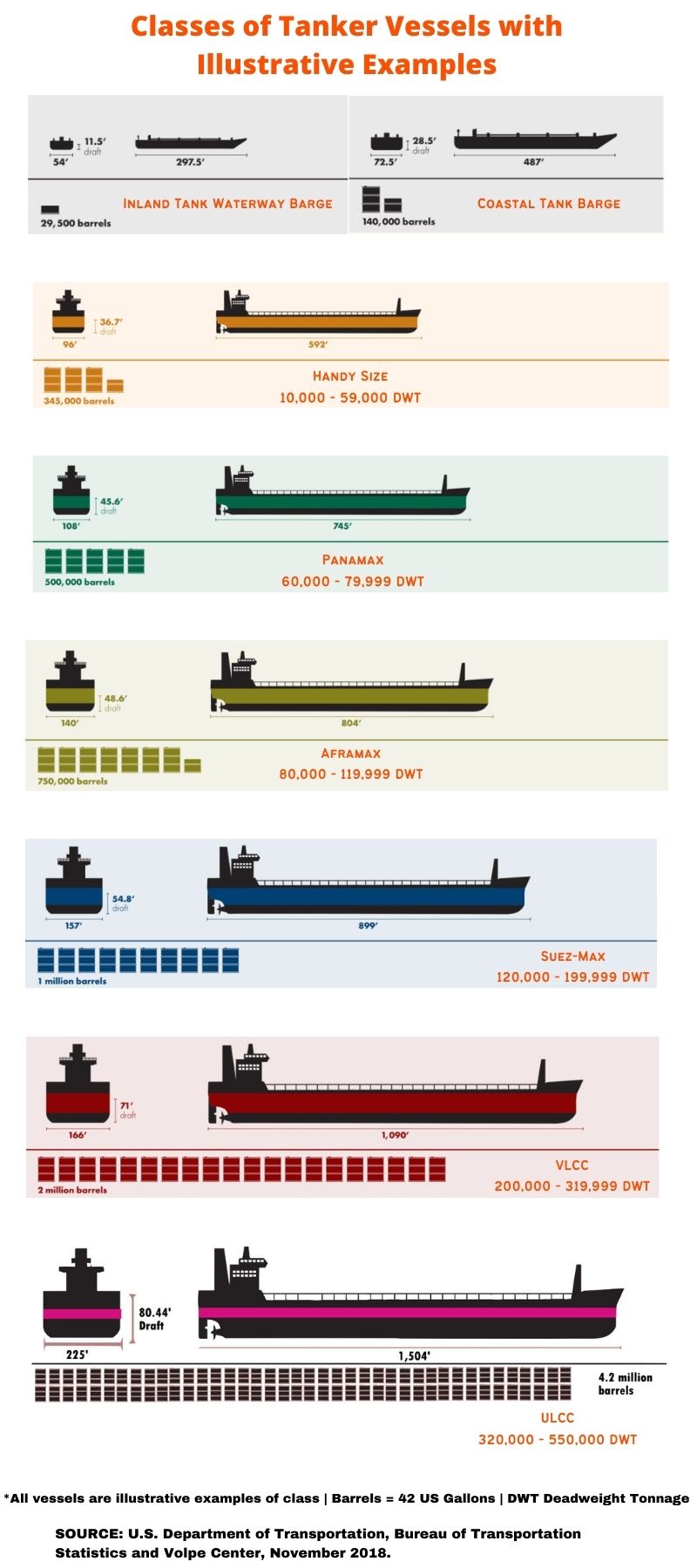
Crude oil and refined petroleum products are transported by ships ranging from engineless river barges to enormous oceangoing cargo ships. The deadweight tonnage (DWT) of a vessel is an indicator of its carrying capacity used to distinguish oceangoing ships. Here are the main classes:
- Panamax: Sized to fit through the Panama Canal. Carries about 500,000 to 800,000 barrels of oil.
- Aframax: Smaller than Suezmax. Very common in the Black Sea and Mediterranean. Carries about 600,000 to 800,000 barrels.
- Suezmax: Sized to fit through the Suez Canal in Egypt. Carries about 1 million barrels of oil.
- VLCC (Very Large Crude Carrier): Too big for the Panama Canal. Must go around South America or Africa. Carries about 2 million barrels of oil.
- ULCC (Ultra Large Crude Carrier) – The biggest tankers ever built. Carries more than 3 million barrels of oil.
The largest oil tankers are classified as VLCC and ULCC. These ships are so big they cannot fit through most canals. They travel long routes around continents.
For marine terminals that handle these huge tankers, marine gangways provide safe access for crew and dock workers. Loading arms transfer the crude oil from ship to shore.
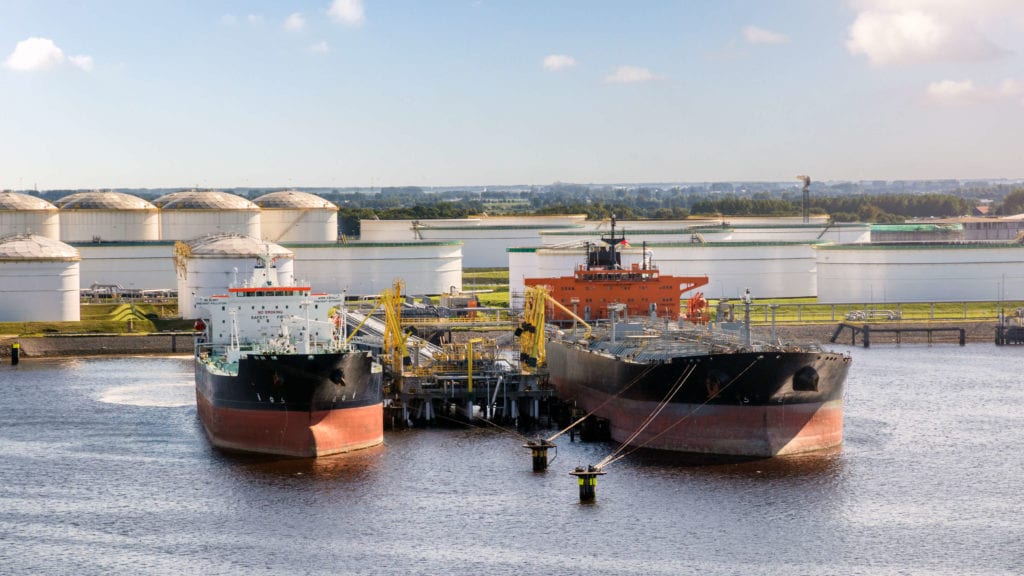
The Biggest Oil Tanker Ever Built
Classified as an ULCC supertanker, the Seawise Giant is considered the biggest and longest ship in history. Here are the key facts:
- Built by Sumitomo Heavy Industries in Japan
- Became operational in 1979
- Renamed several times: Happy Giant, Jahre Viking, Knock Nevis, Oppama, and Mont
- Sunk during the Gulf War in 1988
- Later raised and repaired
- Finally dismantled in India in 2009
Today, the only remnant of the Seawise Giant is its 36-tonne anchor. You can see it at the Hong Kong Maritime Museum. No tanker since has matched its size.
For comparison, a typical VLCC tanker today carries about 2 million barrels of oil. The Seawise Giant carried more than 3.5 million barrels.
At bulk chemical plants and petroleum refineries, tankers of all sizes arrive daily to load and unload product.
Tankers on the Road
Not all tankers float on water. Tanker trucks are the carriers that transport massive quantities of liquids in large tanks on land. They come in a variety of sizes and are tailored for various cargo and operation specifications.
How tanker trucks work
- Fitted with a pumping system for loading and unloading bulk liquids
- Subject to the 80,000-pound gross weight limit in the United States
- Capacity depends on the density of the liquid being shipped
- Heavier liquids mean smaller gallon capacity
Typical capacities
- Small tanker trucks: up to 3,000 gallons maximum
- Large tanker trucks: up to 11,600 gallons maximum
A tanker truck carrying gasoline (lighter liquid) can hold more gallons than one carrying sulfuric acid (heavier liquid). The weight limit is the same, but heavy liquids fill that weight limit with fewer gallons.
For safe loading of tanker trucks, truck loading systems include loading platforms and safety gates to protect operators.
Breakaway couplings prevent spills if a tanker truck pulls away while still connected.
Tanker Specifications and Deadweight Tonnage
Deadweight tonnage (DWT) is the standard measure for tanker capacity. DWT includes the weight of cargo, fuel, crew, and supplies. It does not include the weight of the ship itself.
Here is how DWT breaks down by tanker class:
| Tanker Class | DWT Range | Typical Barrels |
|---|---|---|
| Small tanker | 10,000 – 60,000 DWT | 80,000 – 500,000 |
| Panamax | 60,000 – 80,000 DWT | 500,000 – 700,000 |
| Aframax | 80,000 – 120,000 DWT | 700,000 – 900,000 |
| Suezmax | 120,000 – 200,000 DWT | 900,000 – 1,500,000 |
| VLCC | 200,000 – 320,000 DWT | 1,500,000 – 2,200,000 |
| ULCC | 320,000+ DWT | 2,200,000 – 4,000,000 |
For accurate measurement of liquids transferred between tankers and storage, metering systems are essential.
Tankers in the Petrochemical Industry
The petrochemical industry depends on tankers at every stage. Here is how they fit in:
- Crude oil arrives at refineries by oceangoing tankers
- Refineries process crude into gasoline, diesel, jet fuel, and chemicals
- Products leave by tanker truck, railcar, or smaller ship
- Distribution terminals store products until delivery
- Final delivery uses tanker trucks to local gas stations and factories
For oil and gas facilities, spill containment systems protect the environment during tanker loading and unloading. Railcar track pans and truck spill containment capture accidental releases.
Grounding and monitoring systems prevent static electricity from igniting flammable vapors around tanker trucks and ships.
Safety Around Tankers
Working around tankers is dangerous. Falls, chemical exposure, and fires are real risks. Here are key safety measures:
- Use fall protection systems when working on top of tanker trucks or ships
- Install safety gates at access points on loading racks
- Provide drench showers and eyewash stations near tanker loading areas
- Use overfill protection to prevent spills when filling tankers
- Train workers on emergency procedures
For tanker ships, marine gangways provide safe boarding. Swivel joints allow loading arms to move with the ship as tides change.
A tanker is a ship, truck, or aircraft designed to haul liquid bulk cargo in world trade.
VLCC stands for Very Large Crude Carrier and ULCC stands for Ultra Large Crude Carrier, the biggest tanker ships ever built.
Small tanker trucks hold up to 3,000 gallons and large tanker trucks hold up to 11,600 gallons.
Fall protection, loading platforms, breakaway couplings, grounding systems, and overfill protection are needed.