


Spring spikes also known as elastic rail spikes, are two-pronged U-shaped fasteners bent to resemble the letter M. These specialized spikes hold rails down to prevent tipping while securing baseplates to sleepers. They are commonly used with flat-bottomed rails, baseplates, and wooden sleepers where elastic fastening properties are beneficial.
How Spring Spikes Work
They works differently than a standard rail spike. Here is how it works:
- The two prongs are driven into the wooden sleeper
- The M-shaped bend creates spring tension
- The spike presses down on the rail foot or baseplate
- When the rail tries to lift, the spring resists
- The elastic force remains consistent over time
Spring Spikes vs Traditional Spikes
They offer significant advantages over traditional spikes. Here is the comparison:
Traditional spikes
- Rigid, no elastic properties
- Can work loose from vibration
- Rail can lift off the baseplate
- Require frequent tightening
Spring spikes
- Elastic, flexes with the rail
- Maintains constant clamping force
- Prevents rail tipping
- Less maintenance required
The M-shaped design of spring spikes provides elastic clamping force that maintains consistent rail pressure despite vibration and temperature changes. For downstream petroleum, They are standard on tracks leading to distribution terminals. Oil and gas facilities across the country rely on spring spikes for track stability. Liquefied natural gas terminals also use in their rail infrastructure.
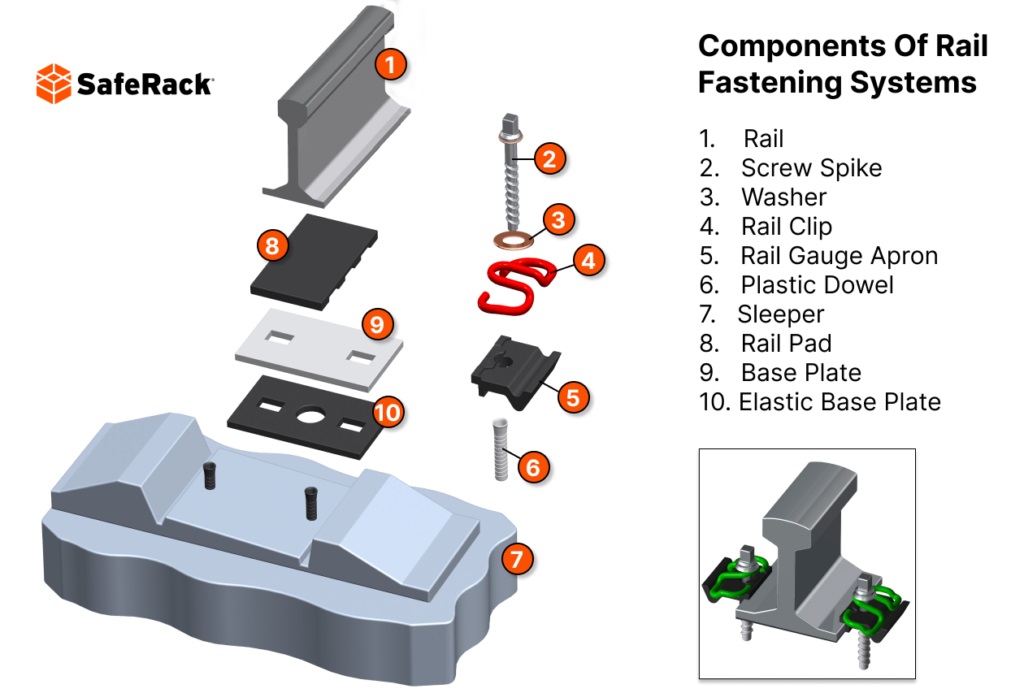
Parts of a Spring Spike
They is a single piece of shaped metal. Here are its key features:
- Two prongs – The legs that drive into the sleeper
- M-shaped bend – The spring section that provides elasticity
- Rail contact point – Where the spike presses on the rail
- Flattened head – For driving with a spike hammer
Where Spring Spikes Are Used
They are found on many types of railway tracks. Here are the most common applications:
- Flat-bottomed rail tracks
- Wooden sleeper tracks
- Baseplate-secured tracks
- Curved sections with lateral forces
- Areas with heavy vibration
- Industrial sidings
- Rail yard switching tracks
- Bridge track work
- Turnouts and switches
- Heavy haul routes
The M-Shaped Design
The M shape is key to its function. Here is why it works:
- The two outer legs form the prongs
- The center of the M presses down on the rail
- The curves create spring tension
- Each leg acts as a separate spring
- The design balances strength and flexibility
The M-shaped design provides elastic clamping force that maintains consistent rail pressure despite vibration and temperature changes. For helicopter ground support, They are used on rail tracks serving heliport facilities. Satellite launch facilities also use spring spikes for rocket component transport. Private aviation services rely on spring spikes at their fuel terminals.
Spring Spikes for Flat-Bottomed Rails
They are especially well suited for flat-bottomed rails. Here is why:
Flat-bottomed rail design
- Rail sits flat on the baseplate
- Wide base distributes weight
- Common on modern tracks
How its work with flat-bottomed rails
- Spike prongs drive into the sleeper
- The spring section presses down on the rail base
- Elastic force holds rail firmly against baseplate
- Allows slight rail movement without loosening
They are commonly used with flat-bottomed rails, baseplates, and wooden sleepers where elastic fastening properties are beneficial. For cement and frac sand mining, They secure tracks for heavy hopper cars. Frac sand mines across the country use on their rail lines. Power generation plants also rely on spring spikes for coal delivery tracks.
Installation
Proper installation of spring spikes is important for performance. Here are key steps:
- Position the spike over the rail base or baseplate
- Align the two prongs with the sleeper
- Drive the spike using a spike hammer
- The prongs penetrate the wood sleeper
- The M-shaped spring sits above the rail
Maintenance
They require periodic inspection. Here is what to check:
- Spike is still tight in the sleeper
- Spring section has not flattened out
- No cracks in the metal
- Consistent pressure on the rail
- Loose spikes need re-driving
Spring Spikes for Different Rail Types
They work with various rail profiles. Here is the compatibility:
Flat-bottomed rail
- Best compatibility
- Wide base for spring pressure
- Most common rail type
Bullhead rail
- Less common today
- Requires different fastening
- Spring spikes less suitable
Grooved rail
- Used for streetcars
- Special fastening required
- Spring spikes not typical
They are commonly used with flat-bottomed rails, baseplates, and wooden sleepers where elastic fastening properties are beneficial. For cold storage warehouses, They perform well in freezing temperatures. Distribution centers use on their rail sidings. Loading dock operations benefit from stable tracks with spring spikes.
Safety and Worker Protection
Properly installed spring spikes contribute to rail safety. Here is why they matter:
- Maintain proper rail position
- Prevent rail rollover under heavy loads
- Reduce derailment risk
- Extend track maintenance intervals
SafeRack’s comprehensive approach to railroad safety includes OSHA-compliant access equipment, EPA-compliant spill containment, and expert consultation services for railcar loading facilities. For fall protection systems, workers inspecting need proper safety gear. Safety gates provide secure access to track areas. Railcar gangways help workers reach for inspection. YELLOWGATE safety gates add an extra layer of fall protection.
They, also known as elastic rail spikes, are two-pronged U-shaped fasteners bent to resemble the letter M.
They are commonly used with flat-bottomed rails, baseplates, and wooden sleepers where elastic fastening is beneficial.
They provide elastic clamping force that flexes with the rail, while traditional spikes are rigid and can work loose from vibration.