


A scaffold brace is a rigid structural component used to hold one scaffold member in a fixed position relative to another or to a building. It plays a critical role in maintaining the stability, alignment, and safety of scaffolding systems.
In industrial environments, proper access systems such as work platforms and rolling stairs are often preferred alternatives to traditional scaffolding due to improved safety and flexibility. However, when scaffolds are used, a properly installed scaffold brace is essential.
How a Scaffold Brace Works
It stabilises the structure by connecting vertical and horizontal members.
Functions:
- Keeps scaffold frames aligned and square
- Prevents swaying or movement
- Distributes loads evenly across the structure
- Maintains overall rigidity
The most common configuration includes cross braces and diagonal braces that secure vertical members together.
Types of Scaffold Bracing
Common types include:
- Cross bracing – connects frames diagonally for stability
- Diagonal bracing – prevents lateral movement
- Horizontal bracing – supports structural alignment
- Frame bracing systems – used in modular scaffold designs
OSHA Requirements for Scaffold Brace
Proper use regulated by OSHA standards.
Key OSHA Guidelines:
- 29 CFR 1926.451(d)(3)
- Scaffolds must be properly brace using cross or diagonal braces
- Braces must align vertical members to keep the scaffold plumb, square, and rigid
- 29 CFR 1926.451(e)(10)
- Guardrails required on scaffolds above 10 feet
- Must include top rail, midrail, and toeboards
Additional Safety Rules:
- Cross braces cannot be used as access points
- Structural members must be properly aligned and secured
- Access must be provided when platforms exceed 2 feet in height difference
- Direct access allowed only within safe horizontal and vertical limits
These safety measures ensure that every scaffold brace contributes to a stable and compliant structure.
Applications
It is use in:
- Construction and maintenance projects
- Industrial facilities and plants
- Warehousing and logistics operations
- Elevated work areas
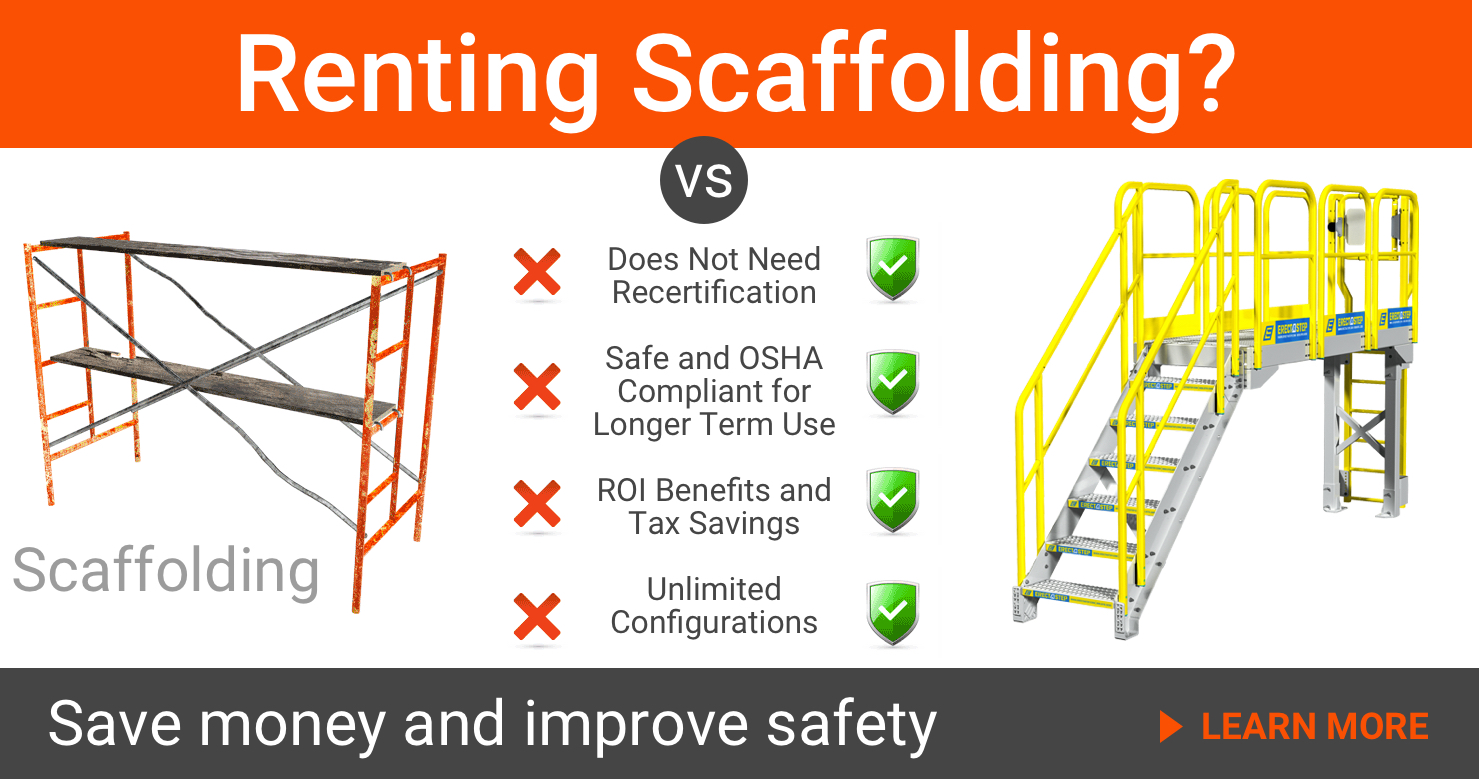
Many facilities now combine scaffolding with safer systems like crossover stairs and roof access stairs for improved access and safety.
Benefits and Importance
Using provides:
- Increased structural stability
- Reduced risk of collapse or movement
- Improved worker safety
- Compliance with OSHA regulations
- Better load distribution
Safety can be further enhanced with systems like safety gates and fall protection equipment.
Limitations of Scaffolding
While a improves safety, scaffolding still has limitations:
- Requires proper installation and inspection
- Can be unsafe if incorrectly assembled
- Time-consuming setup and dismantling
- Limited flexibility compared to modular systems
Because of these limitations, many industries prefer permanent solutions like modular platforms and engineered access systems.
It is a rigid component that stabilises scaffold structures by connecting different members.
It prevents movement, improves stability, and ensures worker safety.
OSHA requires scaffolds to be properly brace to remain stable, square, and secure.
No, OSHA prohibits using cross braces as a means of access.