


Machine guarding refers to safety measures designed to protect workers from injuries caused by moving machine parts. According to OSHA, improper machine operation and lack of safety protection contribute to thousands of serious workplace injuries each year, including amputations, lacerations, and fatalities.
Protective systems are installed to reduce the risk of contact with dangerous components such as rotating gears, belts, cutting tools, and conveyor mechanisms. These safeguards help protect workers while allowing equipment to operate efficiently.
Why Machine GuardingProtection Is Important
Industrial equipment often contains moving parts that can cause severe injuries if workers accidentally come into contact with them. Protective systems help prevent accidents caused by human error, mechanical failure, or unexpected equipment movement.
In addition to improving worker safety, proper safeguards can also:
- Reduce equipment downtime
- Prevent mechanical damage
- Improve operational efficiency
- Help organizations comply with OSHA safety regulations
Effective protection ensures that workers can perform their duties without unnecessary risk.
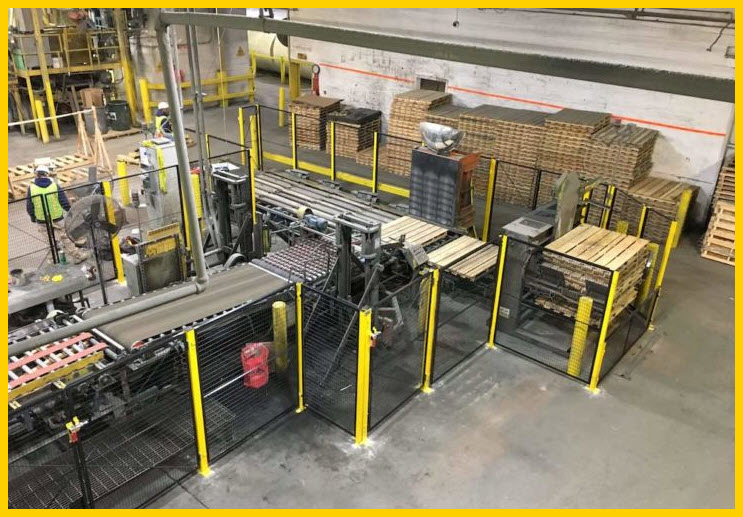
Types of Machine Safeguards
OSHA divides safety protection for industrial equipment into two main categories: guards and safety devices.
Guards
Guards are physical barriers that prevent access to hazardous machine components.
- Fixed Guards: Permanent barriers attached to the machine.
- Interlocked Guards: Shut off power when opened or removed.
- Adjustable Guards: Can be modified to accommodate different machine sizes or operations.
- Self-Adjusting Guards: Automatically adjust based on the material or operation.
These barriers prevent workers from reaching dangerous moving parts during operation.
Safety Devices
Safety devices use mechanical or electronic systems to prevent accidents or stop equipment quickly.
Common examples include:
- Photoelectric Devices: Use light sensors that stop equipment when the light beam is interrupted.
- Radiofrequency Systems: Detect disturbances in an electrical field and stop the machine.
- Electromechanical Devices: Use contact bars or probes to detect obstructions.
- Pullback and Restraint Systems: Prevent hands from entering hazardous areas during machine cycles.
- Safety Trip Controls: Emergency systems that immediately stop equipment if triggered.
- Safety Gates: Movable barriers that block access until the machine cycle is complete.
These systems help prevent injury when physical barriers alone are not sufficient.
Worker Responsibilities for Equipment Safety
Proper protection depends not only on equipment design but also on worker awareness and training. Employees operating industrial equipment should:
- Receive training on equipment operation and safety systems
- Inspect machines and safeguards before use
- Wear appropriate personal protective equipment (PPE)
- Follow all safety procedures when operating machinery
- Report damaged or malfunctioning safeguards immediately
Training and awareness significantly reduce workplace accidents involving industrial equipment.
Examples of Machines That Require Safety Guards
Many types of industrial equipment require point-of-operation protection, including:
- Guillotine Cutters 1910.212(a)(3)(iv)(a)
- Shears 1910.212(a)(3)(iv)(b)
- Alligator Shears 1910.212(a)(3)(iv)(c)
- Power Presses 1910.212(a)(3)(iv)(d)
- Milling Machines 1910.212(a)(3)(iv)(e)
- Power Saws 1910.212(a)(3)(iv)(f)
- Jointers 1910.212(a)(3)(iv)(g)
- Portable Power Tools 1910.212(a)(3)(iv)(h)
- Forming Rolls and Calenders 1910.212(a)(3)(iv)(i)
- Revolving Drums, Barrels, and Containers 1910.212(a)(4)
These machines contain moving components that pose significant hazards without proper safeguards.
Its purpose is to protect workers from contact with dangerous machine parts during operation.
Yes. OSHA requires appropriate safeguarding for machines that could cause injury.
Some designs are removable for servicing, but they must be reinstalled before the machine is operated again.
Most industrial equipment with moving parts requires some form of protection to prevent workplace injuries.