


A low dock leveler is a surface-mounted loading dock solution installed on top of an existing low-height dock. It raises the effective dock height, typically by up to 11 inches, allowing facilities to safely interface with modern trailer bed heights without reconstructing the dock.
Unlike recessed pit-style dock levelers, a low dock leveler mounts directly onto the existing concrete surface, forming an elevated platform that also functions as a bridge between the dock and the vehicle. Adjustable decks and lip extensions accommodate remaining height differences during loading and unloading.
How a Low Dock Leveler Works
They serves two purposes: increasing dock height and providing controlled vertical articulation. Once mounted, the unit compensates for trailer height variance by adjusting upward or downward from the raised platform.
This design allows forklifts, pallet jacks, and workers to transition smoothly between the dock and trailer while minimizing impact forces and operational risk.
Installation and Applications
It offers a cost-effective alternative to full dock reconstruction. Because it mounts directly to the dock surface, installation is faster, less disruptive, and requires minimal concrete modification.
Common applications include:
- Retrofitting older facilities with non-standard dock heights
- Warehouses transitioning from rail service to truck loading
- Distribution centers adapting to modern trailer standards
- Facilities using wheel risers to supplement dock height
- Operations needing temporary or seasonal dock height adjustments
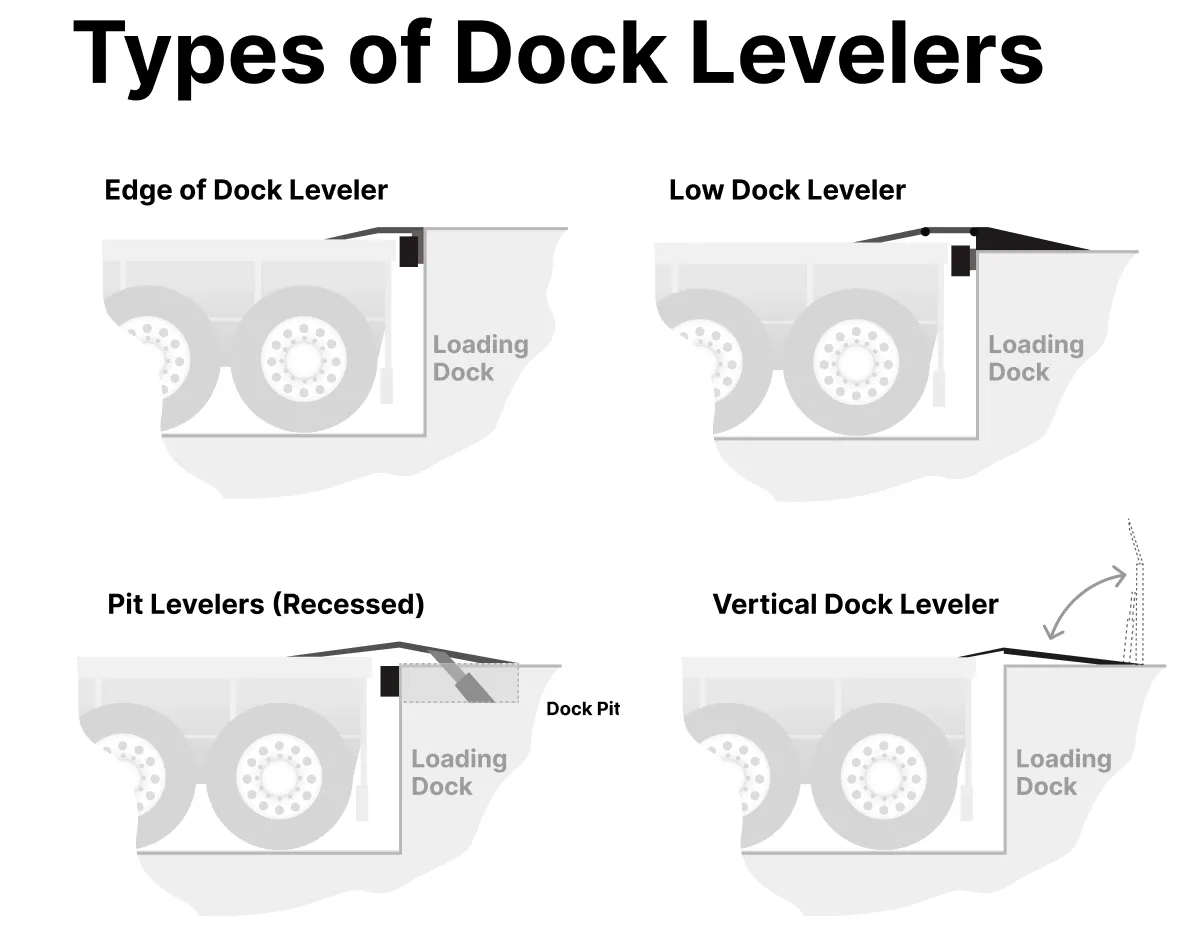
Safety and Compliance Considerations of Low Dock Leveler
All dock equipment must comply with workplace safety standards. According to the Occupational Safety and Health Administration, dock levelers must incorporate protective features that reduce fall hazards and vehicle interface risks.
Typical safety requirements include:
- Run-off guards to prevent forklift edge drop-offs
- Smooth transition surfaces to minimize dock shock
- Secure anchoring to prevent movement during operation
- Compliance with ANSI MH30.1 and MH30.2 standards
- Fall protection when dock edges exceed 4 feet
- Optional dock stairs to improve pedestrian access
Frequently Asked Questions
It mounts on top of an existing dock to raise its height, while a standard dock leveler is installed into a recessed pit flush with the dock floor. The surface-mounted design makes them ideal for retrofit applications.
Safety requirements include run-off guards, secure anchoring, smooth transitions, and compliance with OSHA and ANSI standards. Additional fall protection may be required depending on dock elevation.
Most low dock leveler systems provide:
Platform height increase: up to 11 inches
Upward service range: 5–12 inches
Downward service range: 5–12 inches
Total effective range: suitable for trailers above or below original dock height
Yes. it is designed for surface mounting and does not require pit excavation. Installation involves anchoring directly to the existing concrete dock, making it suitable for older facilities and fast retrofit projects.