


Hydraulic fracturing, commonly known as fracking, is a drilling and extraction process used to release oil and natural gas from deep underground rock formations, especially shale.
Fracking works by injecting a high-pressure mixture of water, sand, and chemicals into rock layers to create small fractures. These fractures allow trapped oil and gas to flow out and be collected at the surface.
What Is Fracking?
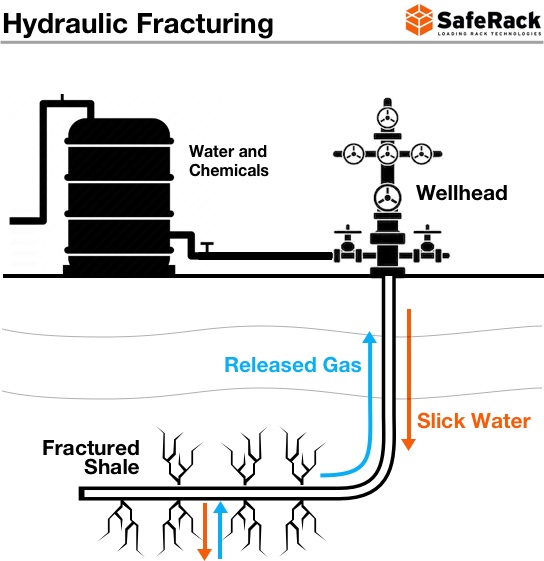
Fracking is a well-stimulation technique used in oil and gas production. After a well is drilled deep into the ground, a pressurized fluid—often called slickwater—is pumped into the rock formation.
This fluid:
- Cracks the shale rock
- Releases oil and natural gas
- Allows hydrocarbons to flow back up the well
The sand in the mixture, known as frac sand, keeps the fractures open so gas and oil can continue flowing.
How the Fracking Process Works
The hydraulic fracturing process typically follows these steps:
- Vertical Drilling
A drilling rig drills several thousand feet straight down into the earth. - Horizontal Drilling
Once the target shale layer is reached, the drill bit turns horizontally, creating a long underground channel called a wellbore. - Perforation
Small holes are created in the well casing along the shale layer. - High-Pressure Injection
A mixture of water, sand, and chemicals is pumped into the well at extremely high pressure. - Rock Fracturing
The pressure fractures the shale, releasing oil and natural gas. - Flowback and Recovery
The released oil, gas, and some of the fluid flow back to the surface, where they are collected for processing, storage, and transport.
Why Sand Is Used in Fracking
Sand plays a critical role in fracking. It acts as a proppant, meaning it holds the fractures open after the pressure is released. Without sand, the cracks would close, trapping oil and gas underground.
Where Fracking Is Commonly Used
Hydraulic fracturing is widely used in:
- Shale oil and gas fields
- Natural gas production zones
- Tight oil reservoirs
Major fracking regions include parts of the United States, Canada, and other energy-producing countries.
Safety and Environmental Considerations
Fracking is highly regulated due to:
- High pressures involved
- Chemical handling requirements
- Environmental protection concerns
Operators must follow strict safety standards related to:
- Well integrity
- Water management
- Chemical disclosure
- Worker safety
Hydraulic Fracturing and Industrial Safety
Fracking operations rely heavily on safe access systems, loading platforms, and fall protection for workers handling chemicals, hoses, tanks, and transport equipment.
Hydraulic fracturing is a process that uses high-pressure fluid to crack underground rock formations and release oil and natural gas.
Fracking allows access to oil and gas trapped in shale that cannot be extracted using traditional drilling methods.
Fracking fluid typically contains mostly water, sand, and a small percentage of chemicals designed to reduce friction and protect equipment.
When properly regulated and managed, fracking can be conducted safely, but it requires strict controls to protect workers, water sources, and the environment.
The oil and gas flow back to the surface through the well and are collected for storage, transport, and refining.