


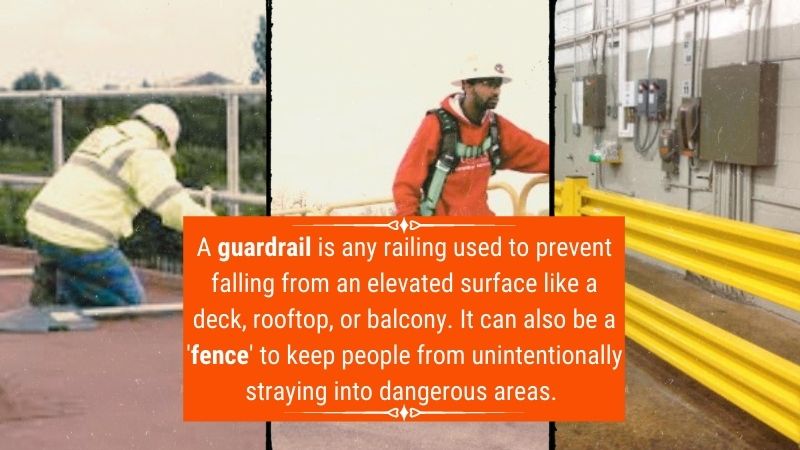
Guardrail systems are critical for fall protection, preventing employees from accidents by acting as a physical barrier along exposed edges or elevated surfaces. According to OSHA, a guardrail is a barricade designed to prevent falls from walking-working surfaces.
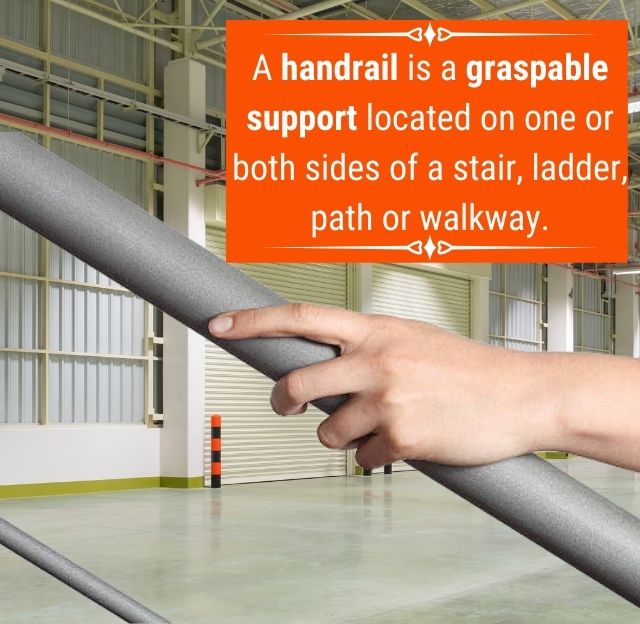
Handrails vs. Guardrails
| Feature | Handrail | Guardrail |
|---|---|---|
| Definition | Rails intended for support and handhold while walking on stairs or ramps. Clearance of 2½” from walls/obstructions. | Barriers installed along edges of elevated platforms, decks, or dangerous areas to prevent falls. |
| Placement | Along stairways, ramps, and walkways. | Along unprotected sides/edges of work surfaces, rooftops, balconies, scaffolds, and around machinery. |
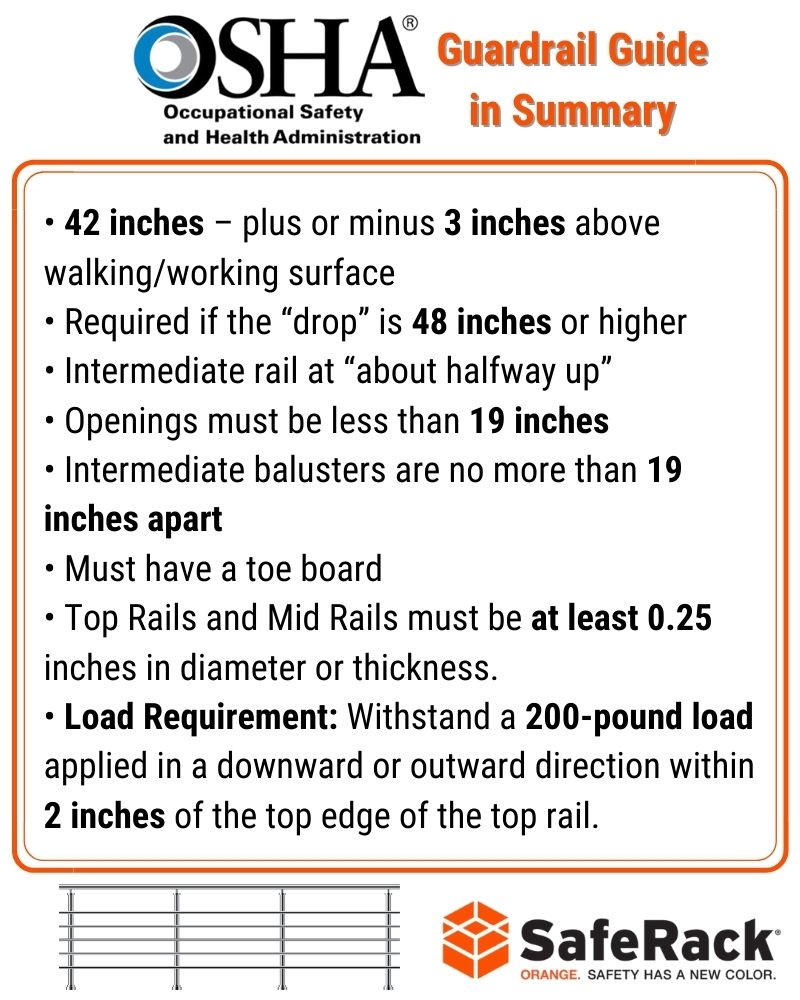
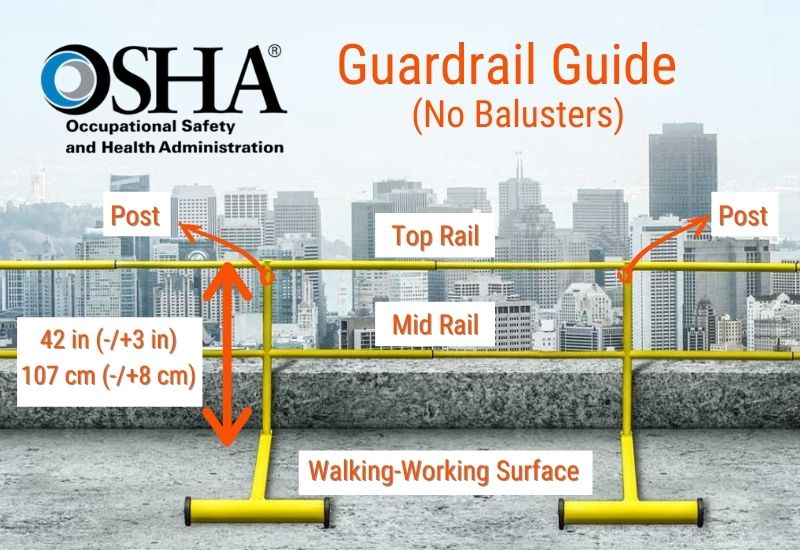
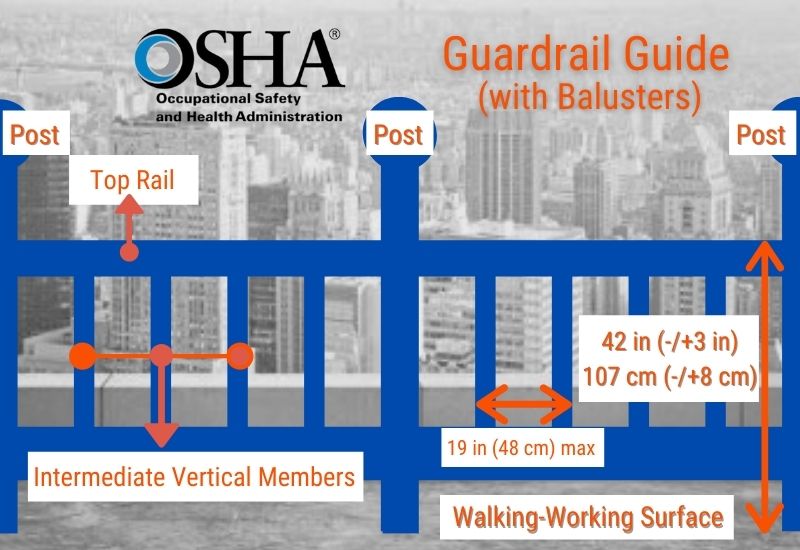
| Height | 30–38 inches (measured from leading stair edge to rail top). | 42 inches ±3 inches (top-edge from walking surface). May exceed 45” if compliant. |
| Strength Requirement | Must withstand 200 lbs downward or outward within 2” of top edge. | Must withstand 200 lbs downward or outward at any point within 2” of top edge without deflecting below 39”. |
| Material | Steel recommended for durability. | Steel, aluminum, fiberglass, or concrete. Aluminum is lighter and aesthetic; steel is robust and cost-effective. |
Tip: Handrails are primarily for grip support, while guardrails are physical barriers against falls.
OSHA Guidelines: Key Requirements
Standard: OSHA 1910.29(b)
Applicability: Platforms with 4+ open sides, heights >6 feet above the ground.
Highlights
- Top Rails & Mid Rails: Must withstand impact and not protrude dangerously.
- Balusters / Intermediate Rails: Ensure fall prevention in areas without mid rails.
- Clearances: Minimum 18” spacing between intermediate supports.
- Inspection & Maintenance: All guardrail components must be regularly check for integrity.
- Penalties: Non-compliance can lead to fines up to $10,000 per violation, with daily charges for ongoing violations.
Practical Tip: Always include guardrails during initial construction planning to save costs and reduce retrofitting challenges.
Best Practices for Installation
- Location: Outside edges of roofs, platforms, or elevated walkways.
- Material Choice: Choose steel for heavy-duty areas; aluminum or fiberglass for lightweight and aesthetic applications.
- Strength Compliance: Ensure rails meet OSHA 200 lbs minimum force resistance.
- Regular Maintenance: Inspect for rust, loose fittings, and physical damage.
- Employee Training: Teach staff to use guardrails correctly and report hazards immediately.
Guardrails are required for edges, platforms, balconies, or areas with fall hazards >6 ft, while handrails are for stairways and ramps.
Yes, if they meet other OSHA safety requirements such as force resistance and stability.
Steel for robustness, aluminum for lightweight and aesthetics, fiberglass for chemical-resistant environments, concrete for permanent installations.
Regularly, especially after heavy use, weather exposure, or any event that may compromise structural integrity.
Companies can face hefty fines, liability for employee injuries, and legal action.