

Gondola railcars are specialized rail vehicles used to transport heavy bulk commodities such as scrap metal, aggregates, logs, lumber, steel, sand, copper, and iron ore. With their low sidewalls and open tops, gondolas allow easy loading and unloading of high-density cargo.
Think of a gondola as a boxcar cut in half horizontally sturdy, versatile, and designed for heavy loads.
Key Features of Gondola Railcars
- Open-top design: Ideal for loading large, bulky items like steel plates, coils, or prilled sulfur.
- Low sidewalls: Reduce weight and make loading/unloading easier.
- High load capacity: Can hold up to 1,000 lbs per square foot, far exceeding typical passenger train capacities.
- Durable construction: Built to withstand heavy industrial use while remaining stable on rails.
History of These Railcars
- Invented in 1825 by Scotsman Robert Fergusson
- Original design emphasized light sides for easy movement and minimal noise
- Still widely used today for bulk material transport in industries such as mining, construction, and steel manufacturing
Gondola Railcars in Industrial Operations
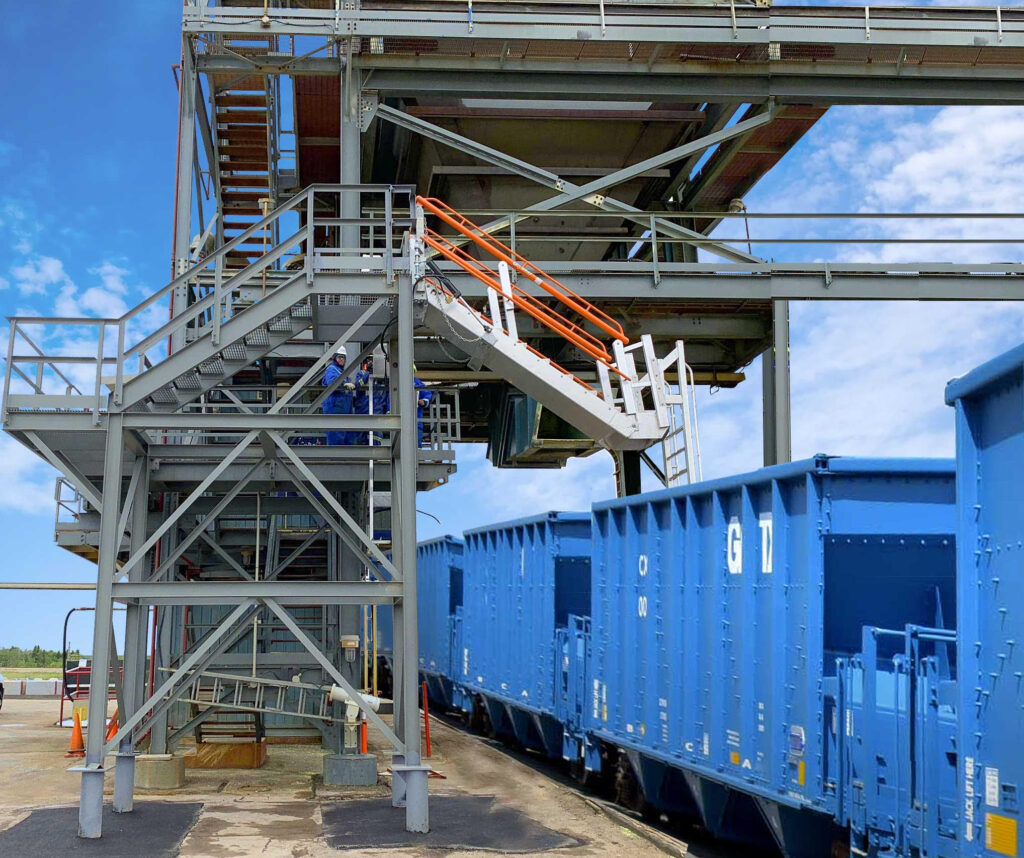
- Access and safety: Workers may need access to open-top gondolas for loading/unloading.
- SafeRack SAS Gangways: Lightweight, heavy-duty aluminum gangways allow safe and efficient access into gondolas.
- Special cargo handling: For hazardous materials like liquid sulfur, additional safety systems such as loading arms are required to manage extreme temperatures and risks.
Advantages of Using Gondola Railcars
- Reduces the need for multiple smaller railcars
- Efficient for high-volume, high-density cargo
- Flexible loading and unloading for irregularly shaped or oversized items
- Compatible with heavy-duty industrial processes
Heavy bulk commodities like steel, scrap metal, lumber, sand, copper, and iron ore are commonly transport.
The open-top design allows easy loading and unloading of large or irregular cargo.
Gondola railcars can handle up to 1,000 lbs per square foot, suitable for very heavy materials.
Using gangways like SafeRack SAS Gangways, which provide stable, adjustable access for loading and unloading.
Yes, but additional safety measures like specialize loading arms and protective equipment are required for materials such as molten sulfur.