


Fuel transfer systems are integrated networks of pipes, pumps, filters, meters, and loading equipment designed to move jet fuel from remote storage tanks to aircraft on the ground. At major airports, jet fuel storage tanks can be located miles away from the gate. Fuel transfer systems bridge this distance through miles of underground and aboveground pipelines, delivering fuel to access ports where aircraft are serviced. These systems ensure that commercial, private, and military aircraft receive clean, metered, and air-free fuel safely and efficiently before each flight. For facilities handling bulk fuel storage, bulk chemical plants use similar transfer principles for liquid handling.
How Fuel Transfer Systems Work
A typical airport fuel transfer system operates through several coordinated stages:
1. Remote storage: Jet fuel is held in large tanks located away from passenger terminals for safety
2. Pipeline network: Miles of underground and aboveground pipes push fuel toward loading zones
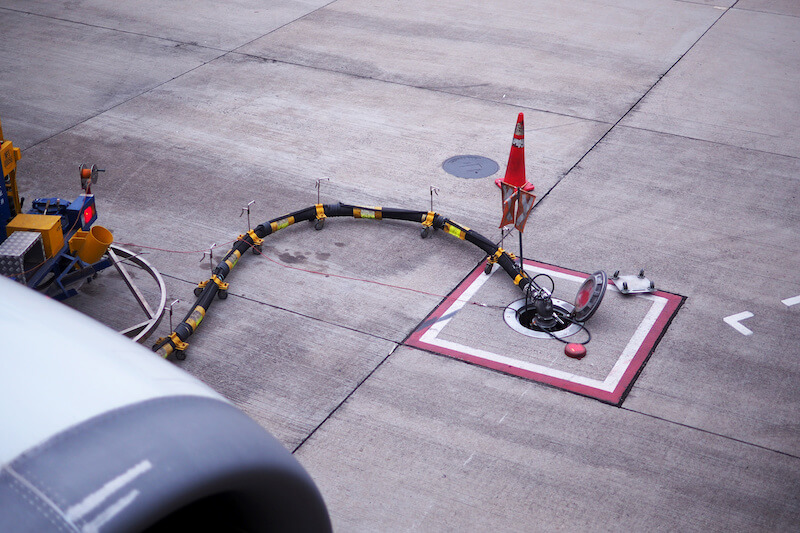
3. Fuel access ports: Strategically positioned connection points where refueling trucks attach
4. Mobile refueling truck: A specialized vehicle equipped with:
- Bottom loading station pump that draws fuel from the access port
- Filtration system that removes sediment, water, and particulates
- Air elimination that removes entrained air which could affect engine combustion
- Metering system that measures exact fuel volume delivered
5. Aircraft connection: Fuel is pumped from the truck into the jet’s wing or fuselage tanks
Fuel transfer systems designed for high flow rates, accuracy, and safety. The metering component ensures proper billing, while filtration protects sensitive jet engines from contamination. For precise measurement during transfer, metering systems provide accurate flow data. Overfill protection systems prevent dangerous spills during aircraft refueling operations.
Applications
Fuel transfer systems are essential across multiple aviation and industrial sectors:
- Commercial aviation: Major airports (international and regional) servicing passenger airlines
- Private aviation: Fixed-base operators (FBOs) at general aviation airports
- Military and defense: Air force bases and naval air stations
- Helicopter operations: Offshore oil platform support and emergency medical services
- Aerospace manufacturing: Fueling newly assembled aircraft before delivery
- Satellite and space launch: Transferring rocket-grade kerosene or other propellants
In military environments, military and defense fueling requires rugged fuel transfer systems capable of rapid deployment. For helicopter-specific fueling, helicopter ground support equipment integrates with fuel transfer systems. Commercial aviation GSE (ground support equipment) includes mobile refueling trucks that connect to fixed fuel transfer systems.
Benefits and Importance
Key Benefits:
- Remote fuel delivery – Moves jet fuel from miles away to the aircraft parking position
- Contamination control – Filtration removes sediment, water, and particulates that damage engines
- Air elimination – Removes entrained air that could cause flameout or inaccurate metering
- Accurate metering – Ensures precise billing and fuel inventory management
- High flow rates – Reduces aircraft turnaround time between flights
- Safety integration – Grounding and monitoring prevent static discharge
Importance:
Without a properly designed fuel transfer system, airports would rely on truck transport from remote tank farms, creating traffic congestion, safety hazards, and refueling delays. The combination of pipeline infrastructure and mobile refueling trucks creates an efficient, scalable solution that handles thousands of gallons per aircraft.
For static electricity control during fueling, grounding and earthing systems prevent dangerous sparks. Breakaway couplings protect fuel transfer systems from damage if an aircraft drives away while still connected. Swivel joints allow refueling hoses to articulate freely, reducing operator strain and hose wear. Loading arms provide rigid, durable connections for high-flow fuel transfer systems at fixed loading positions.
In short It is the complete infrastructure of pipes, pumps, filters, meters, and mobile equipment that moves jet fuel from remote storage tanks to aircraft at the gate.
That is Entrained air in jet fuel can cause flameout (engine failure), inaccurate metering, and reduced combustion efficiency.
In short Jet fuel can contain sediment, rust, water, and microbial contamination. That is use multi-stage filters (typically 1 to 5 micron rating) to remove these contaminants, preventing nozzle clogging, corrosion, and engine damage.
Key safety components include grounding monitoring to prevent static sparks, overfill protection to stop flow when tanks are full, breakaway couplings to prevent hose rupture, and spill containment to capture accidental releases. Emergency drench showers also required for personnel safety in fueling zones.