


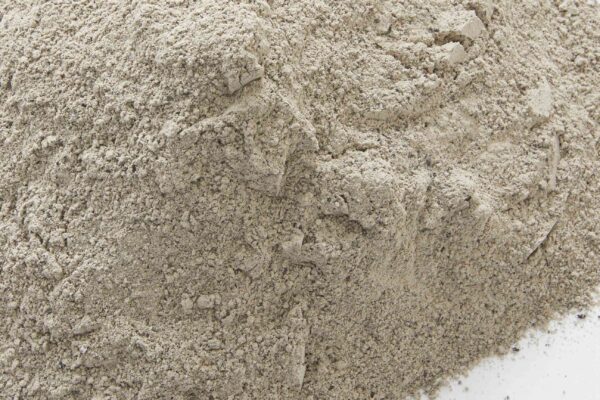
Fly ash is an industrial by product generated from burning coal at high temperatures in power plants. During electricity generation, pulverized coal is combusted, producing heat and leaving behind molten residue.
- Heavier particles fall to the bottom as slag
- Lighter particles remain suspend in flue gas, these are collected as fly ash
It is classified as a pozzolan, meaning it contains silica and alumina that react with water to form cement-like compounds. Because it is a by product, it is consider an environmentally friendly alternative to traditional materials.
Why Fly Ash is Important
- Reduces industrial waste by repurposing coal by-products
- Requires less energy to produce compared to Portland cement
- Lowers carbon footprint in construction
- Approved for use by organizations like the Federal Highway Administration (FHA)
If not reuse, it would be sent to landfills, contributing to environmental pollution. Its widespread use helps improve both sustainability and cost-efficiency.
Applications of Fly Ash
It is widely use in construction and infrastructure projects, including:
- Road construction and highway engineering
- Asphalt filler and embankments
- Mine fills and land reclamation
- Pavements and sidewalks
- Concrete production (as a replacement for Portland cement)
It is often use anywhere cement is traditionally applied, offering a more economical alternative.
Advantages Over Portland Cement
It provides several practical benefits:
- Cost-effective compared to cement
- Easier to work with, especially in cold temperatures
- Produces stronger and more durable concrete
- Resistant to cracking and shrinkage
- Creates a denser, smoother finish
- Enhances the lifespan of concrete structures
Types of Fly Ash
Class C Fly Ash
- Derived from sub-bituminous coal
- Contains higher calcium content (20%+)
- Also known as high-calcium fly ash
- Offers self-cementing properties
Class F Fly Ash
- Derived from bituminous coal and anthracite
- Lower calcium content
- Also known as low-calcium fly ash
- Commonly used in structural concrete applications
Handling, Storage, and Transport
It is known for being easy to manage in bulk operations:
- Stored dry in silos
- Transported via pneumatic trailers, rail, or ships
- Moved using air slides, conveyors, or pipelines
- Can be pneumatically transfer for efficient handling
Environmental and Industry Impact
It plays a major role in modern construction. It is a estimate that over 50% of concrete use in the United States contains fly ash, highlighting its importance in:
- Reducing construction costs
- Improving material performance
- Supporting environmental sustainability
It is use in concrete production, road construction, and infrastructure projects as a substitute for cement.
It is a recycled by-product that reduces landfill waste and lowers carbon emissions compared to cement production.
Class C has higher calcium content and self-cementing properties, while Class F has lower calcium and is commonly use in structural applications.
In some cases, it can partially or fully replace cement, depending on the application and engineering requirements.
It is transport in bulk using pneumatic systems, trucks, railcars, or ships.