


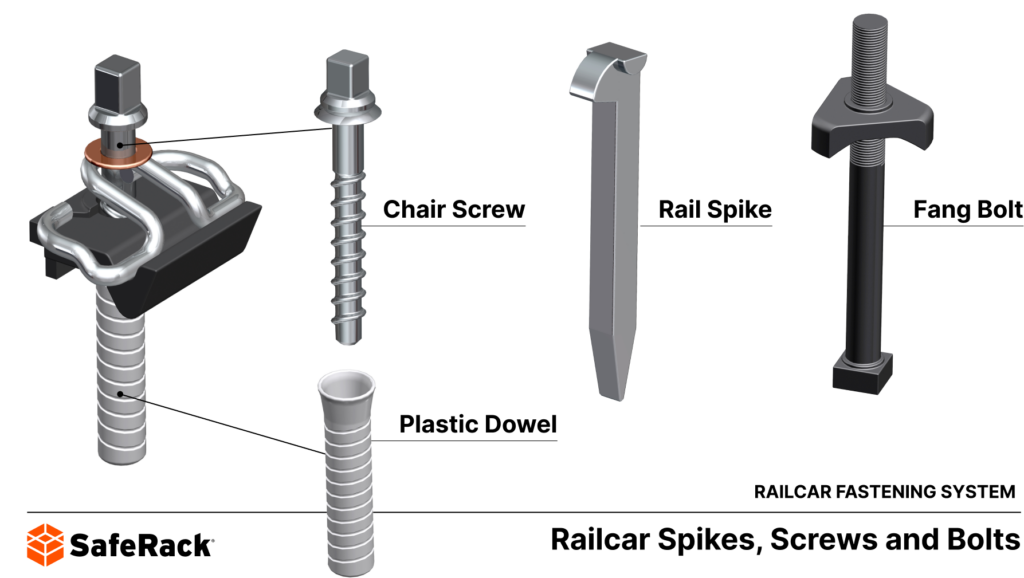
A fang bolt, also called a rail anchor bolt, is a specialized fastener used in railway track construction. It provides superior fastening performance compared to traditional rail spikes and chair screws. The fix rails or chairs to sleepers by passing through pre-drilled holes in the sleeper structure. What makes fang bolts special? They feature fanged nuts that bite into the lower surface of sleepers when tightened. This creates exceptional resistance to vibration induced loosening. Trains create constant vibration as they pass. Ordinary bolts would shake loose over time. They stay tight. For rail facilities handling hazardous materials, railcar loading depends on well-maintained tracks secured with reliable fang bolts.
How Fang Bolts Work
it works differently than a standard bolt. Here is how:
- A hole is drilled completely through the sleeper (railroad tie)
- The passes through the rail or chair and through the sleeper
- On the bottom side, a special nut with fangs (sharp protrusions) is installed
- When tightened, the fangs bite into the wood or concrete of the sleeper
- The fangs prevent the nut from turning or loosening
This mechanical locking mechanism ensures long-term stability with minimal maintenance. Even with constant train vibration, a properly installed will not come loose. For precision track work, metering technologies help verify proper installation.
Fang Bolts vs Traditional Fasteners
They offer advantages over older fastening methods. Here is the comparison:
Traditional rail spikes
- Hammered directly into the sleeper
- Can work loose over time
- Difficult to remove without damage
- Less holding power
Chair screws
- Screwed into the sleeper from above
- Can strip or pull out
- Vibration can cause loosening
Fang bolts
- Pass completely through the sleeper
- Fanged nut bites into the bottom surface
- Excellent vibration resistance
- Easy to inspect and replace
- Superior holding power
The superior vibration resistance of fang bolts makes them ideal for high-stress railway applications. For refinery track systems, it help keep sidings secure for heavy tank cars.
Parts of a Fang Bolt System
A complete fastening system includes several components:
- Bolt shaft: The threaded rod that passes through the sleeper
- Head: The top portion that bears against the rail or chair
- Fanged nut: The bottom nut with sharp protrusions that bite into the sleeper
- Washer: Distributes load under the head
- Spring washer: Optional component for additional vibration resistance
When tightened, the fanged nut on a fang bolt digs into the sleeper material. This creates a mechanical interlock that resists turning. For safe track inspection, work platforms provide stable access to examine fang bolts.
Where Fang Bolts Are Used
They are used in many railway applications:
- Mainline railroad tracks
- Rail yard switching ladders
- Industrial sidings
- Bridge track work
- Tunnel track installations
- Curved tracks with high lateral forces
- High-speed rail lines
- Heavy haul routes for unit trains
In the oil and gas sector, They are common at distribution terminals where tank cars are switched. Chemical plants use fang bolts to secure tracks where tank cars are loaded and unloaded.
History of Rail Fastening Systems
Rail fastening technology has advanced significantly since wooden rails were first used in 1515. The evolution has been driven by increasing demands for speed, load capacity, and safety.
Early fasteners
- Wooden rails (1515) – simple timber tracks
- Iron straps on wood (1700s)
- Cast iron rails (1800s)
- Rail spikes (1830s)
Modern fasteners
- Chair screws (late 1800s)
- Fang bolts (early 1900s)
- Spring clips (1950s)
- Modern elastic fasteners (today)
It represent an important step in this evolution. They offered a more secure connection than spikes or screws. For worker safety during rail maintenance, fall protection is essential when inspecting fang bolts.
Benefits of Using Fang Bolts
Using for rail fastening brings several important benefits:
- Superior vibration resistance compared to spikes
- Mechanical locking that prevents loosening
- Long-term stability with minimal maintenance
- Easy inspection from below the sleeper
- Simple replacement if damaged
- Works with wood or concrete sleepers
- Handles high-stress applications
Modern fastening systems employ sophisticated components designed to maintain track geometry under extreme conditions. These fastening solutions must balance structural rigidity with controlled flexibility to accommodate thermal expansion and dynamic forces. It help achieve this balance. For environmental protection at rail facilities, spill containment systems work alongside tracks secured with fang bolts. Railcar track pans provide secondary containment near fang bolt secured tracks.
Installation and Maintenance
Proper installation is important for performance. Here are key steps:
- Drill holes completely through the sleeper
- Ensure holes are straight and properly sized
- Insert the fang bolt from the top
- Install the fanged nut on the bottom
- Tighten to the specified torque
- Inspect fang bite marks periodically
During maintenance, workers check for:
- Loose nuts
- Corrosion on the bolt shaft
- Damage to the fanged nut teeth
- Proper torque
For safe access to track components, railcar gangways help workers reach fang bolts for inspection. Safety gates protect workers crossing tracks near maintenance areas.
Safety and Fang Bolts
Properly secured contribute to rail safety in several ways:
- Prevent track gauge spreading
- Reduce rail movement under trains
- Minimize maintenance needs
- Lower derailment risk
- Support heavy axle loads
Loose fasteners are a common cause of track problems. Fang bolts solve this with their vibration-resistant design. For emergency response at rail facilities, drench showers should be accessible near track maintenance areas. Portable eyewash stations provide immediate decontamination for workers installing. Grounding systems help prevent static discharge on rails secured with fang bolts at chemical facilities. Loading arms used for tank car filling are often located on tracks fastened with fang bolts. Truck loading operations at rail-to-truck transload facilities rely on secure tracks using. YELLOWGATE safety products add fall protection at rail access points near installations. Body harnesses keep workers safe when inspecting on elevated track structures. Beam trolleys help position equipment during installation and replacement. Flatbed tarping systems protect rail workers from weather during maintenance.
it is a rail anchor bolt with fanged nuts that bite into the lower surface of sleepers for superior vibration resistance.
it uses a special fanged nut on the bottom that digs into the sleeper material to prevent loosening from vibration.
They are used on mainline tracks, rail yards, industrial sidings, bridges, tunnels, and high-speed rail lines.
It pass through the sleeper and lock from below, while spikes can work loose from vibration over time.