


Dry bulk bags are large, flexible containers designed for transporting and storing dry, free-flowing materials. Many people recognize them by names such as bulk bags, super sacks, jumbo bags, or totes. These containers are commonly manufactured from woven fabric that may be coated or uncoated depending on the application.
They are widely used across manufacturing, chemical processing, agriculture, and distribution operations where efficient material handling is critical.
Dry Bulk Bags Materials and Construction
These containers are typically made from flat-woven or circular-woven fabrics that provide strength while remaining lightweight. Depending on the product being stored, liners may be added to help protect against moisture intrusion and contamination.
The construction method and fabric selection are tailored to the intended use, ensuring durability during lifting, transport, and storage.
Capacity and Product Types
Flexible intermediate bulk containers are commonly used to handle non-hazardous dry materials weighing close to two metric tons. Certain designs are also suitable for transporting regulated dry materials with lower maximum weight limits.
Because they are designed for free-flowing contents, these containers are ideal for powders, granules, pellets, and similar materials.
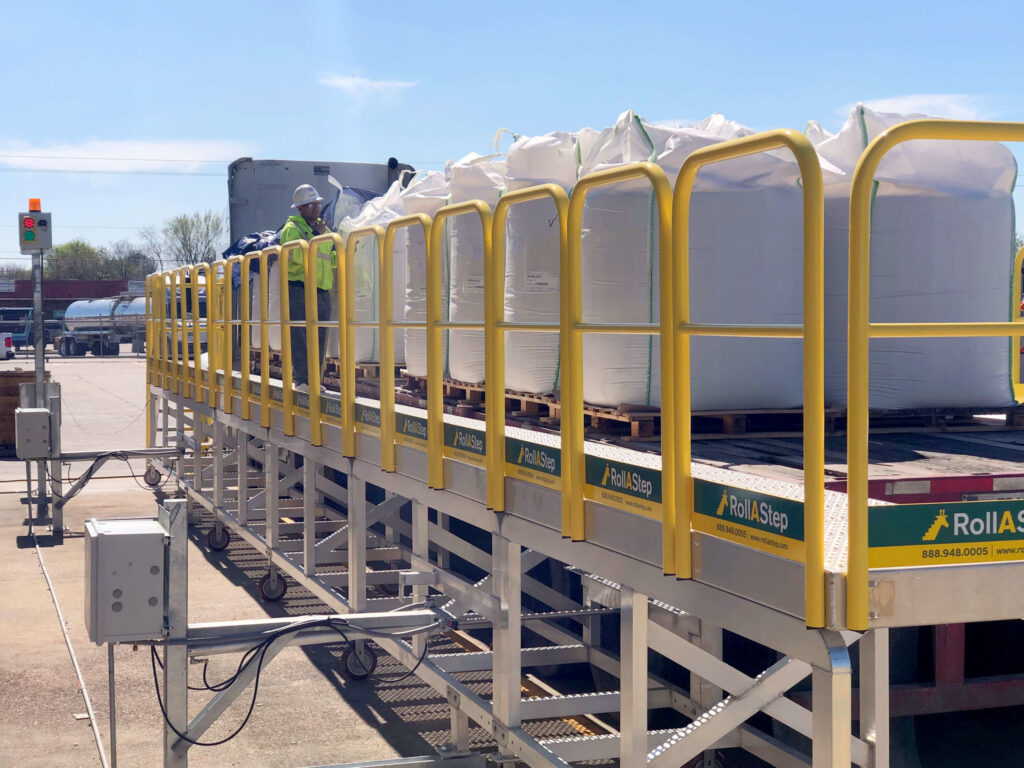
This Coastal Chemical installation in Houston Texas is for tying down and tarping dry bulk bags or super sacks on flatbed trailers.
Handling and Loading Considerations
Safe handling requires properly designed access systems such as loading platforms, forklift ramps, and elevated work platforms. These systems allow workers to load, secure, and unload materials while reducing fall risks and improving efficiency.
Flatbed transport often involves securing and tarping loads to protect materials during transit and ensure compliance with safety standards.
Industrial Applications
Dry bulk bags are widely used in industrial shipping operations, including chemical distribution facilities and manufacturing plants. An example installation supporting flatbed loading operations can be found at a chemical facility in Houston, where platforms are used for securing loads before transport.
Their flexibility, strength, and cost efficiency make them a preferred solution for bulk material movement across industries.
They are typically used for powders, pellets, grains, and other dry, free-flowing products.
No, liners are optional and are used when moisture protection or contamination prevention is needed.
They are usually handled with forklifts, cranes, or hoists using approved lifting points.
Yes, certain designs are suitable for controlled products when weight and handling guidelines are followed.
Platforms improve worker safety and efficiency when securing or preparing loads for transport.