


Deaeration is the process of removing dissolved gases, primarily oxygen and carbon dioxide, from water or other liquids. It is widely use in industries such as petroleum refining, power generation, pulp and paper, and chemical processing to improve system efficiency and prevent corrosion.
How Deaeration Works
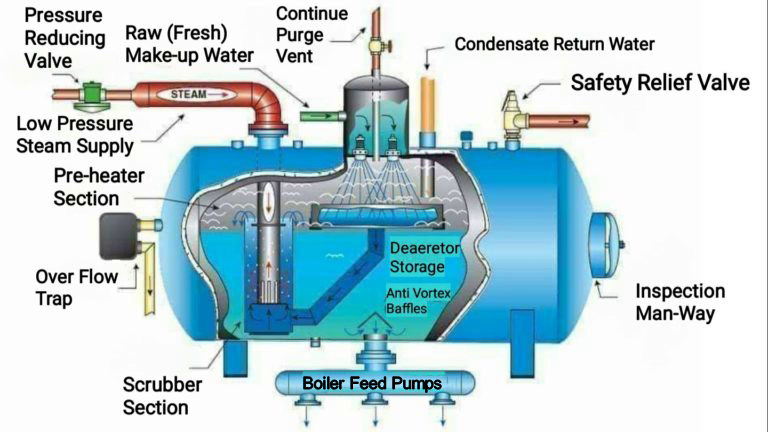
Deaeration typically involves mechanical removal of gases using a device called a deaerator, which may be connected to a storage vessel or operate as a standalone unit.
- Steam is introduced to reduce gas solubility in the liquid
- Dissolved gases separate and are released from the water
- The treated liquid becomes safer for use in pressure vessels and industrial systems
Why Deaeration Is Important
- Prevents corrosion caused by oxygen in pressure vessels
- Eliminates carbon dioxide, which forms corrosive carbonic acid
- Helps maintain stable pH levels in liquids
- Extends the lifespan of tanker trucks, boilers, and storage systems
- More cost-effective and thermally stable than chemical treatment methods
Scientific Principles Behind Deaeration
1. Henry’s Law
According to Henry’s Law, the solubility of gases in a liquid is proportional to pressure.
- Reducing pressure (via steam) lowers gas solubility
- Gases separate from the liquid and escape
2. Temperature and Solubility
- Gas solubility decreases as temperature increases
- Heating the liquid makes it easier to remove dissolved gases
Industrial Applications
- Petroleum refining (removal of water-related contaminants)
- Boiler feedwater systems in power plants
- Chemical processing and bulk liquid handling
- Tanker trucks and pressure vessels
Deaeration is the process of removing dissolved gases like oxygen and carbon dioxide from liquids.
It prevents corrosion, acidity, and equipment damage, improving safety and efficiency.
Primarily oxygen and carbon dioxide, both of which can cause corrosion and chemical instability.
By removing corrosive gases, it reduces rust and chemical damage, extending the life of pressure vessels and tanks.
Yes, mechanical deaeration is generally more cost-effective, stable, and efficient compare to chemical methods.