


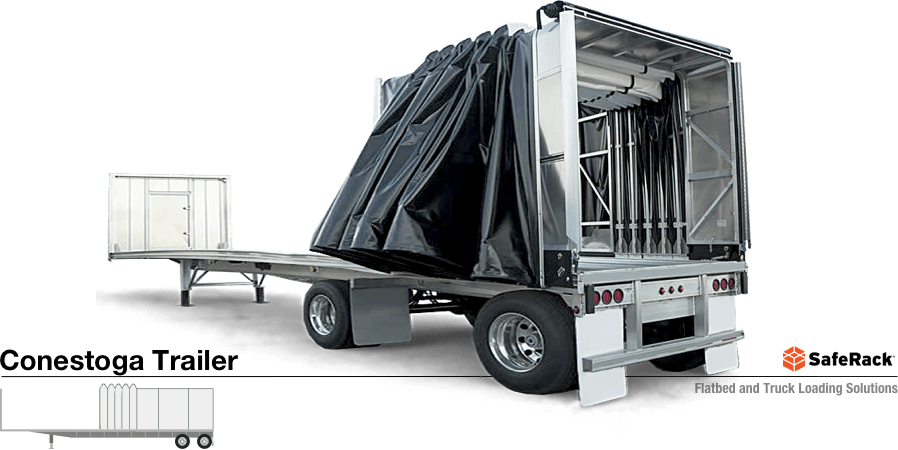
A Conestoga trailer is a specialized type of flatbed trailer that uses a hard sliding cover and integrated tarping system to protect freight during transport. Unlike standard flatbed tarps that must be tied down manually, a Conestoga trailer’s cover rolls open and closed along a track system, providing faster loading and unloading with better cargo protection.
Because of this design, they are widely used when freight needs protection from weather, road debris, and damage, but still requires the flexibility of a flatbed.
Many shippers choose this as an alternative to enclosed vans when freight is oversized, oddly shaped, or requires top-loading by crane or forklift.
Key Benefits of a Conestoga Trailer
Conestoga trailers are popular because they combine protection, efficiency, and flexibility.
Better Freight Protection
The hard shell and integrated tarp system shield cargo from rain, snow, UV exposure, and dirt. This greatly reduces the risk of damaged goods compared to traditional flatbed tarps.
Faster Loading and Unloading
The rolling cover system opens quickly, allowing forklifts or cranes to load from the side or top. This saves time at docks, job sites, and manufacturing facilities.
Reduced Cargo Damage
Because the tarp system is built into the trailer, there is less risk of tarps rubbing, flapping, or tearing freight during transit. This makes them ideal for fragile or finished goods.
Versatile Freight Options
They can haul many of the same loads as flatbeds while offering added protection, making them a preferred option for high-value shipments.
Conestoga Trailer Weight Limits
The legal maximum freight weight for a Conestoga trailer typically falls between:
- 42,000 lbs to 45,000 lbs
Actual allowable weight depends on axle configuration, trailer specifications, and state regulations. Loads that exceed legal limits may require permits or route approvals before transport.
Common Freight Hauled on Conestoga Trailers
Conestoga trailers are often used to transport:
- Machinery and industrial equipment
- Palletized building materials
- Steel products and fabricated parts
- Finished or painted components
- High-value freight that must stay dry
- Crated or partially packaged goods
Industries such as manufacturing, construction, logistics, and energy frequently rely on Conestoga trailers to balance protection and accessibility.
Why Safe Access to Conestoga Trailers Matters
Accessing the top and sides of a Conestoga trailer is a routine part of loading, securing, inspecting, and unloading freight. Without proper access equipment, workers are exposed to fall hazards, especially when climbing on trailer decks or makeshift ladders.OSHA regulations require employers to provide safe means of access when employees work at height.
RollaStep® – Safe Access for Conestoga Trailers
RollaStep MP Series Mobile Work Platforms are designed to provide safe, stable, and efficient access to flatbed and Conestoga trailers.
Instead of climbing on tires or trailer edges, workers can use a mobile platform that moves easily into position alongside the trailer.
Key RollaStep Features for Conestoga Trailers
- Large 9’ x 3’ work platform for secure footing
- OSHA-compliant handrails for fall protection
- Removable railings to customize access around freight
- 360-degree swiveling casters for precise positioning
- Lightweight aluminum construction for single-user mobility
- Strong enough for tools and equipment, not just foot traffic
The modular design makes RollaStep ideal for logistics yards, manufacturing plants, and distribution centers where trailer types and dock layouts frequently change.
Where RollaStep Fits in Trailer Operations
RollaStep platforms are commonly used for:
- Securing or releasing freight on Conestoga trailers
- Inspecting tarp systems and sliding mechanisms
- Loading and unloading fragile or high-value cargo
- Reducing fall risk during routine trailer operations
Conestoga Trailer vs Standard Flatbed
| Feature | Conestoga Trailer | Standard Flatbed |
| Weather protection | Built-in hard tarp system | Manual tarps |
| Loading flexibility | Side and top loading | Side and top loading |
| Cargo protection | High | Moderate |
| Tarp handling risk | Low | Higher |
| Access safety needs | Platform recommended | Platform recommended |
Both trailer types require safe access solutions, especially when workers are required to climb or reach elevated areas.

A Conestoga trailer is used to haul freight that needs weather protection but still requires the flexibility of flatbed loading.
Most Conestoga trailers have a legal freight capacity between 42,000 and 45,000 pounds, depending on configuration and regulations.
It offers better cargo protection, but worker safety still depends on using proper access equipment when loading or securing freight.
Yes. When workers access the trailer deck or elevated areas, OSHA-compliant access solutions such as mobile work platforms are recommended.